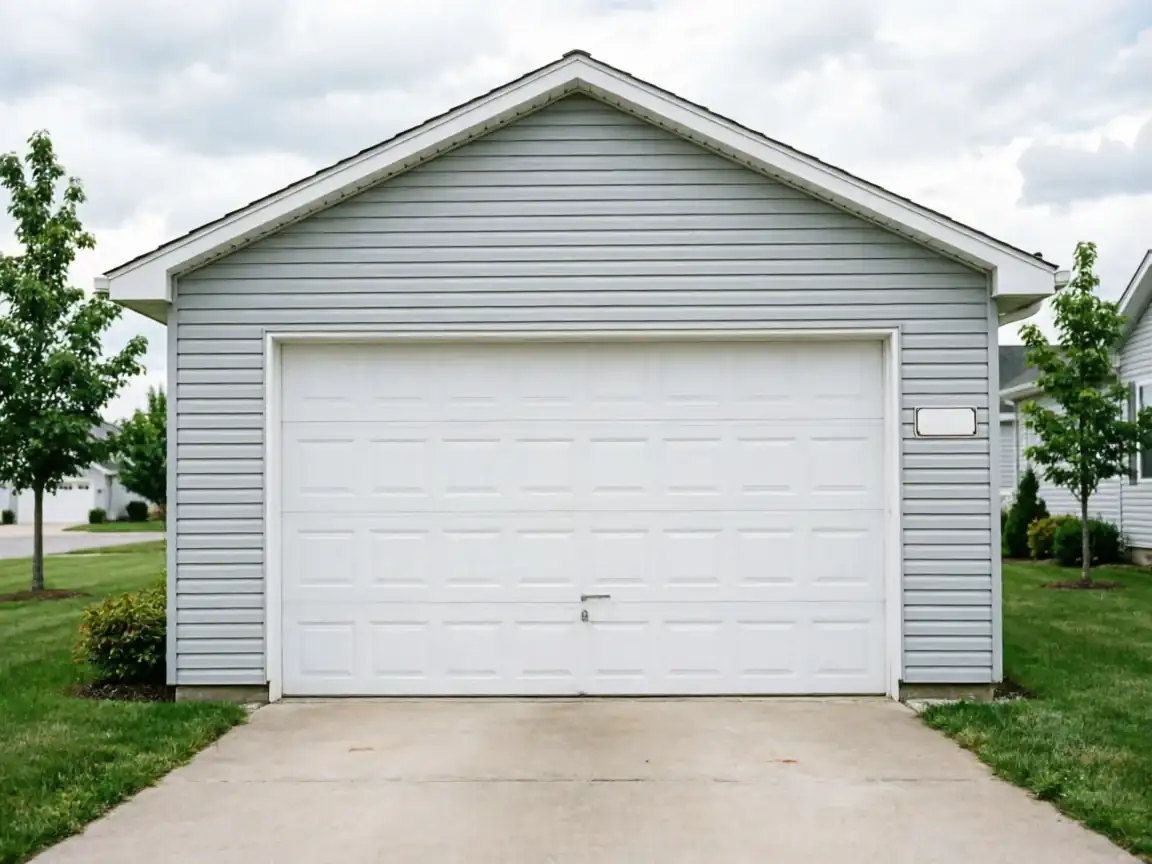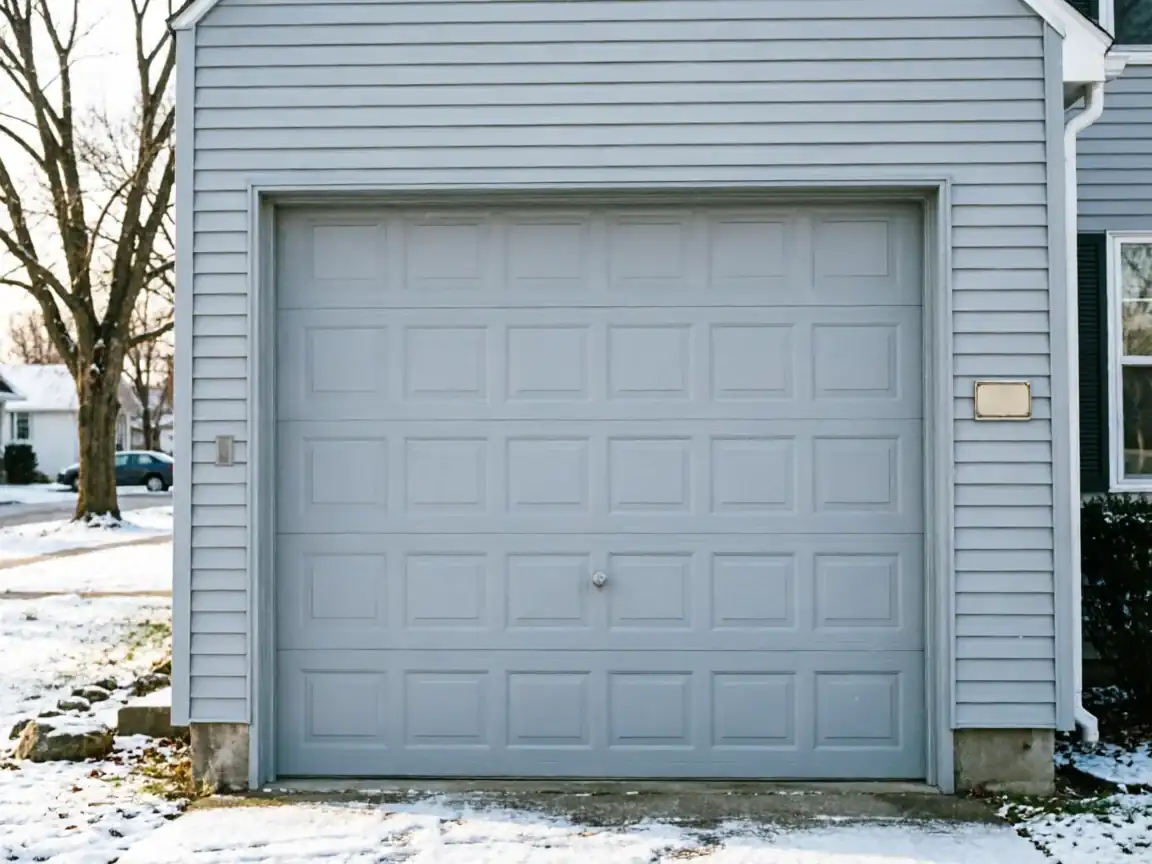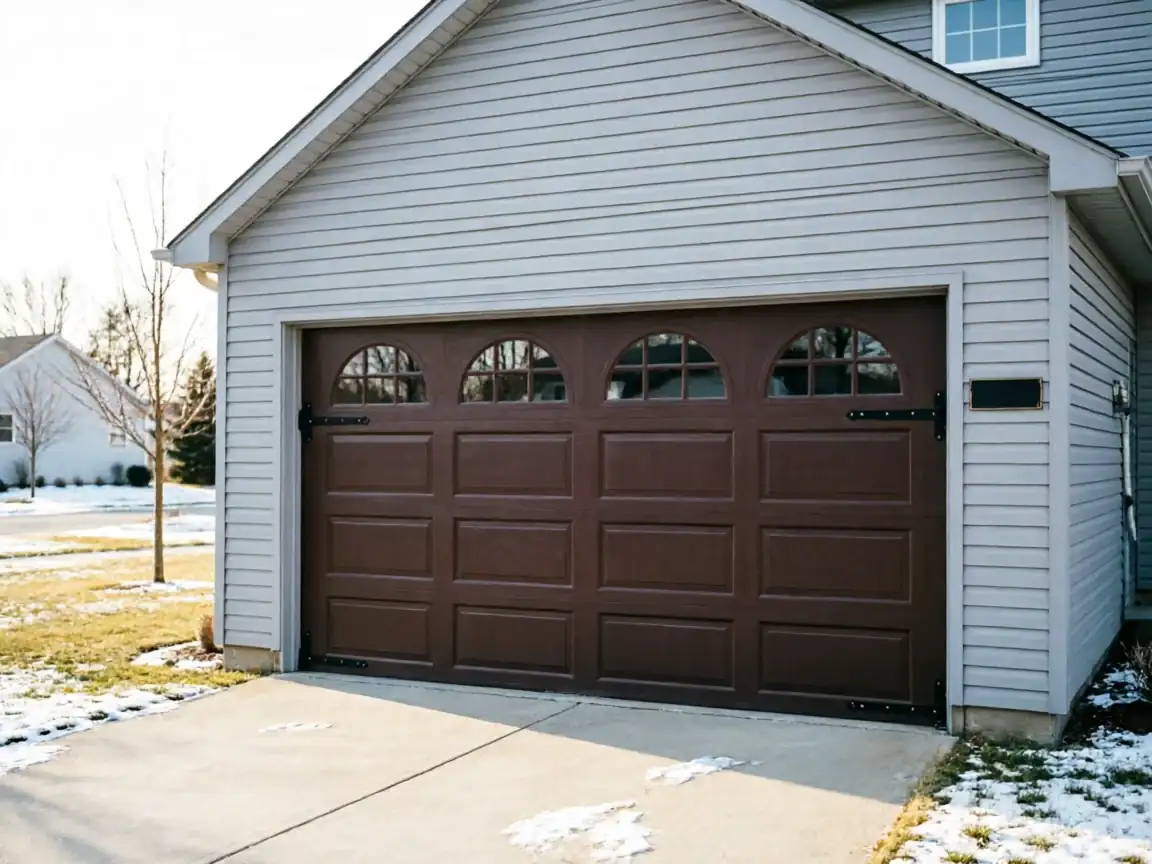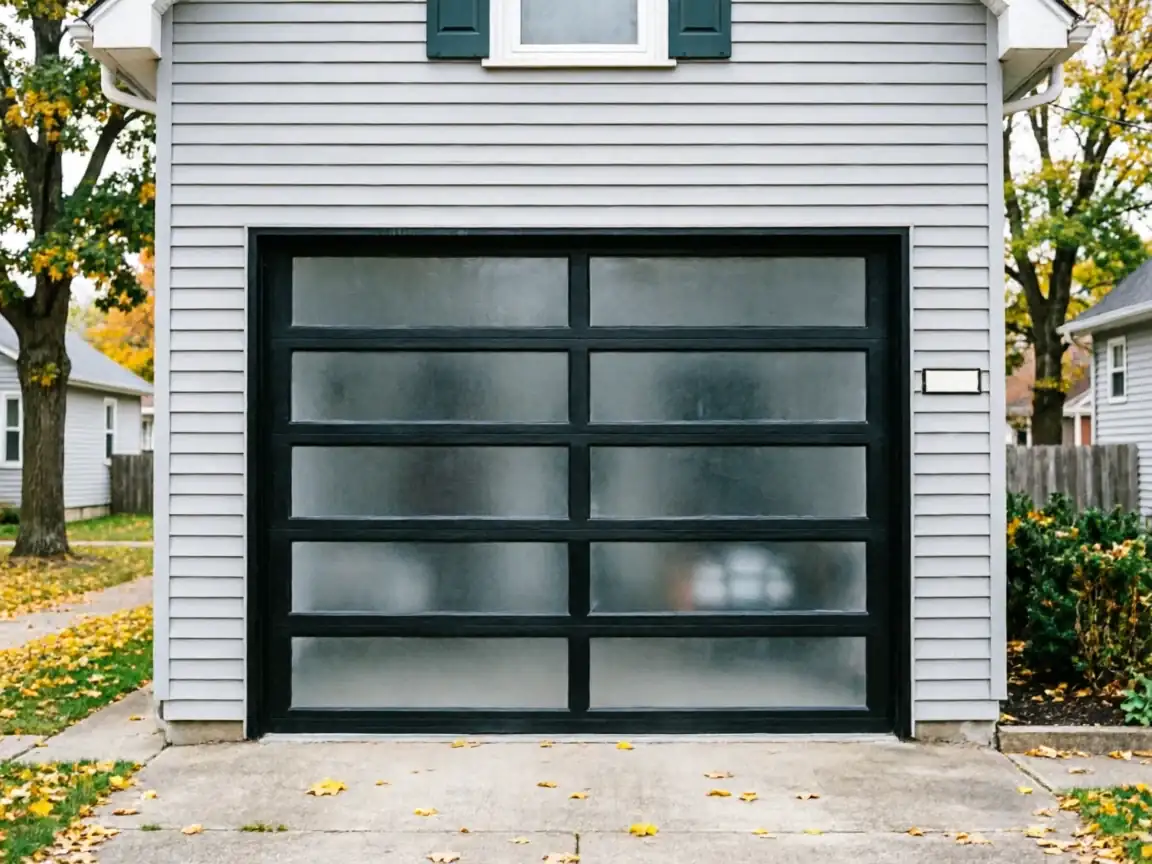
Why This Fails Locally
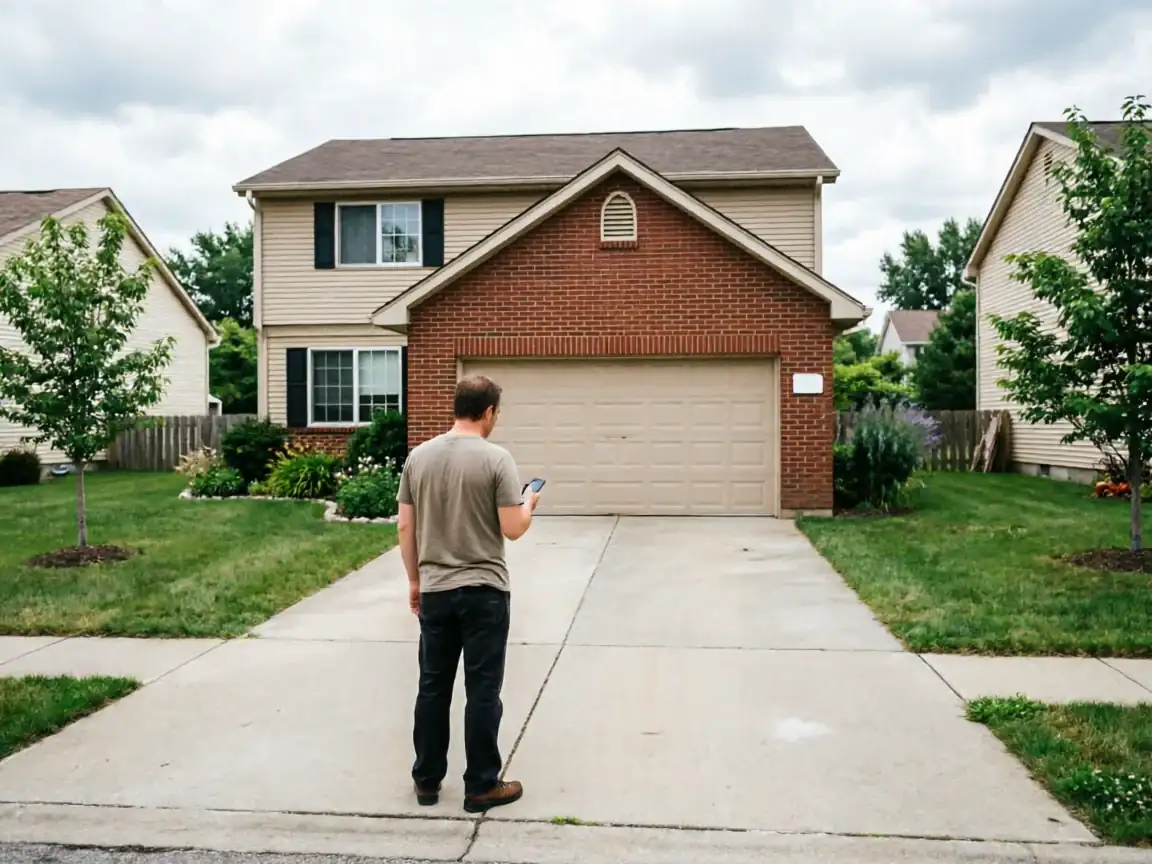
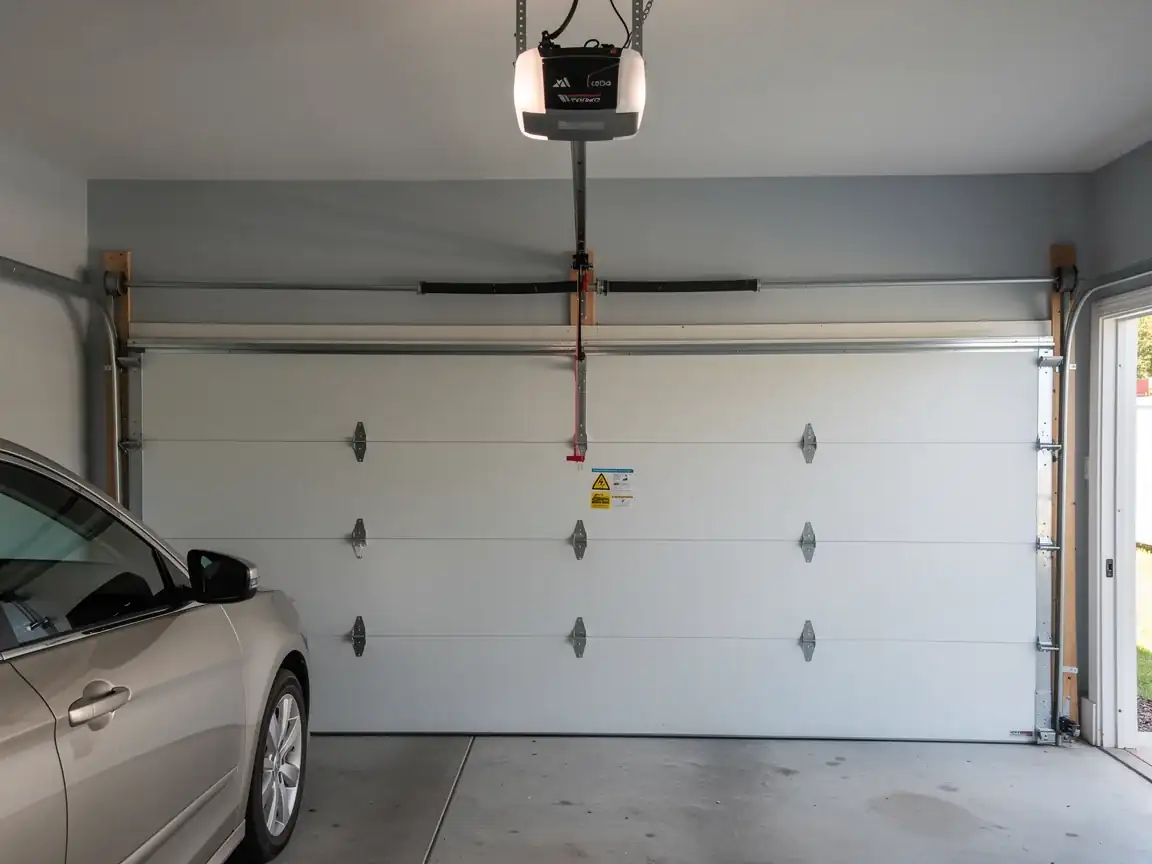
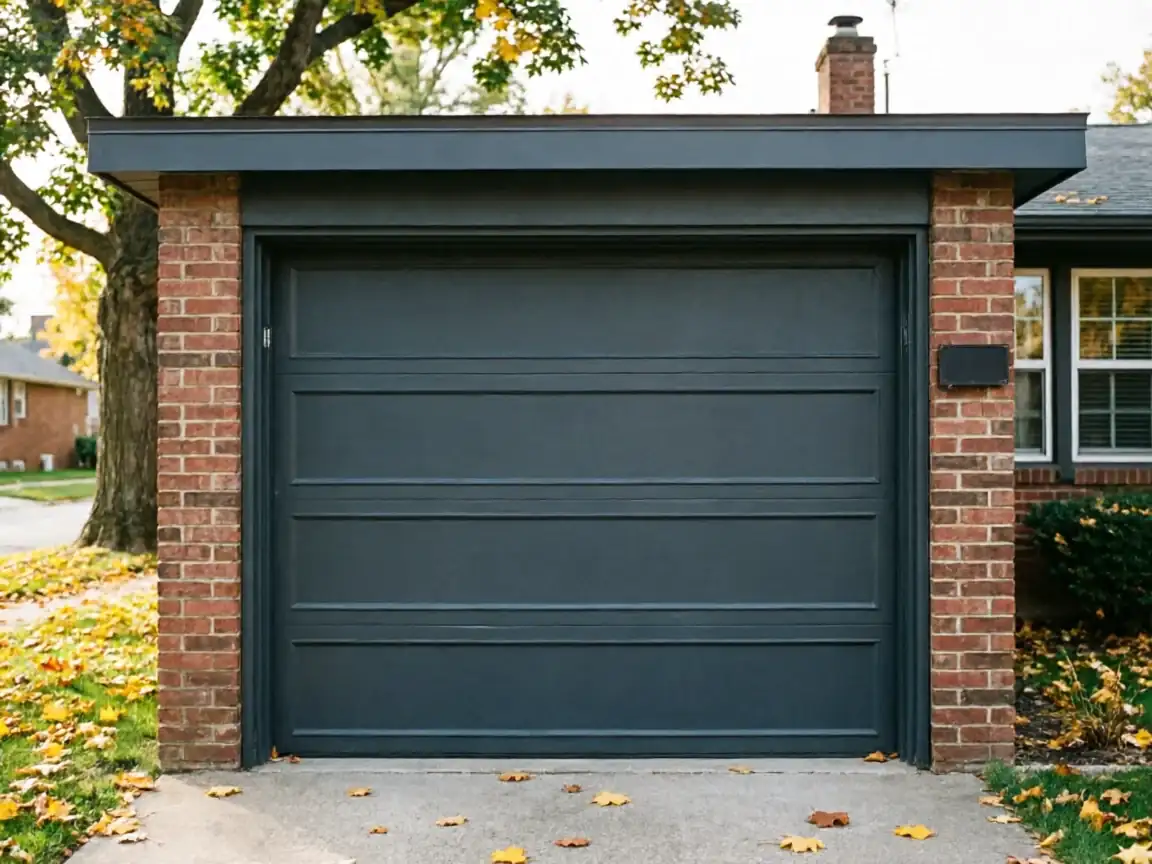
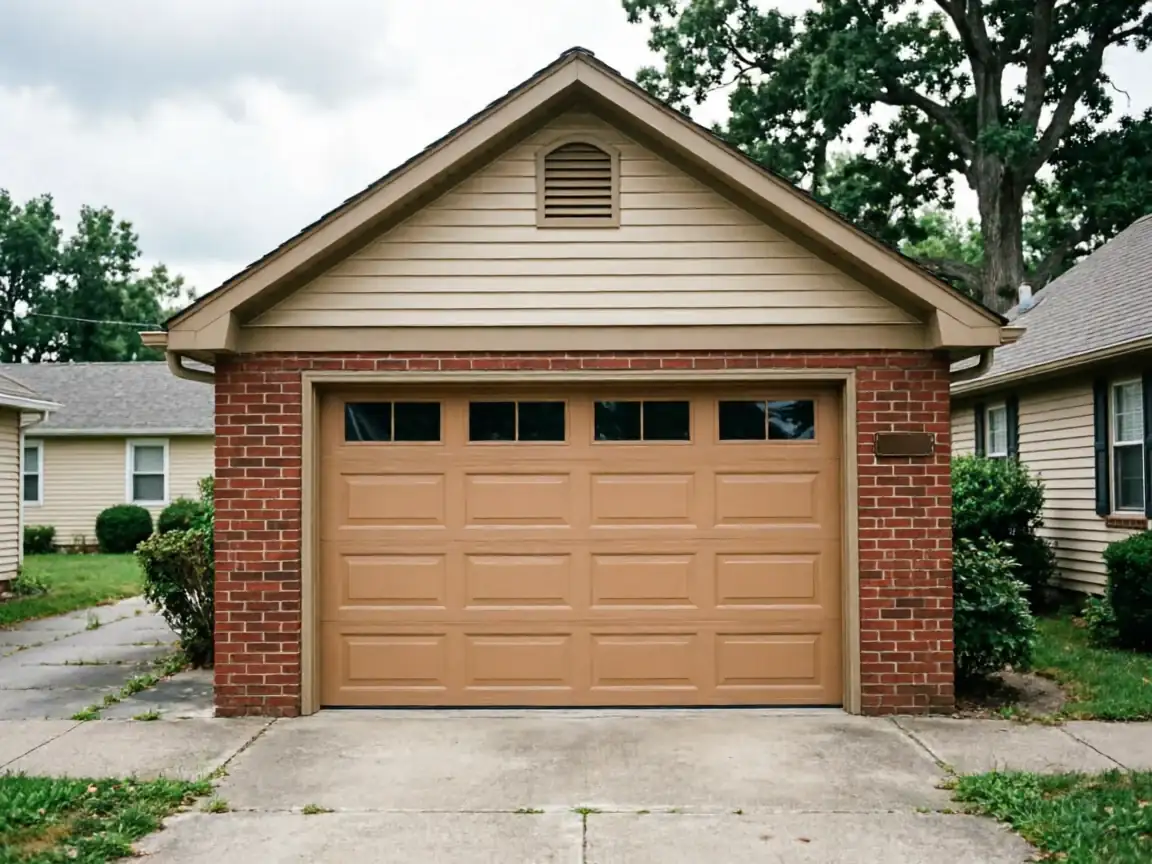
The median home in Barberton went up around 1955. That's nearly two decades ahead of the 1972 median build year across the rest of the service area we cover out of Akron. What that means on the ground: a lot of these garages still carry their original panel sections and the hinges, rollers, and end stiles that came with them from the factory. Nobody swapped them out because nothing forced the issue until a panel cracked or a car backed into one.
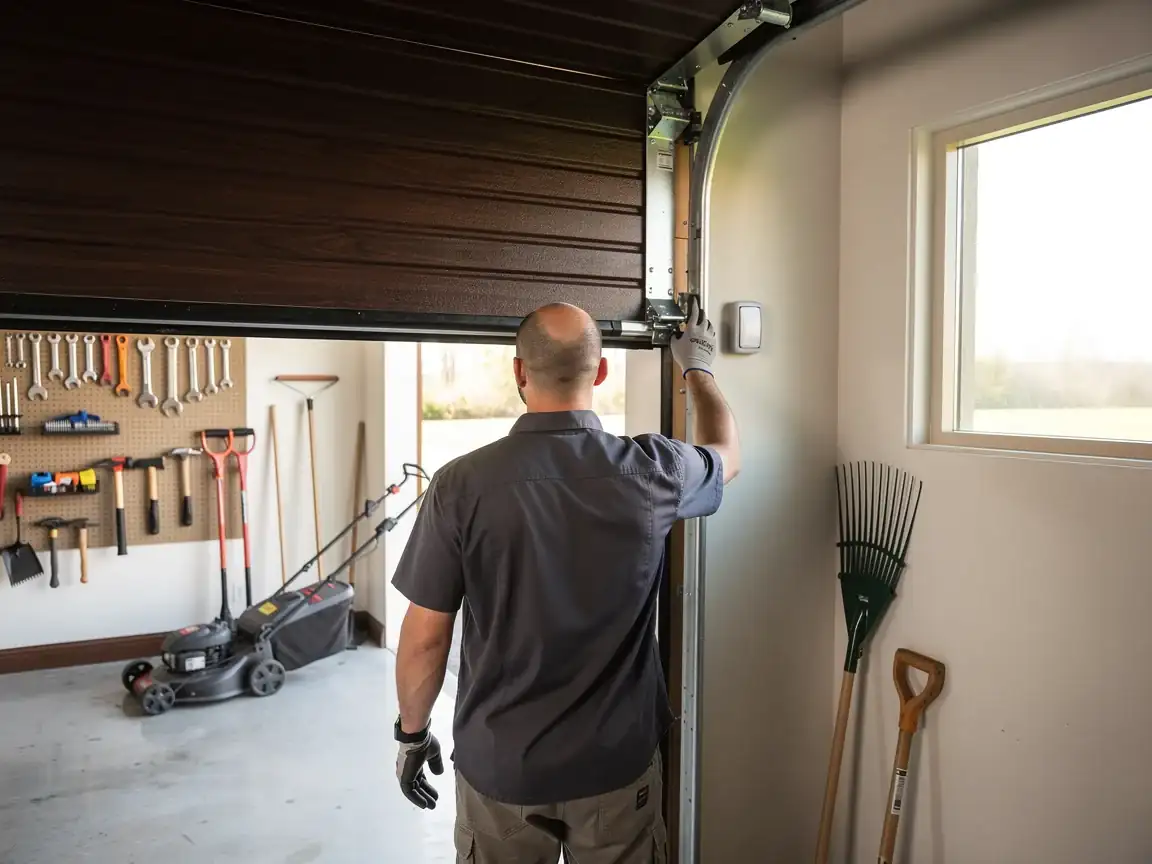
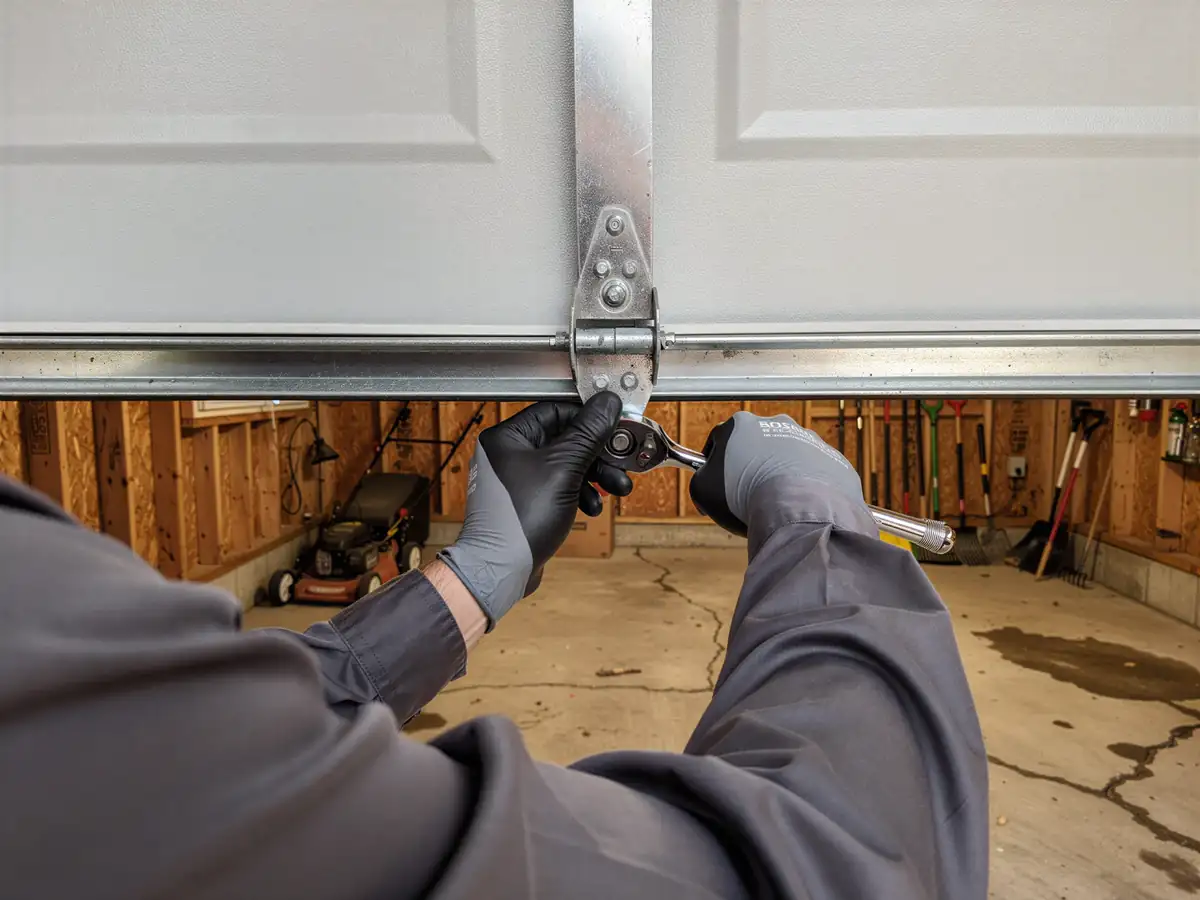
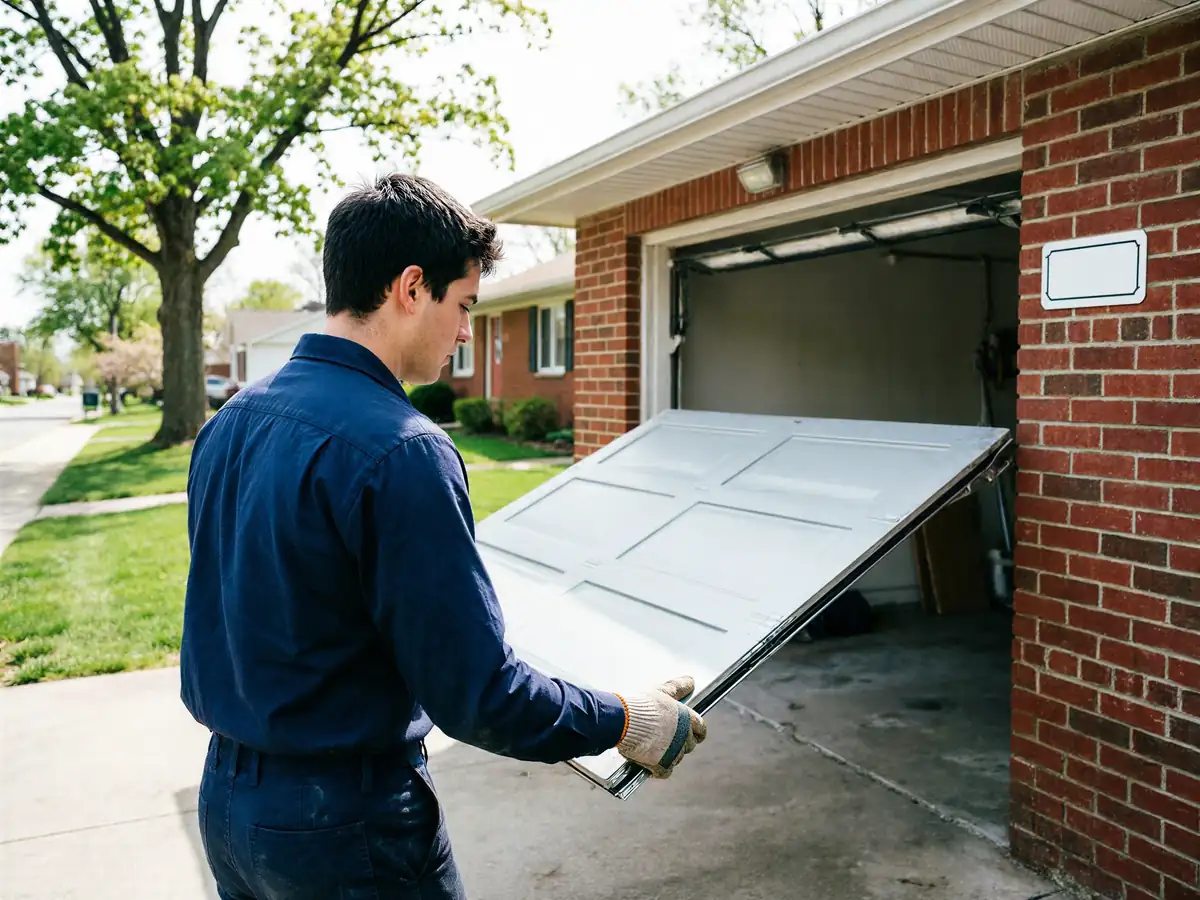
A panel from a 1955 build is usually a heavier-gauge steel section on a narrower track than what gets installed today. The fastener spacing is different. The hinge leaf length is different. When one section finally gives out, whether from a dent, rust-through at the bottom seam, or a cable that whipped loose and tore the skin, you're not just ordering a replacement panel, you're matching a profile that most suppliers stopped stocking decades ago. That's the fail point specific to a town built this early, and it's the reason a panel job here takes a different shape than the same job on a 1990s build a few miles away.
Parts We Carry
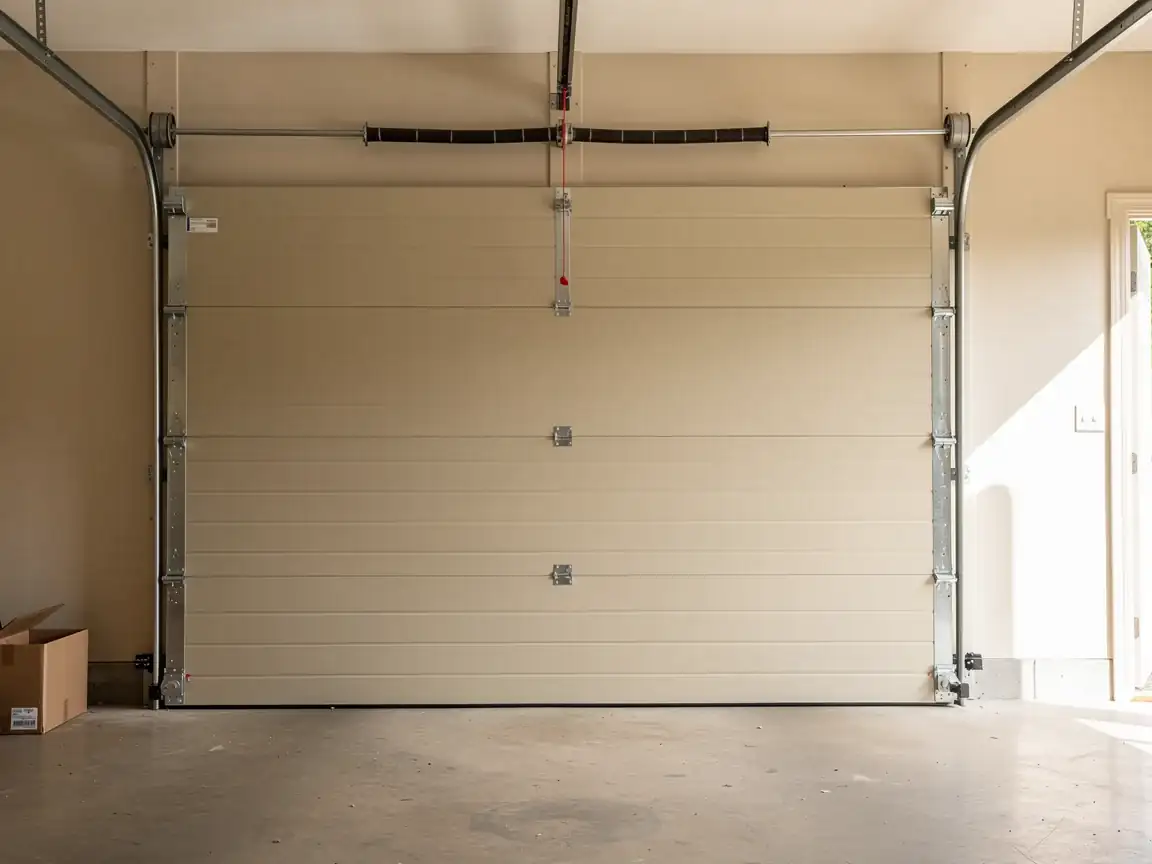
We stock current steel sectional panels in the common widths and insulation types
Along with the hardware that goes with modern track: standard hinges, nylon and steel rollers, end bearing plates, and torsion spring sets sized to today's door weights. That covers the bulk of replacement work across the service area.
What we don't carry on the truck is a shelf of discontinued 1950s panel profiles
If your door is original to a 1955-era Barberton build and the section is a style that hasn't been manufactured in years, the honest path is usually a full replacement door built to match the opening, not a patch panel hunted down from a salvage yard. We'll tell you straight which situation you're in before we quote anything.
Where This Job Goes Sideways
The most common surprise on an older Barberton door is finding out the track and hinge spacing don't match anything currently sold, so a single new panel won't bolt onto the old hardware without modification. The second surprise is paint and texture. Steel panel finishes have changed enough over the decades that a 2020s replacement panel bolted next to a 1955 original will be a visibly different shade and grain, even in the same color family.
The third issue shows up on doors that have had one panel replaced before, sometime in the last few decades, by someone else. Now you've got three different panel generations on one door, and the new section has to somehow sit between two mismatched neighbors. We've seen this more than once on homes in this part of the service area because the housing stock here is old enough to have been through more than one owner and more than one patch job.
Time on the Job
Barberton is about 7 miles from our Akron shop, so every panel job here starts with a drive, not a walk-in. We don't keep a branch or a drop point in Barberton, which means the crew loads the panel, the hardware, and the tools before heading out, same as for any job this distance from the shop.
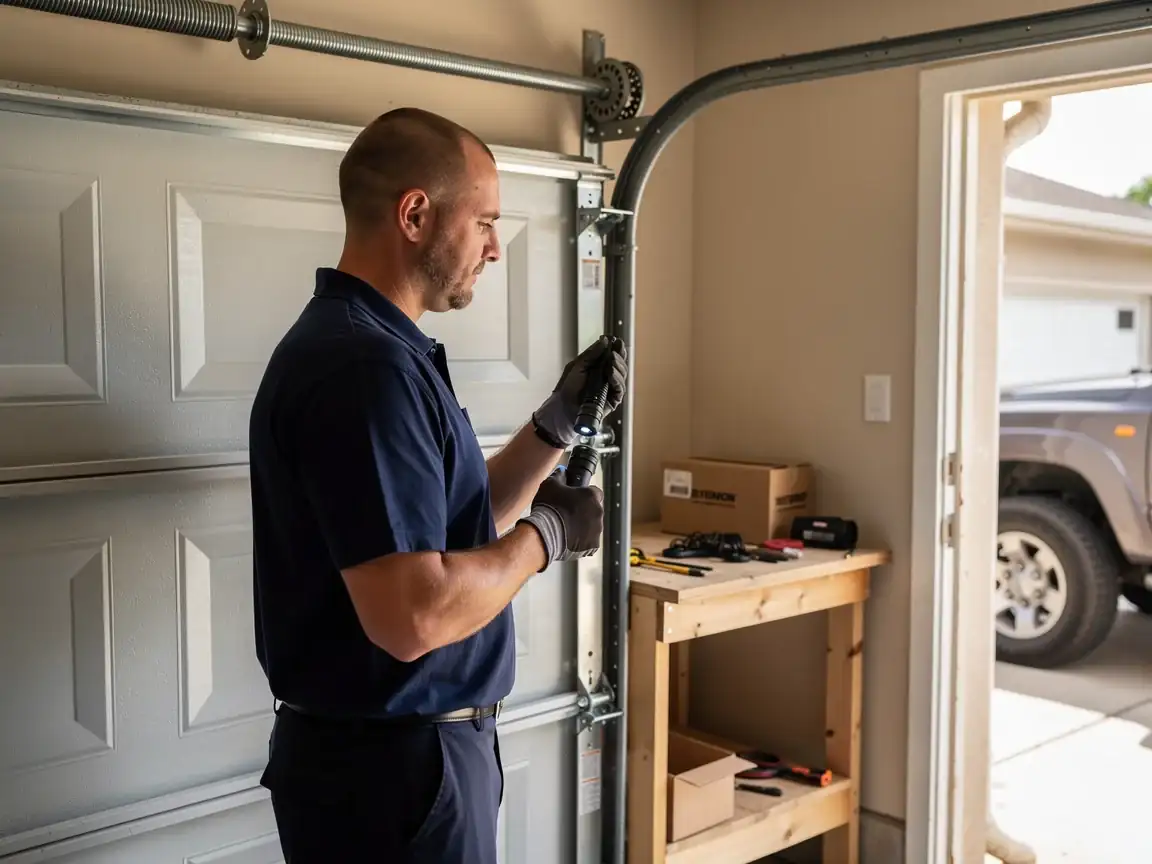
Once on site, a straightforward single-panel swap on compatible hardware is a same-visit job. A door where the track or hinge spacing doesn't match current stock takes longer, because that's a measure-first, order-second situation rather than something we finish in one trip.
The DIY Question
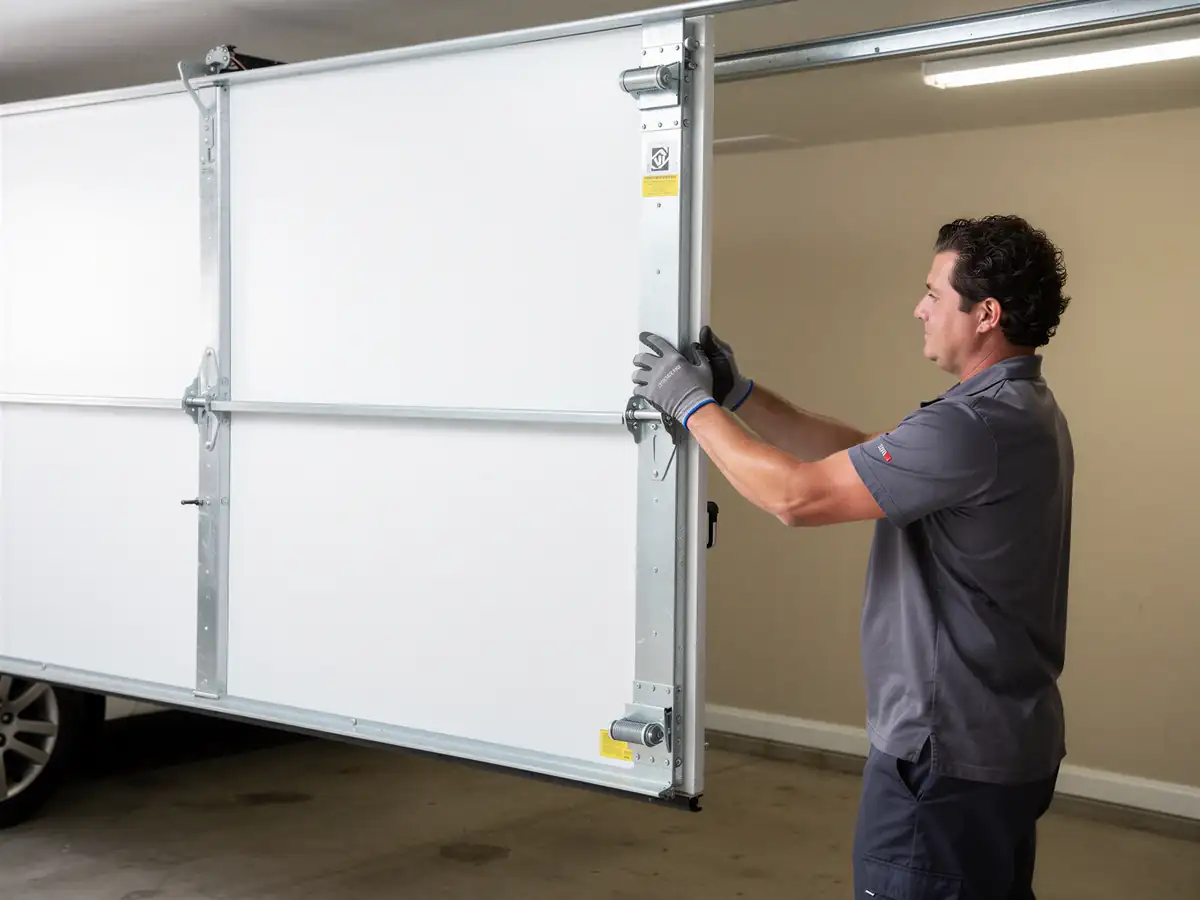
Swapping a single garage door panel looks like a bolt-off, bolt-on job, and on some doors it is
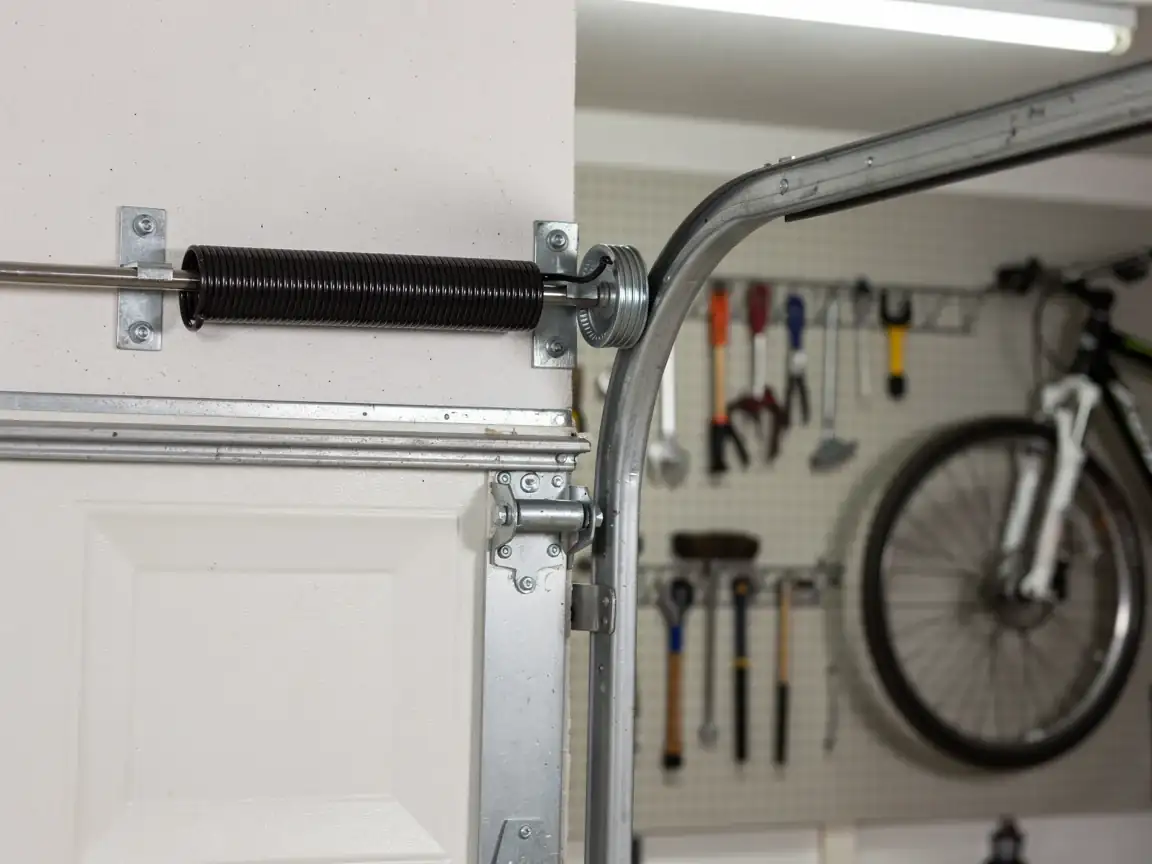
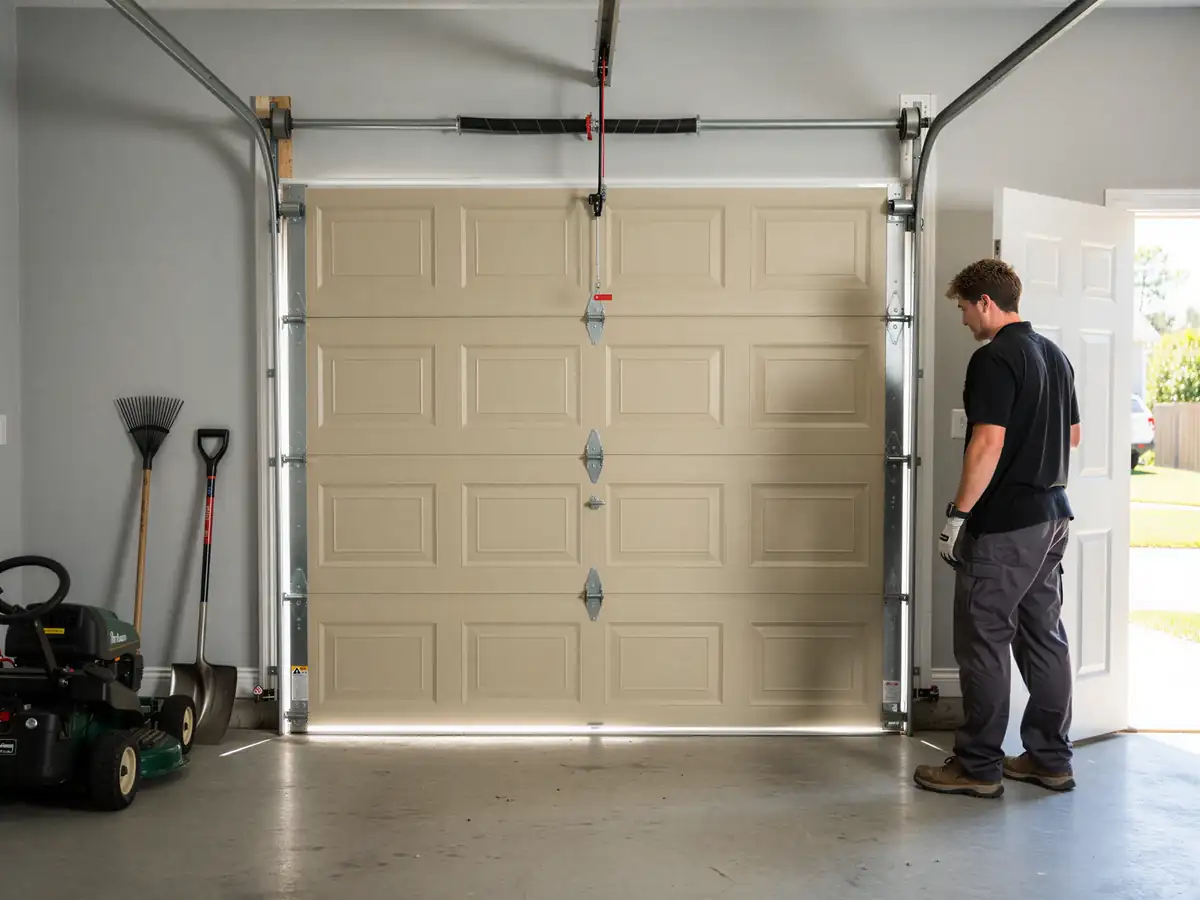
The part that trips people up on an older Barberton door is torsion. If the door uses a torsion spring system and you disconnect the wrong bracket or back off the wrong bolt while the spring is still wound, that spring lets go with enough force to break a bone or worse. We're not going to pretend otherwise.
If you're dealing with a bent panel on a newer door where the hardware is current stock
A careful homeowner with the right tools can often do the swap. If your door still has its original 1955-era hardware and you're not sure what you're looking at, that's the point where a wrong move costs more than the service call would have.
The Cost of This Job
Median household income in Barberton runs $48,943, well under the $80,612 median across the rest of the service area we cover. That gap matters on a panel job, because it changes which answer makes sense: patch the one panel and keep the door running, or put that money toward a full door replacement if the hardware is already failing in more than one spot.
We don't have a published price list here, and we're not going to invent one. What we will say is that a single compatible panel costs less than a custom-matched or discontinued-profile replacement, and a door that needs new hardware along with the panel costs more than one that just needs the skin swapped. The honest number comes after we've looked at what's actually on your garage.