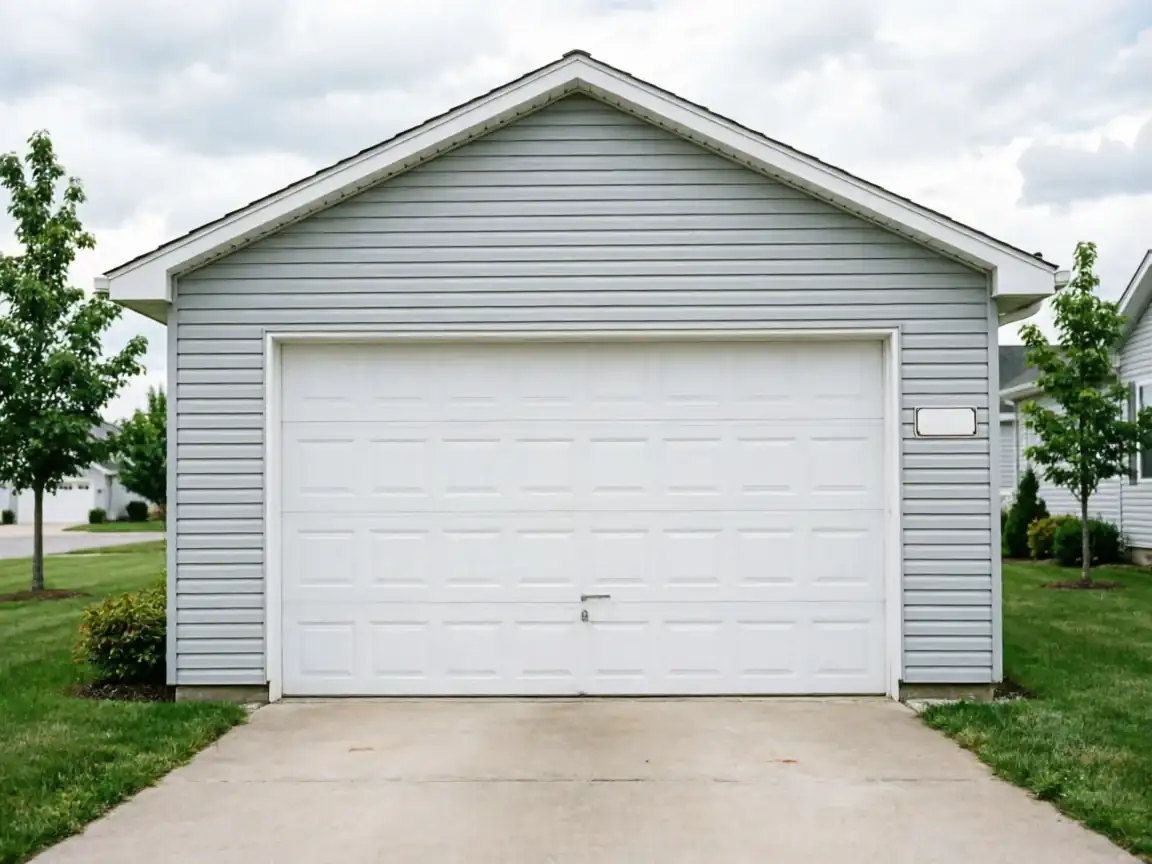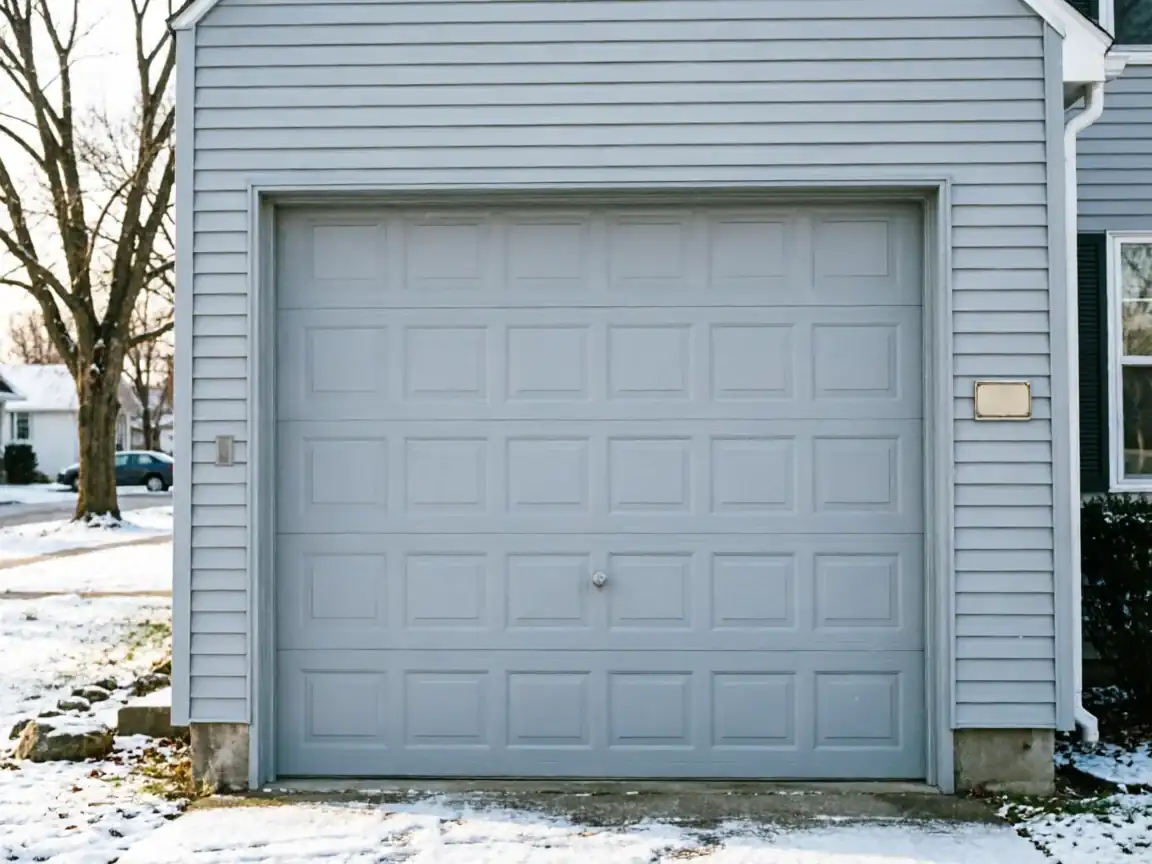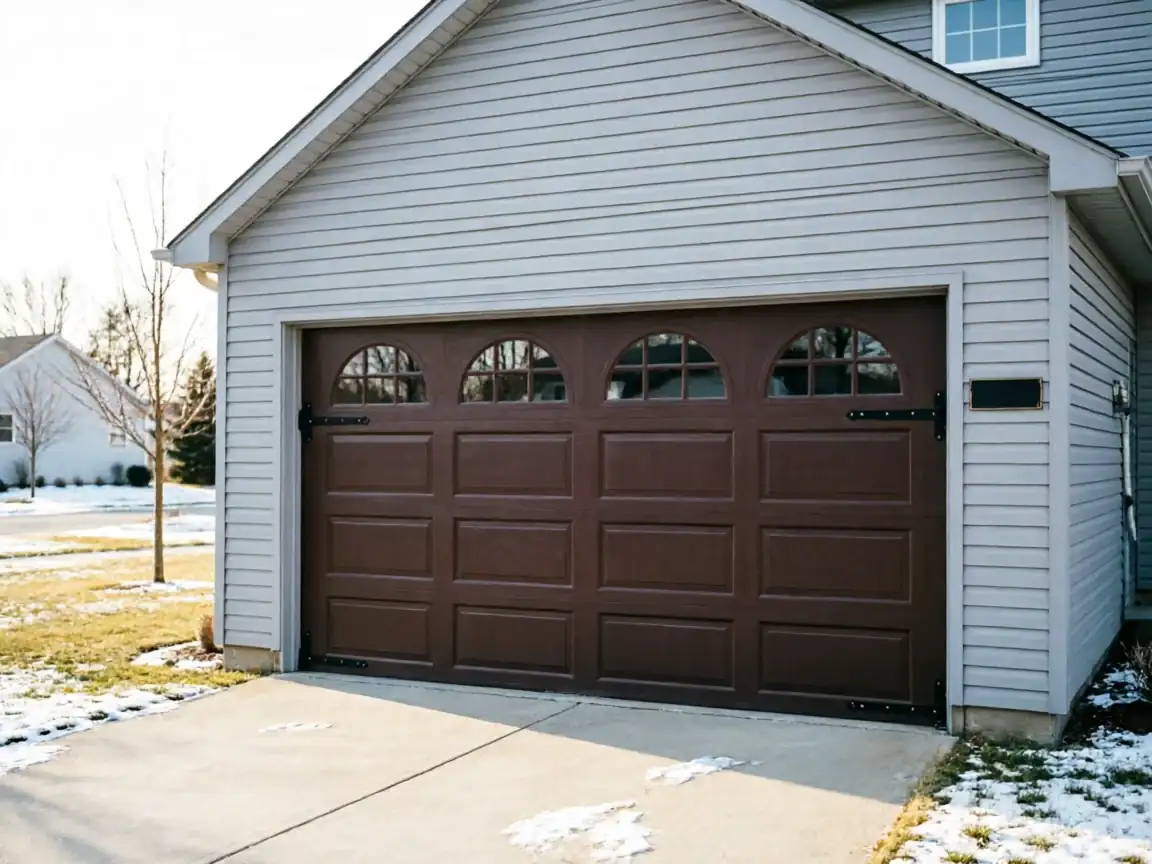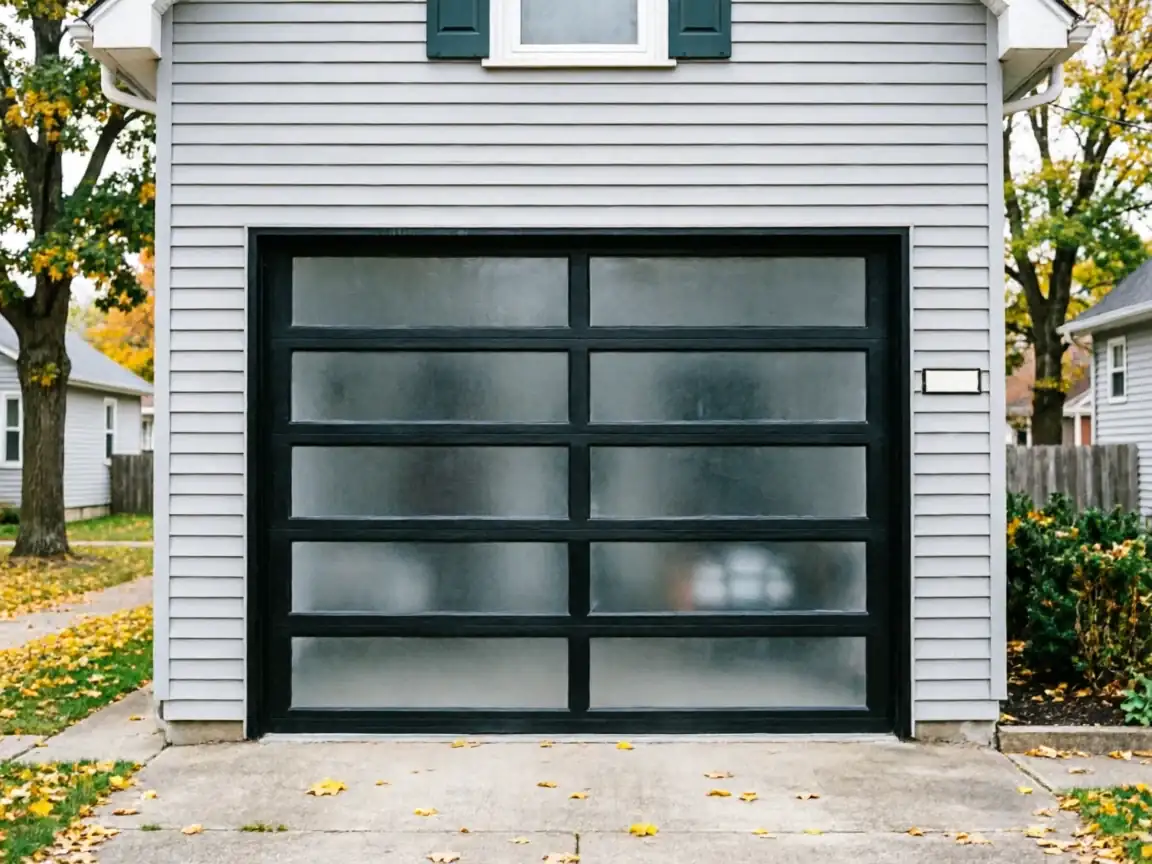
The Symptom
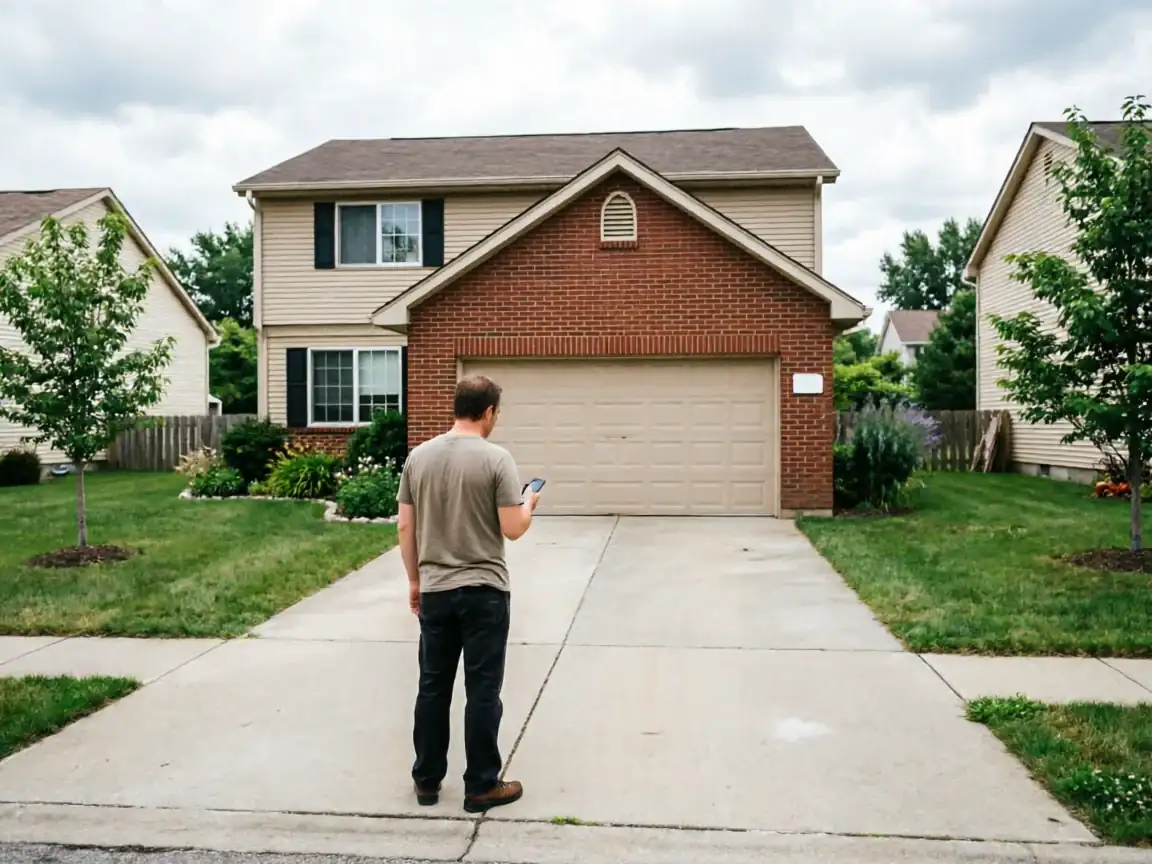
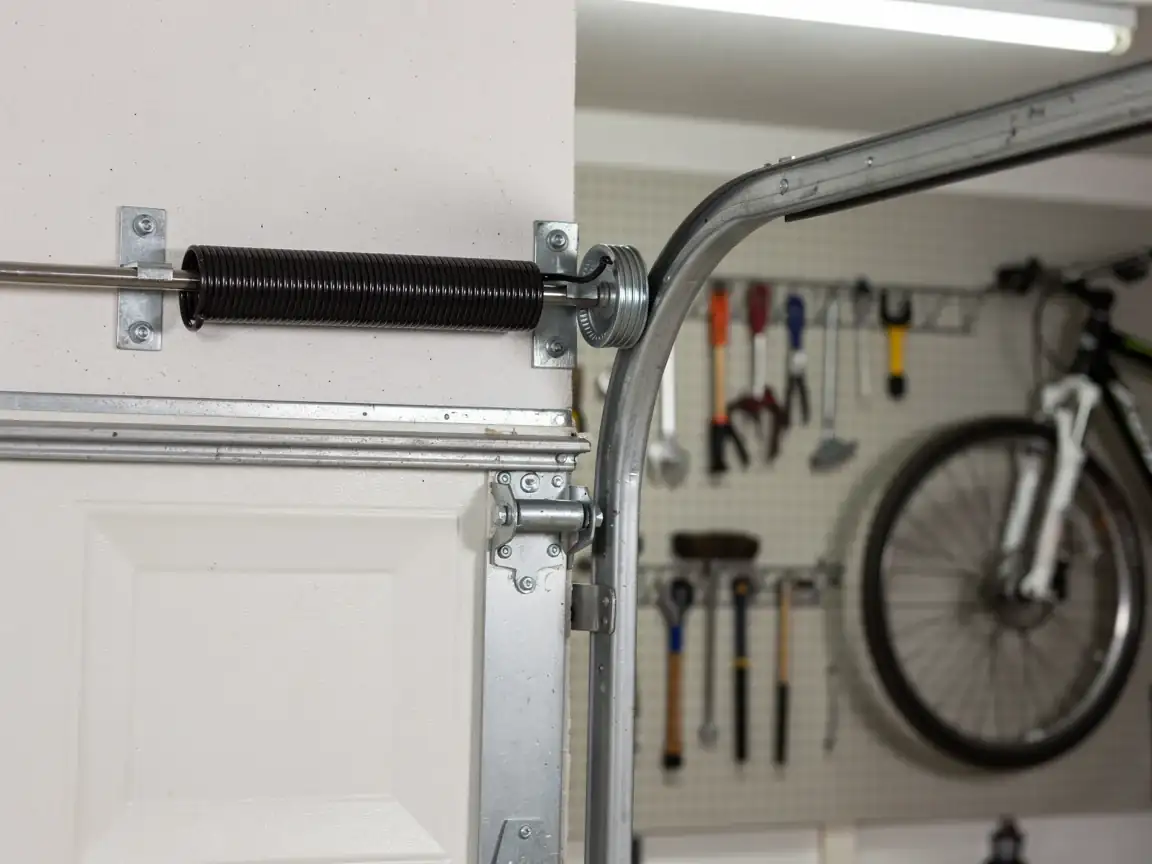
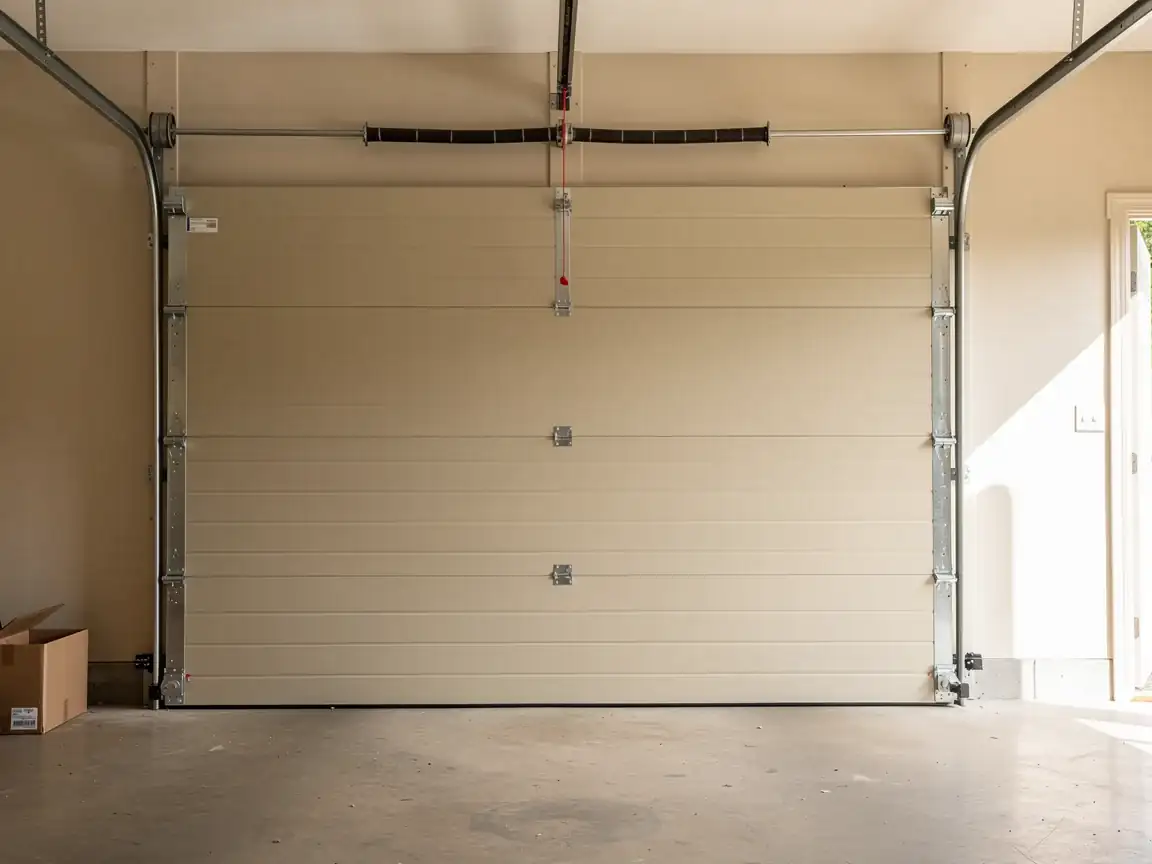
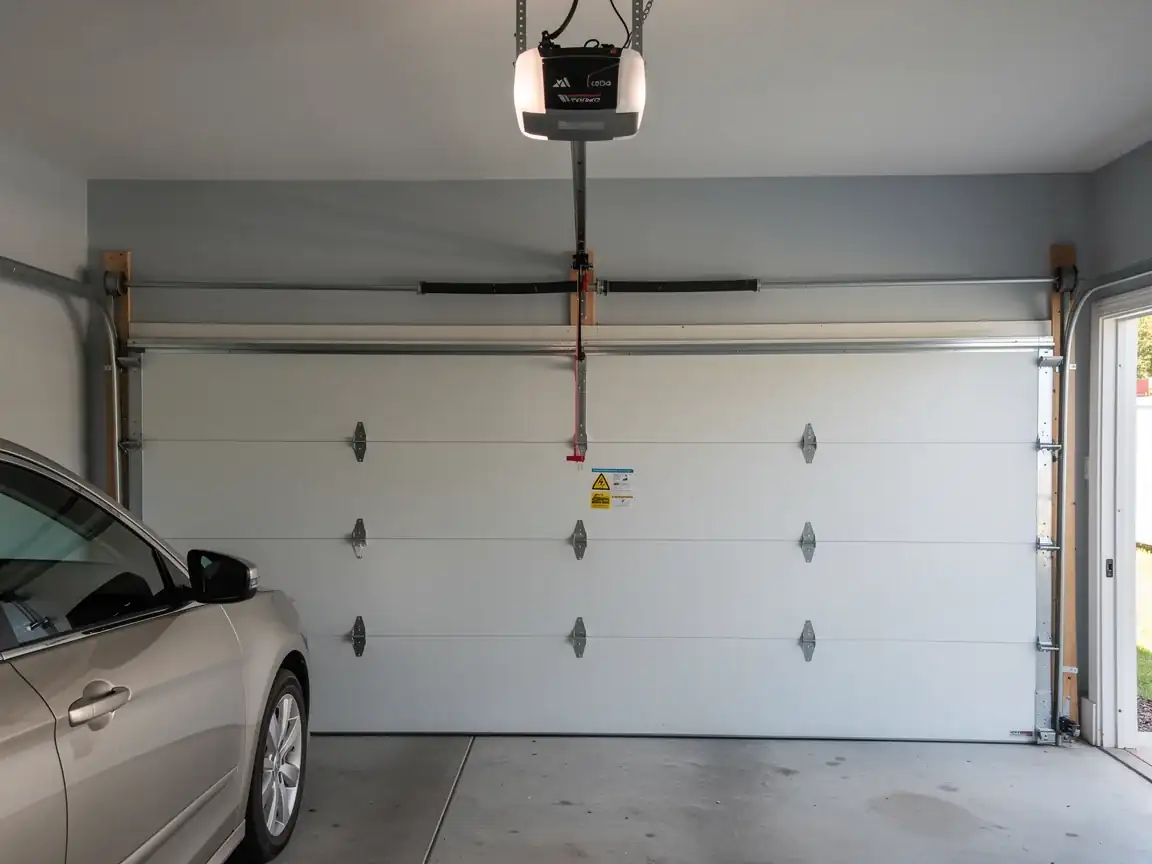
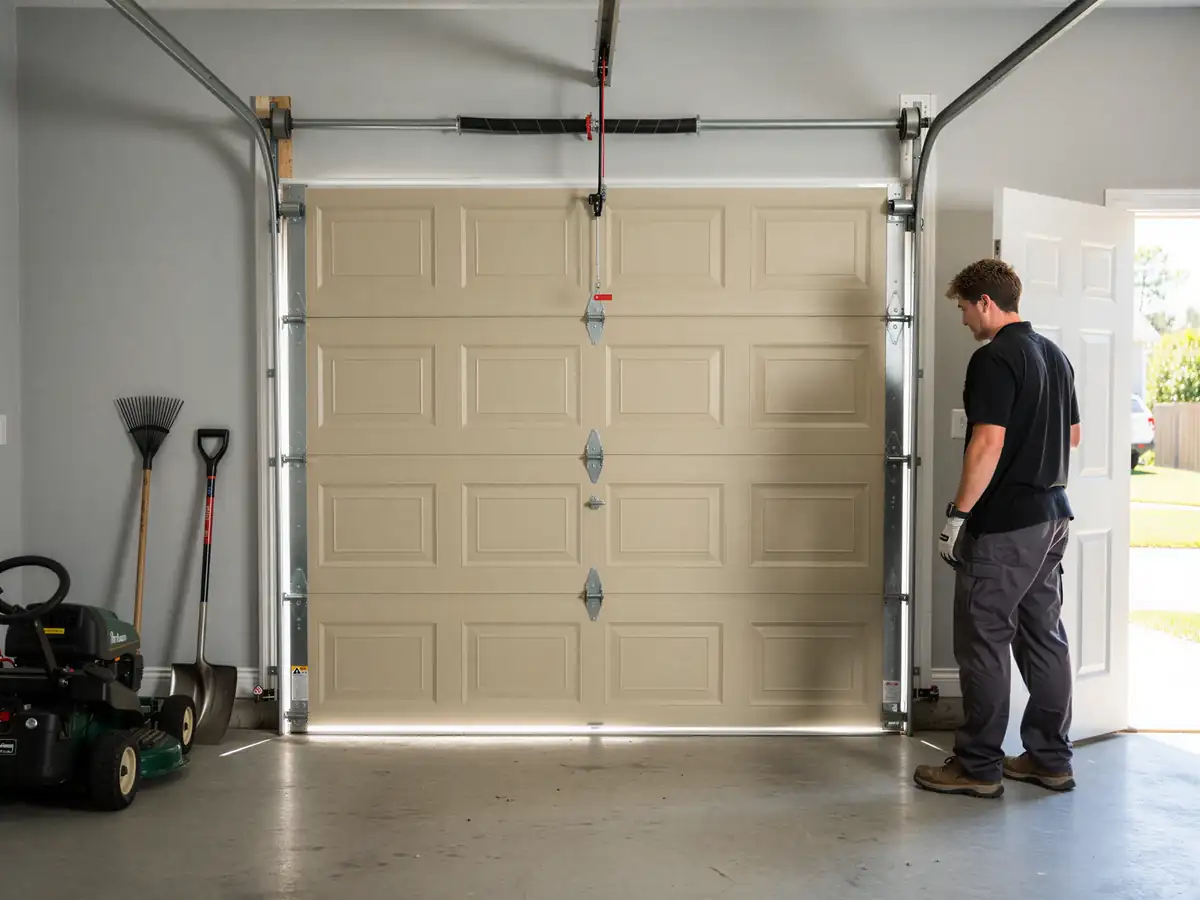
The door won't move, or it moves and then slams the last six inches. Sometimes it's a loud bang from the garage followed by a door that won't budge - that's almost always a torsion spring letting go. Other times the opener runs but the door just sits there, which usually means a cable has come off the drum or a roller has jumped the track. On older sectional doors you'll also see the bottom panel bowing in the middle, especially after a cold week, because the steel has thinned where moisture sat.
If you're hearing a grinding sound every time the door travels, that's a roller or bearing wearing out, not something that fixes itself with oil. And if the door reverses right after it starts closing, the safety sensors are either misaligned or blocked - check that before you call anyone out, since it's a two-minute fix half the time.
We see all of these across Akron, from Downtown out through and the pattern tracks pretty closely with how old the door and hardware are, not the brand.
Why This Fails Locally
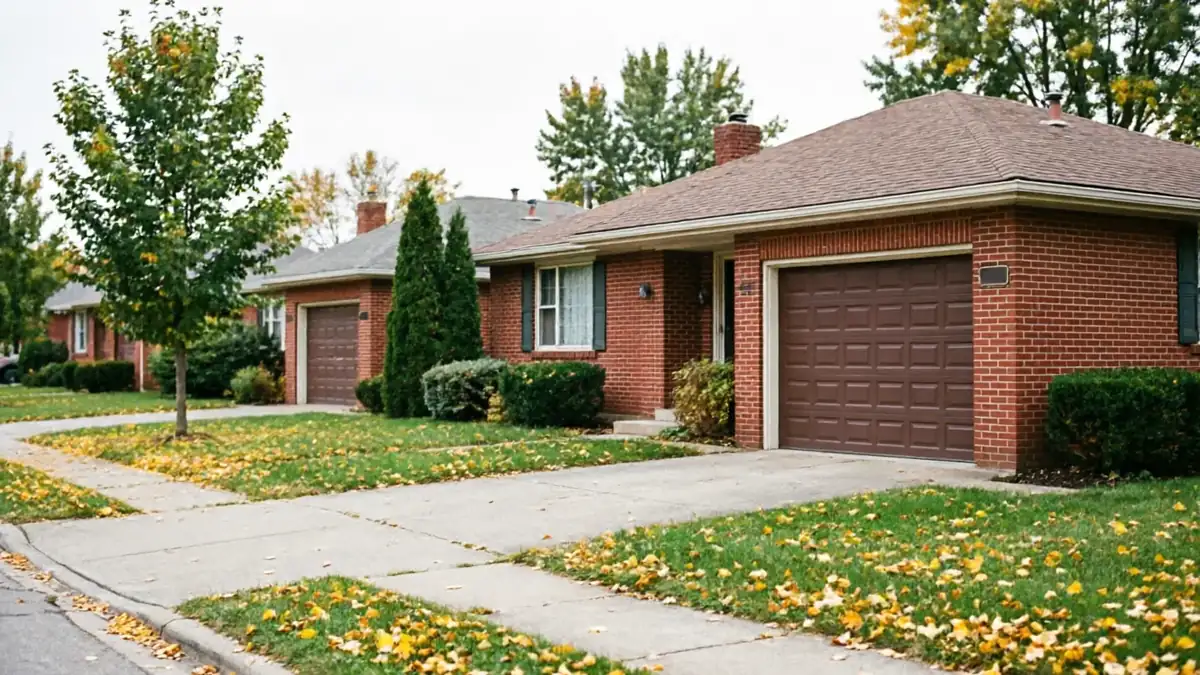
Most of the housing in this service area went up between 1952 and 2004
With the median build year sitting at 1972. That means a huge share of garage doors and openers around Akron are original or close to it - steel sectional doors on torsion springs that have been cycling for forty-plus years without ever being rebalanced. Springs are rated for a number of cycles, not a number of years, and a door that age has usually burned through its rating already.
The climate makes it worse
Akron sits in a severe cold band, and steel contracts in the cold. A spring that's already fatigued takes more load on a January morning than it does in July, which is why we get more snapped-spring calls right after a hard freeze than any other time. Track alignment suffers too - wood door frames built in the 60s and 70s shift seasonally, and a track bolted to a frame that's moved a quarter inch is a track that binds the rollers.
Across the 42 named areas we cover, the specifics vary
Some neighborhoods lean newer, some are almost entirely original stock - but the underlying issue is the same: hardware from the 1972-era median build date meeting Ohio winters it wasn't maintained for.
Time on the Job
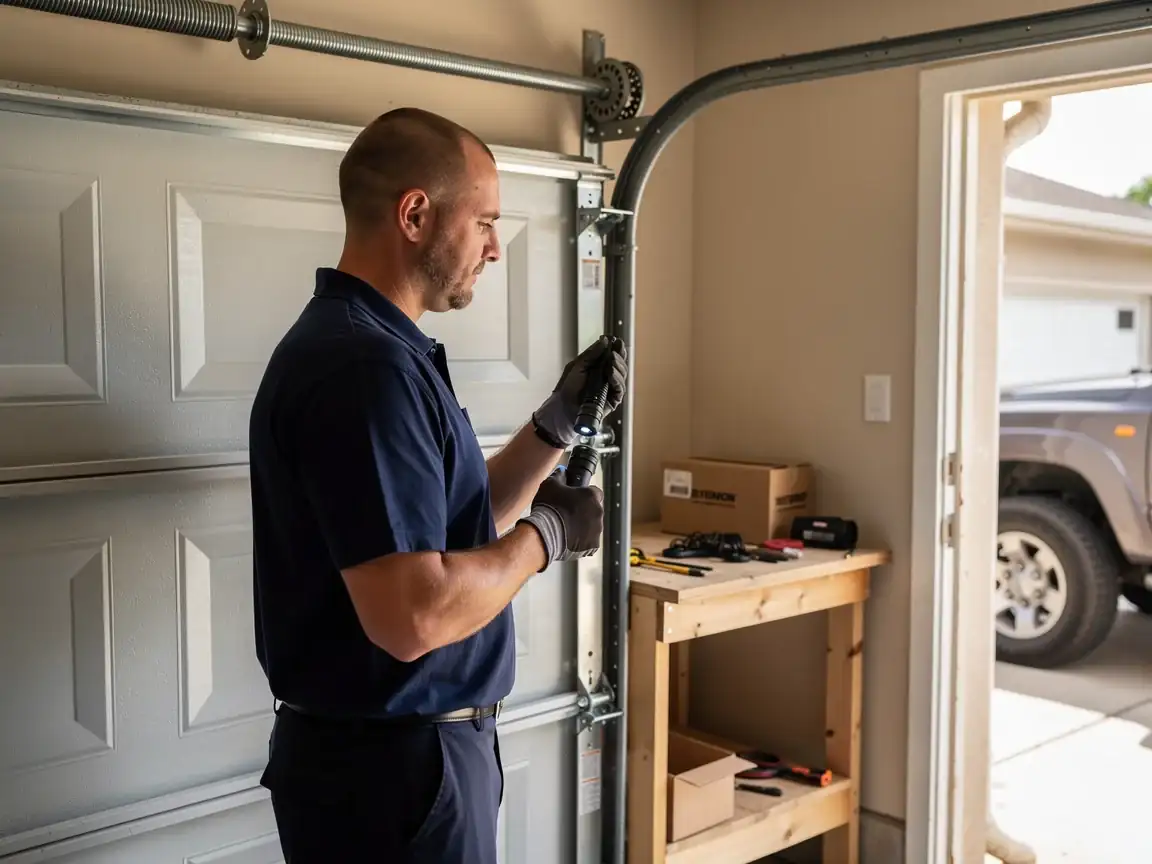
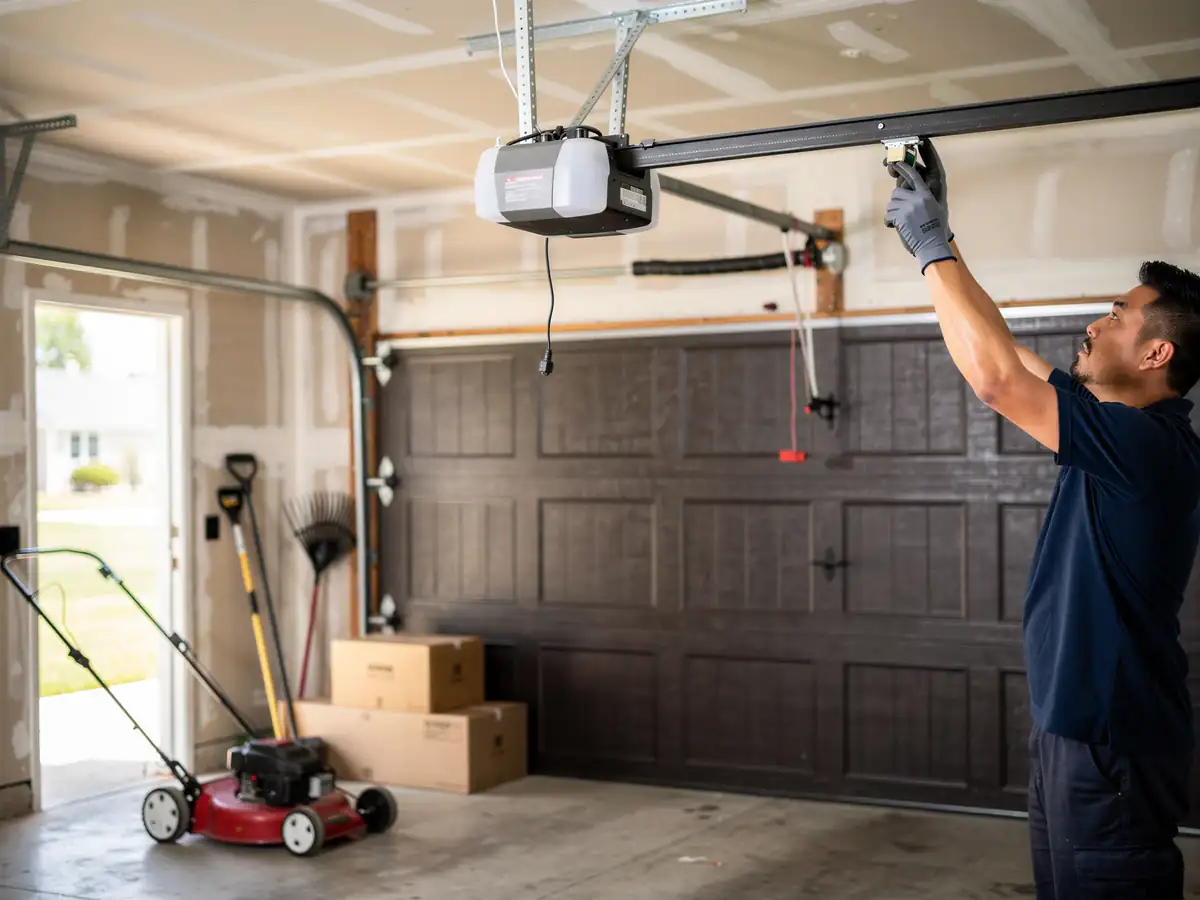
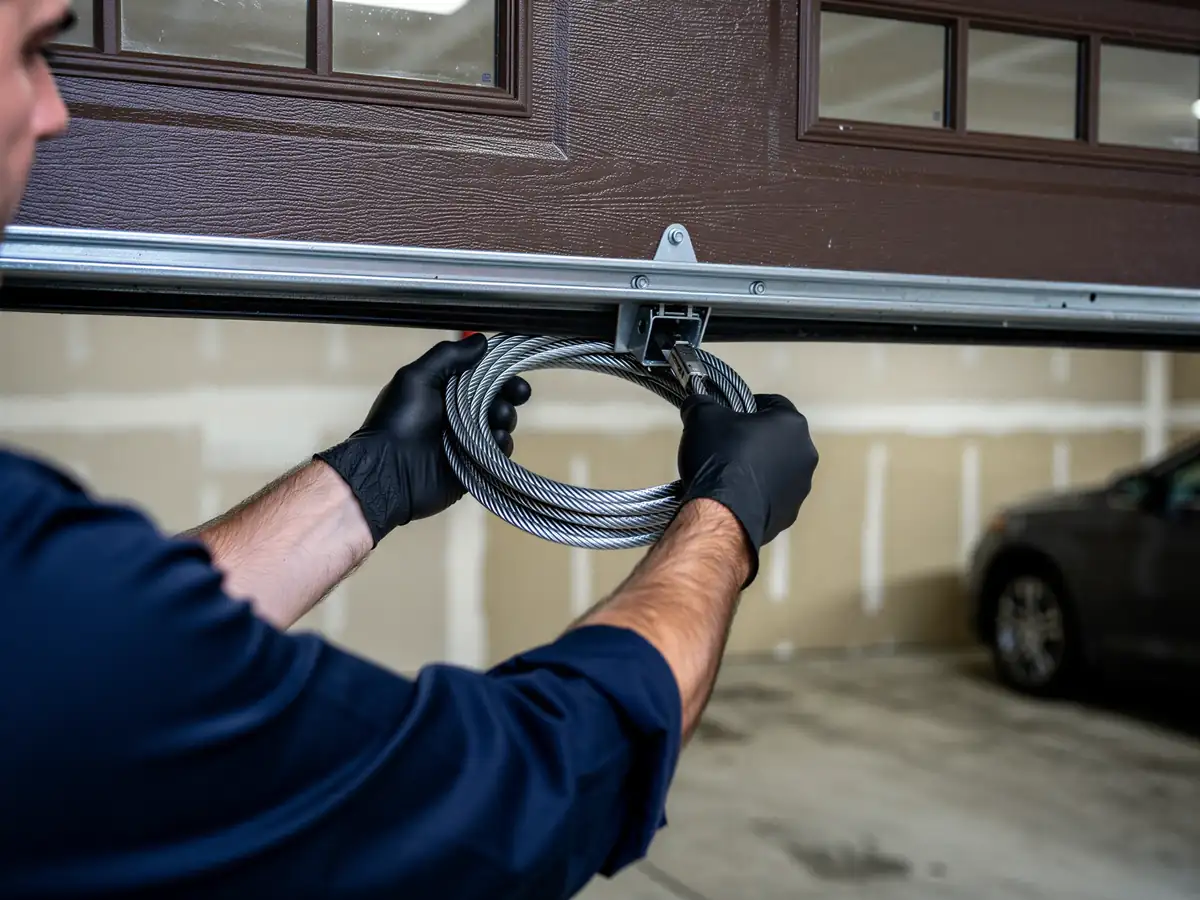
A straightforward torsion spring swap or cable replacement is usually a same-visit job once we're on site - we carry common spring sizes because this is the single most frequent call we get in a housing stock this age. Opener issues take longer to diagnose than to fix, since the logic board, the sensors, and the drive gear all look like the same symptom from the homeowner's side.
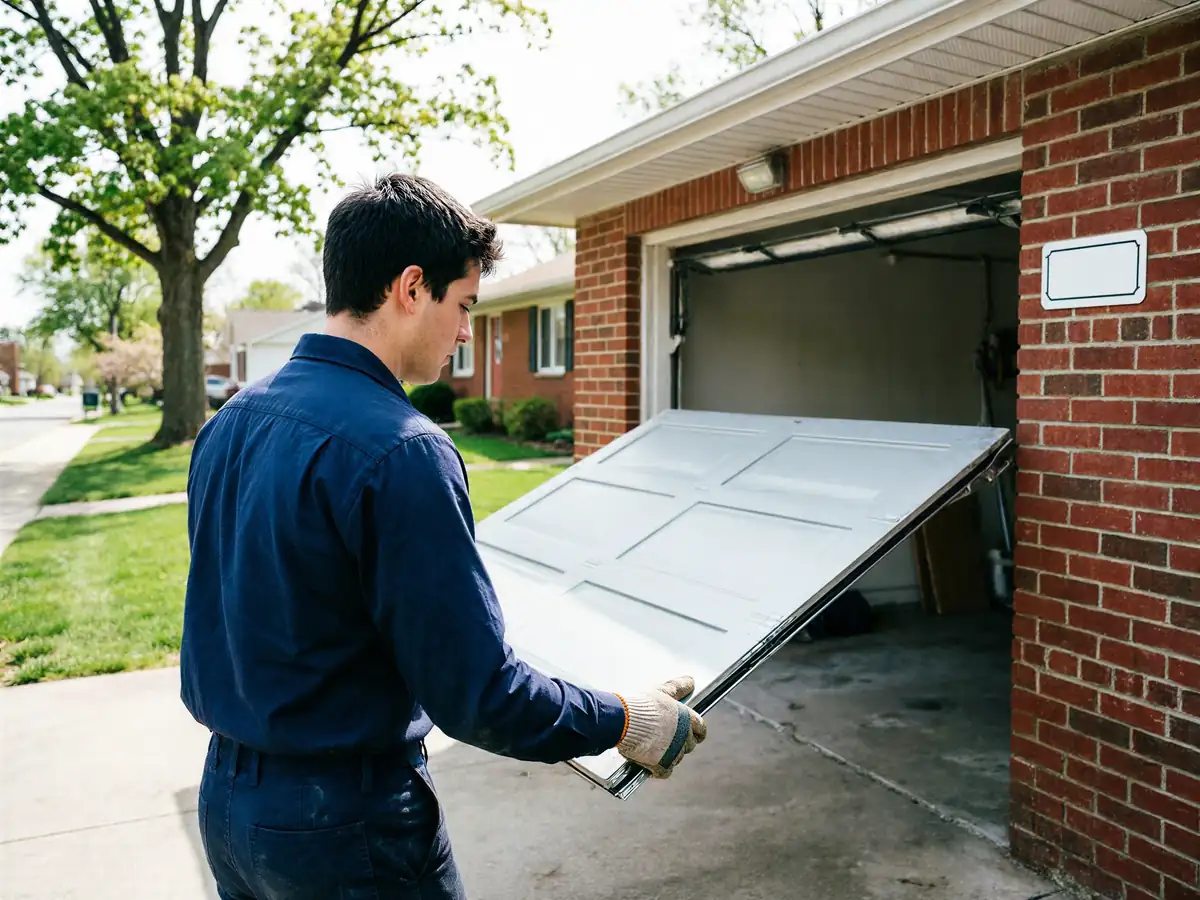
What takes longer is anything involving a bent track or a panel that's rusted through at the bottom - on a door built before the newer galvanized coatings were standard, that bottom panel sometimes isn't worth patching. We'll tell you straight if replacement beats repair; we don't stretch a repair ticket on a door that's going to fail again in six months.
We don't stock every opener logic board on the truck - some models need a part ordered, and we'll tell you that up front instead of promising a same-day fix we can't deliver.
How We Fix It
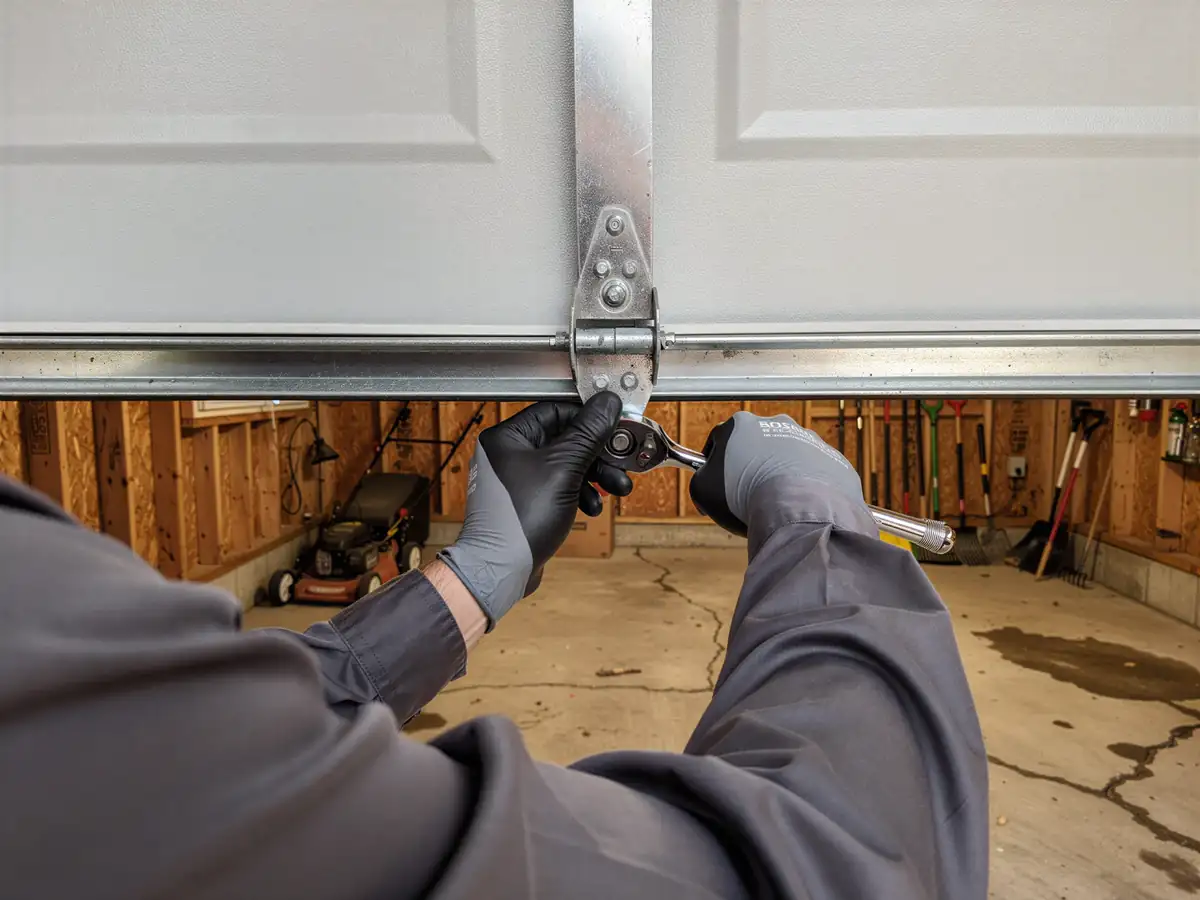
For a broken torsion spring, we match the spring to the door's actual weight and drum size rather than guessing off the old spring's wind - a lot of original 1960s and 70s doors were under-sprung to begin with, which is part of why they fail young. We rebalance the door on new springs set to the correct cycle rating for a cold-climate install, not a generic one.
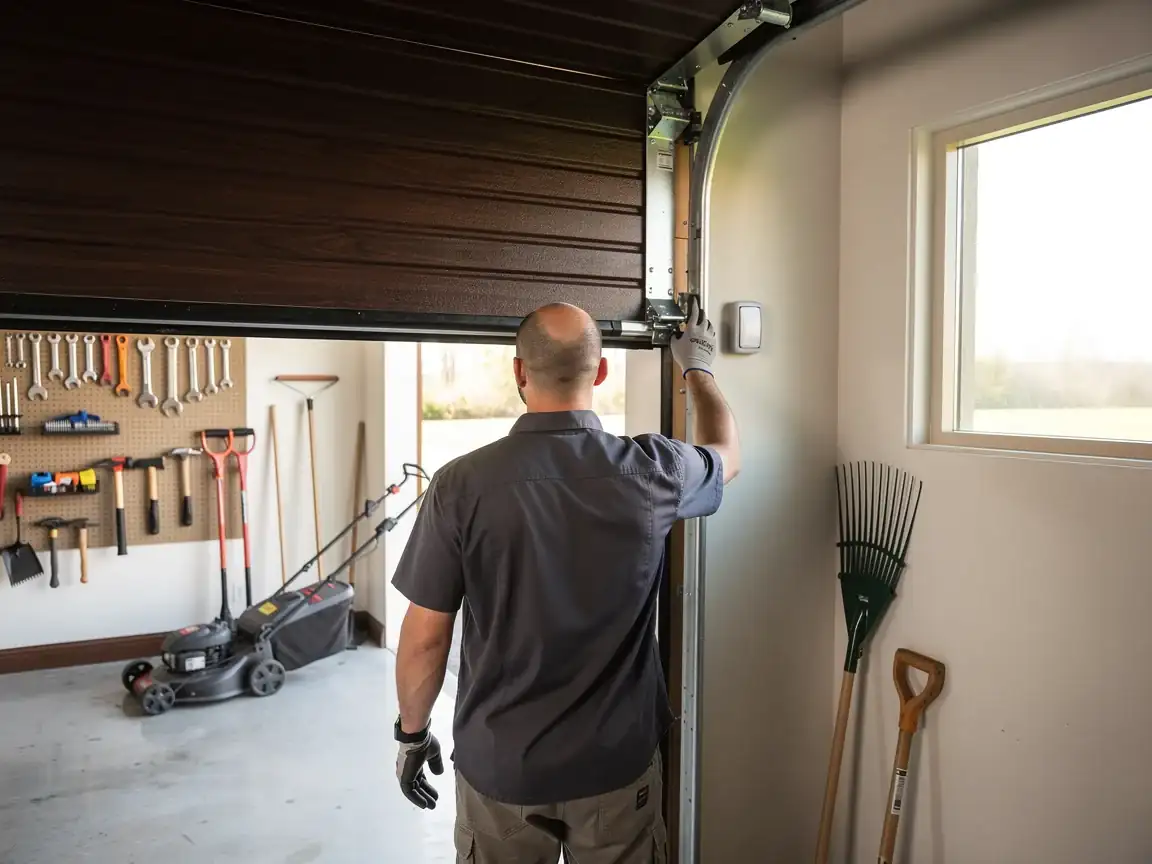
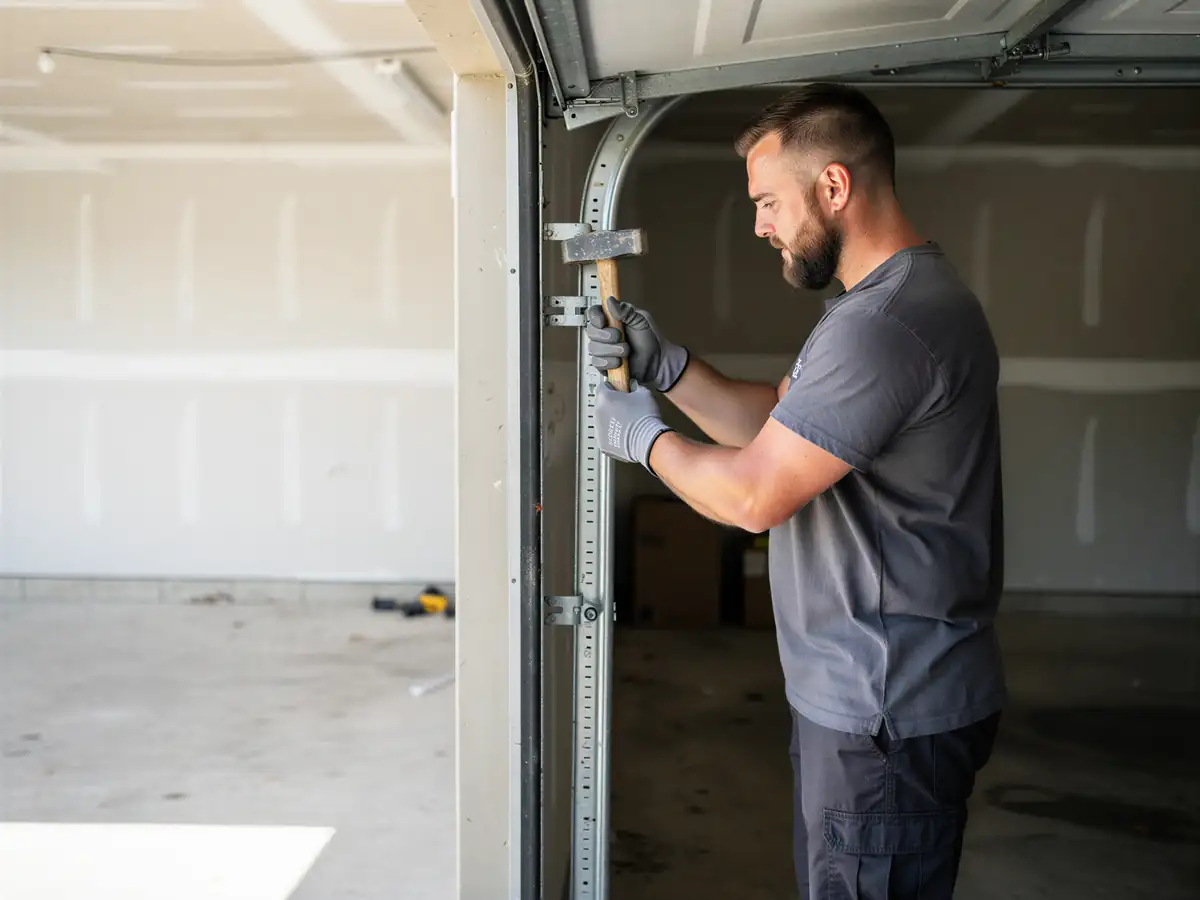
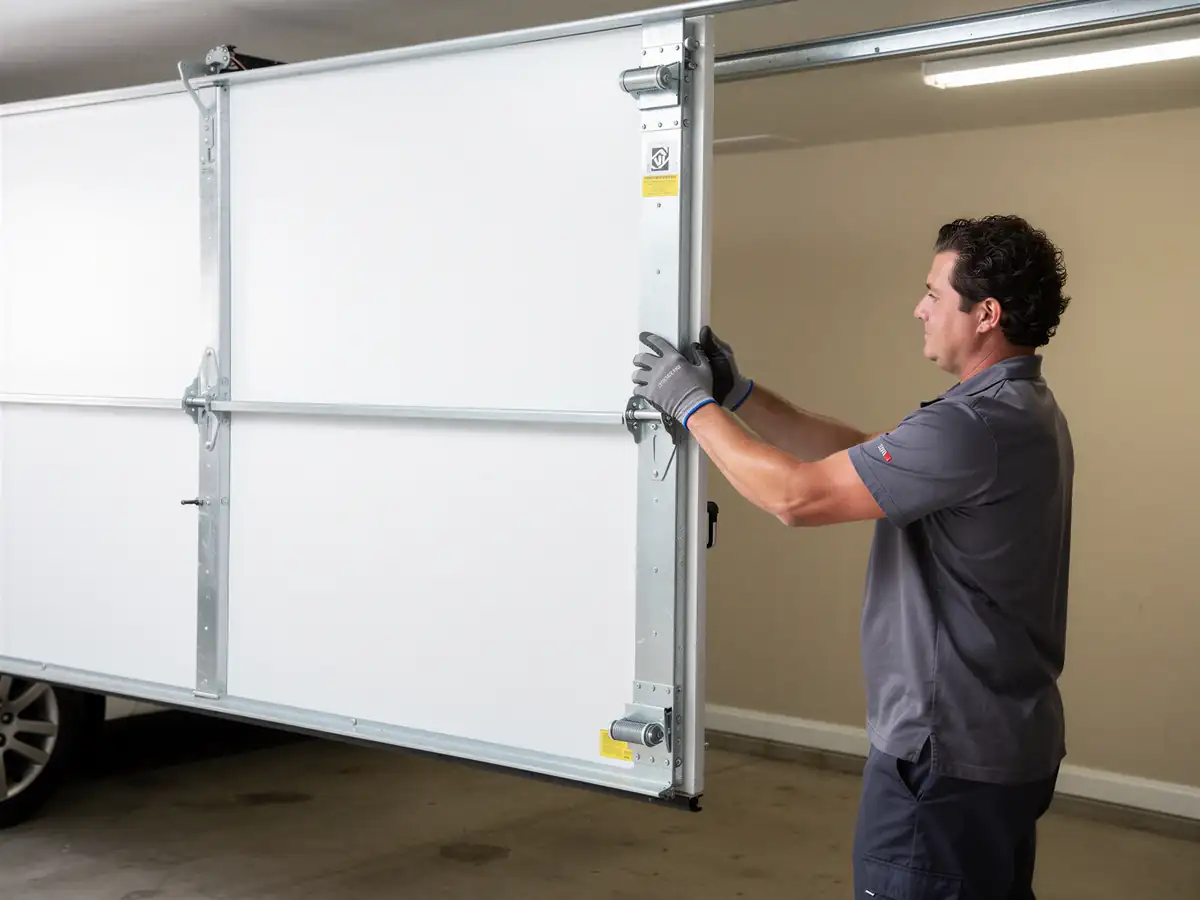
For track and roller problems, we check the frame alignment first, since in this housing stock the frame itself has usually moved over the decades. Reattaching a track to a frame that's out of square just sets up the next failure, so we shim and re-square before we bolt anything down.
On openers, we test the sensors, the logic board, and the drive gear separately rather than swapping the whole unit, because half the