When Waiting Is Fine
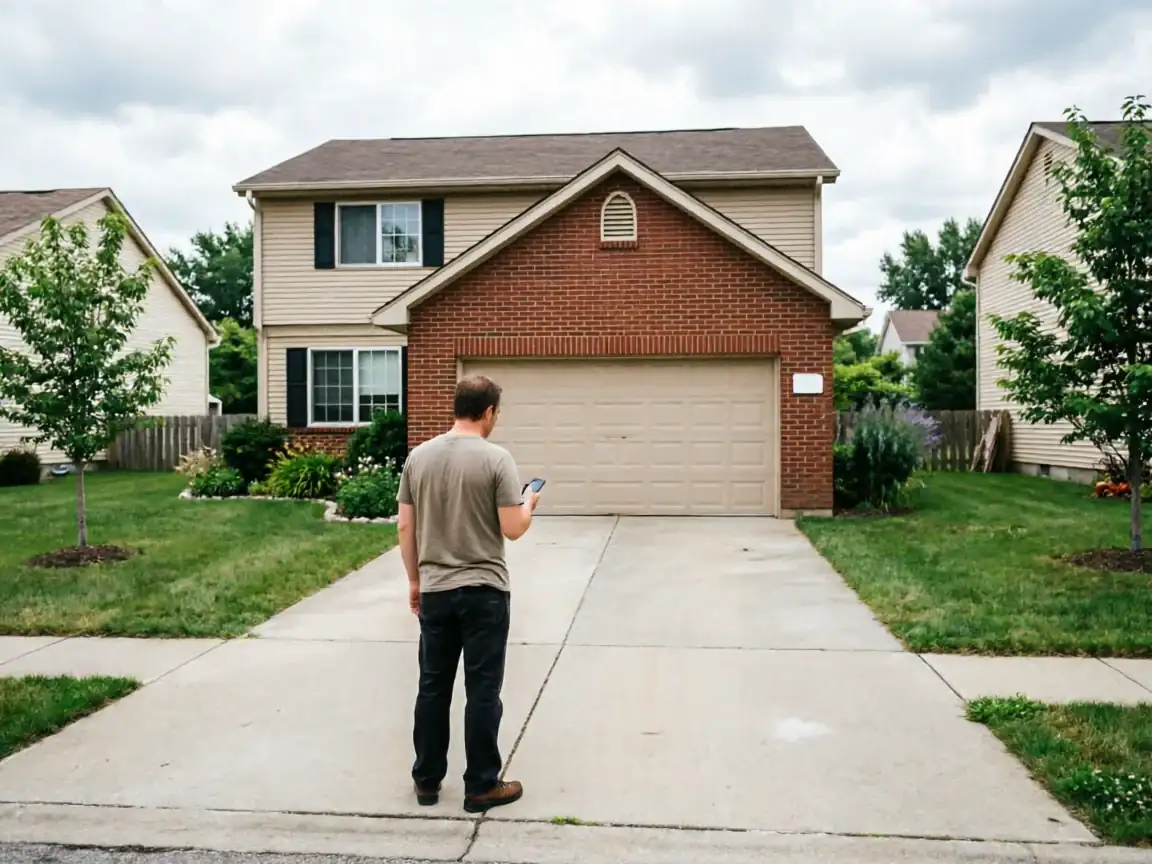
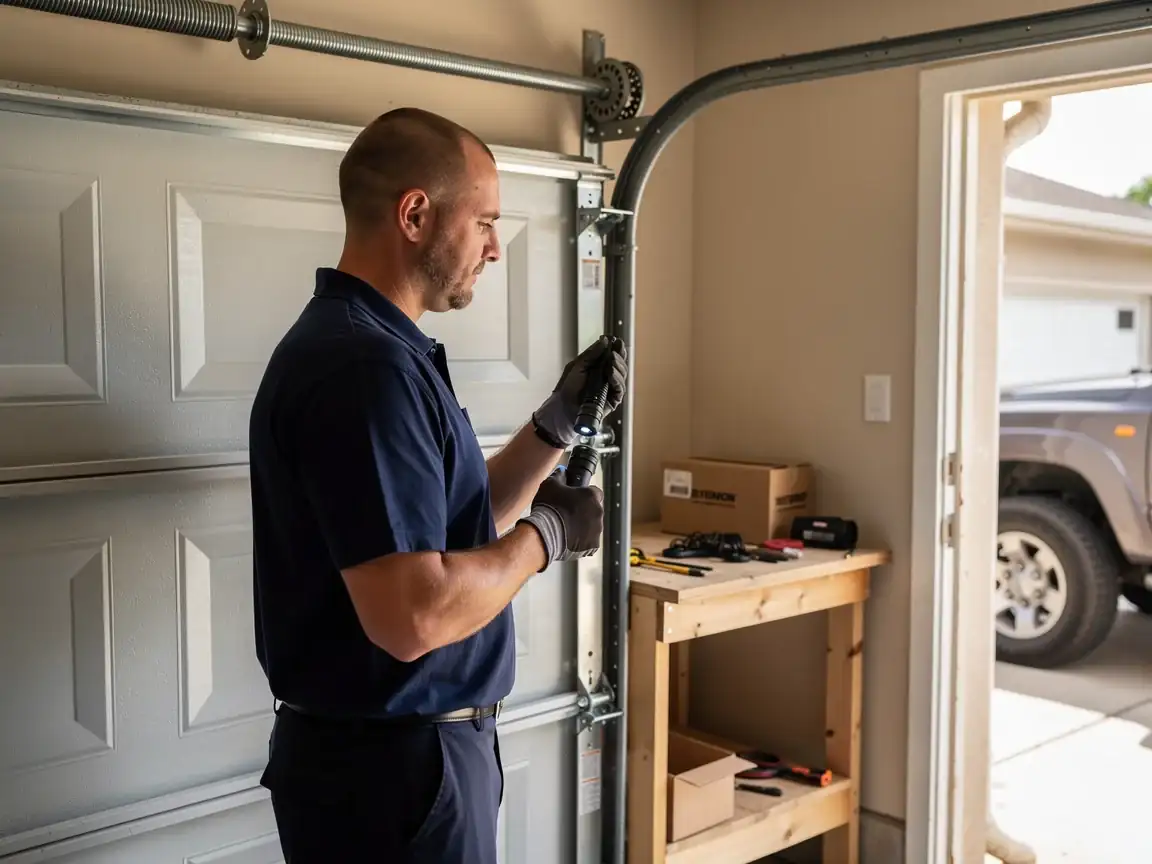
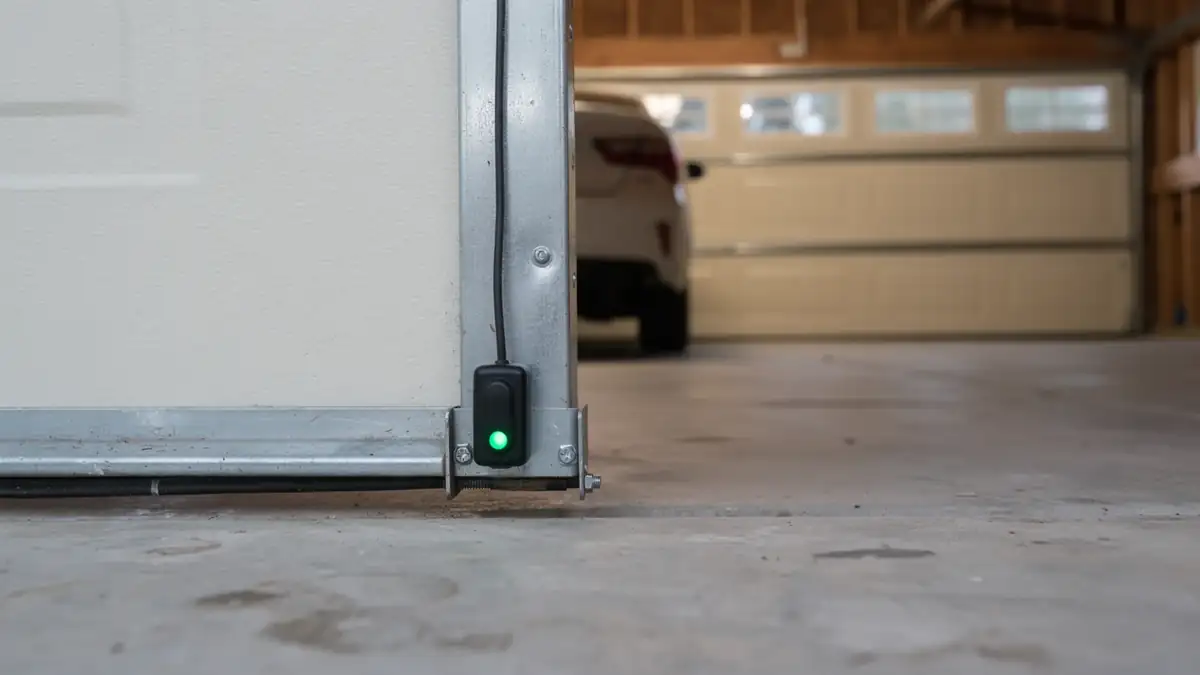
If your opener blinks and the door won't close, check the sensors before you call anyone. A lot of Akron houses built in the 1960s and 70s have garage slabs that have settled a little over fifty-plus years, and that slow settling is usually the reason the two sensor eyes stop lining up with each other. If the light on one sensor is solid and the other is flickering or dark, you can often fix it yourself: loosen the wing nut, nudge the bracket until both lights go solid, snug it back down. No tools beyond a screwdriver, no parts, no truck roll. This is also the time of year - deep cold - when brackets contract slightly and knock a borderline alignment out completely. Try the fix once before you assume the sensor itself is bad. If both lights are solid and the door still won't close, that's a different problem - a limit setting or a binding track - and sensor troubleshooting won't help. But a flickering eye after a cold snap is the single most common false alarm we see, and it costs you five minutes, not a service call.
The Situation
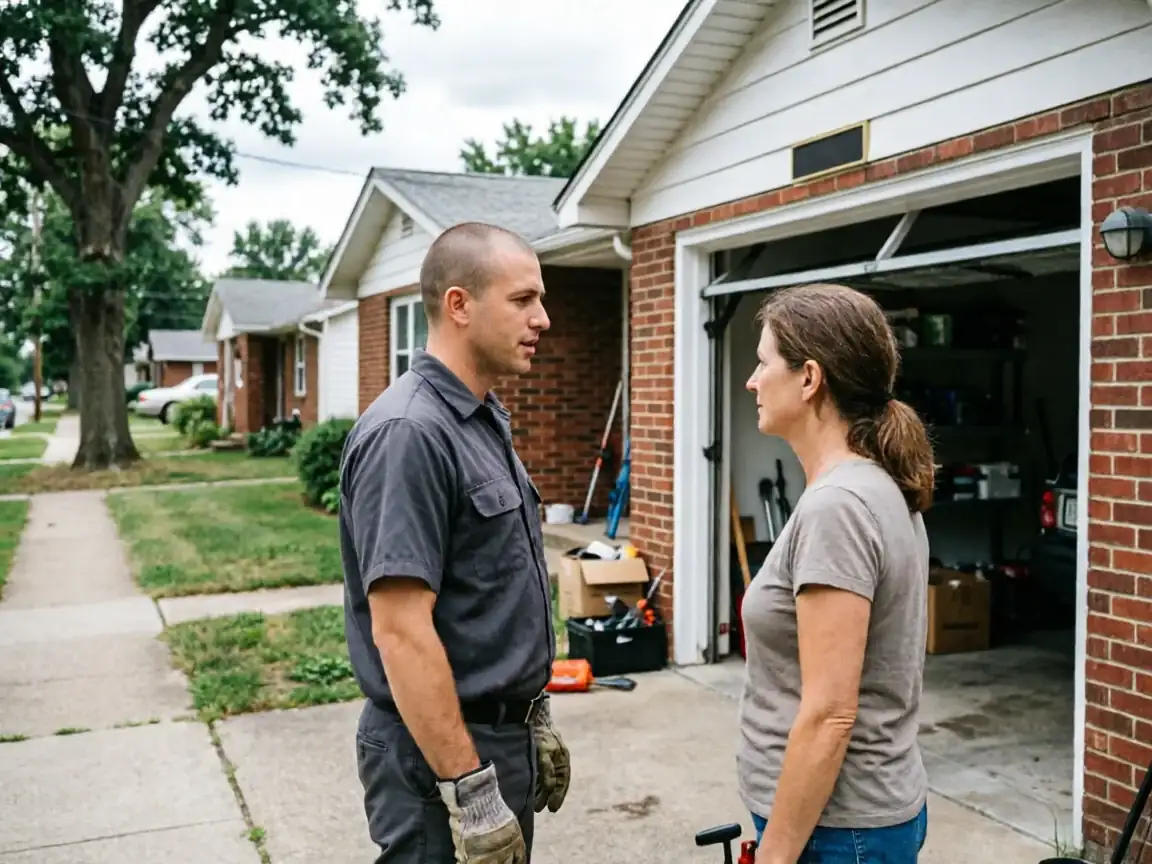
Akron's garages sit on housing stock that runs from 1952 up through 2004, with the median build year around 1972, spread across more than forty named neighborhoods and nearby communities - from in close to Mogadore and Tallmadge a few miles out. That fifty-year spread matters for sensors because the bracket hardware and mounting method changed more than once over that stretch. A door in a home built new in the early 2000s likely has factory plastic sensor brackets that flex slightly and self-correct. A door in a home from the 1960s or 70s - which describes most of the stock in this area - is more likely running retrofitted metal brackets added when the home's original door was replaced at some point, and those don't flex at all. They just bend, stay bent, and need a human to reset them. Knowing which era your garage falls into tells you whether to expect this as a one-time fix or a recurring one.
How Local Conditions Play In
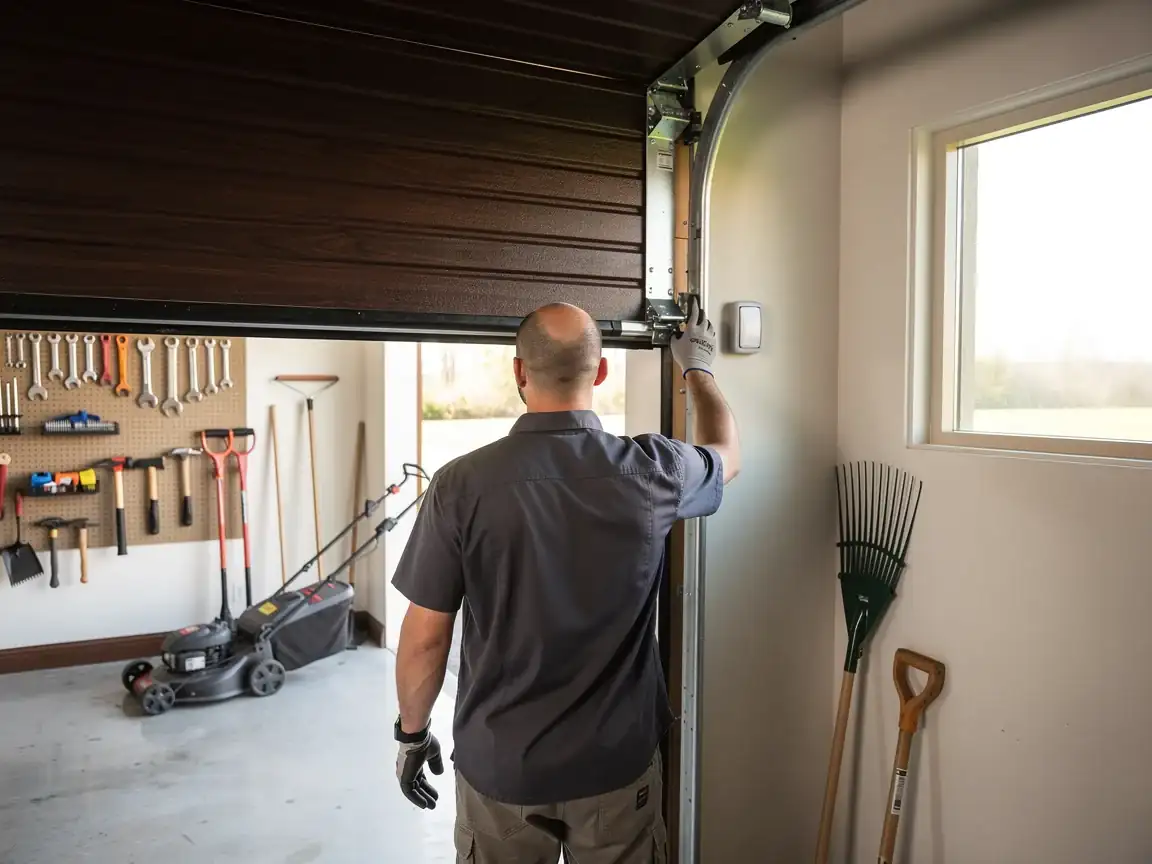
Akron sits in a cold, severe climate band, and that cold is the real driver behind recurring sensor drift here, more than age alone. Steel brackets and aluminum track contract in winter and expand again in summer, and that cycle repeats every year on a garage that isn't heated. A bracket that's slightly loose will work itself a few degrees out of true every winter, then get bumped back into rough alignment by someone's elbow in July, then drift again the next January. If your sensors need resetting every fall or every spring and never in between, that seasonal pattern is cold-cycle movement, not a bad part. The honest limit here: if the bracket mount itself has rusted through or the wall anchor has pulled loose from old block construction, tightening the wing nut won't hold - that needs a new bracket set and sometimes a different mounting point, and it's worth doing once rather than re-leveling it every six months.