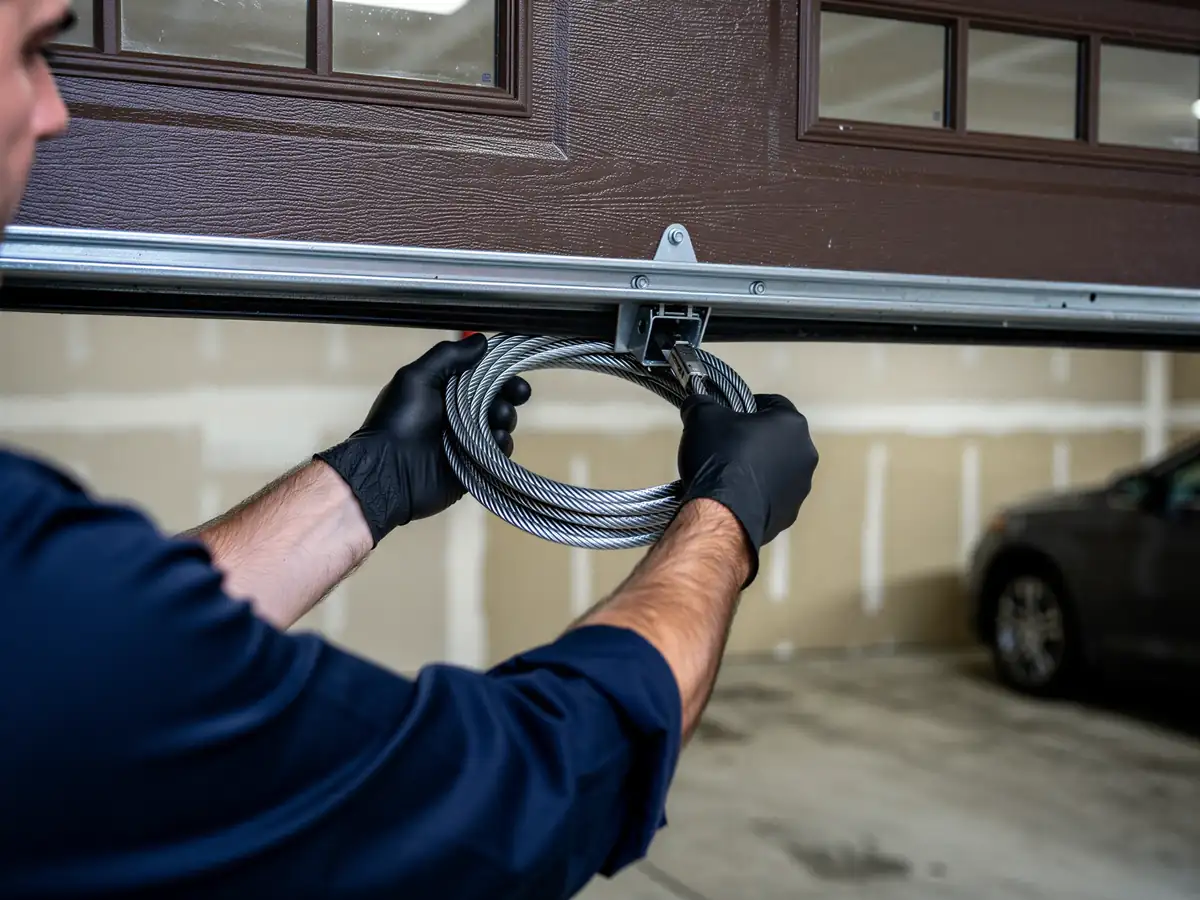
The Symptom
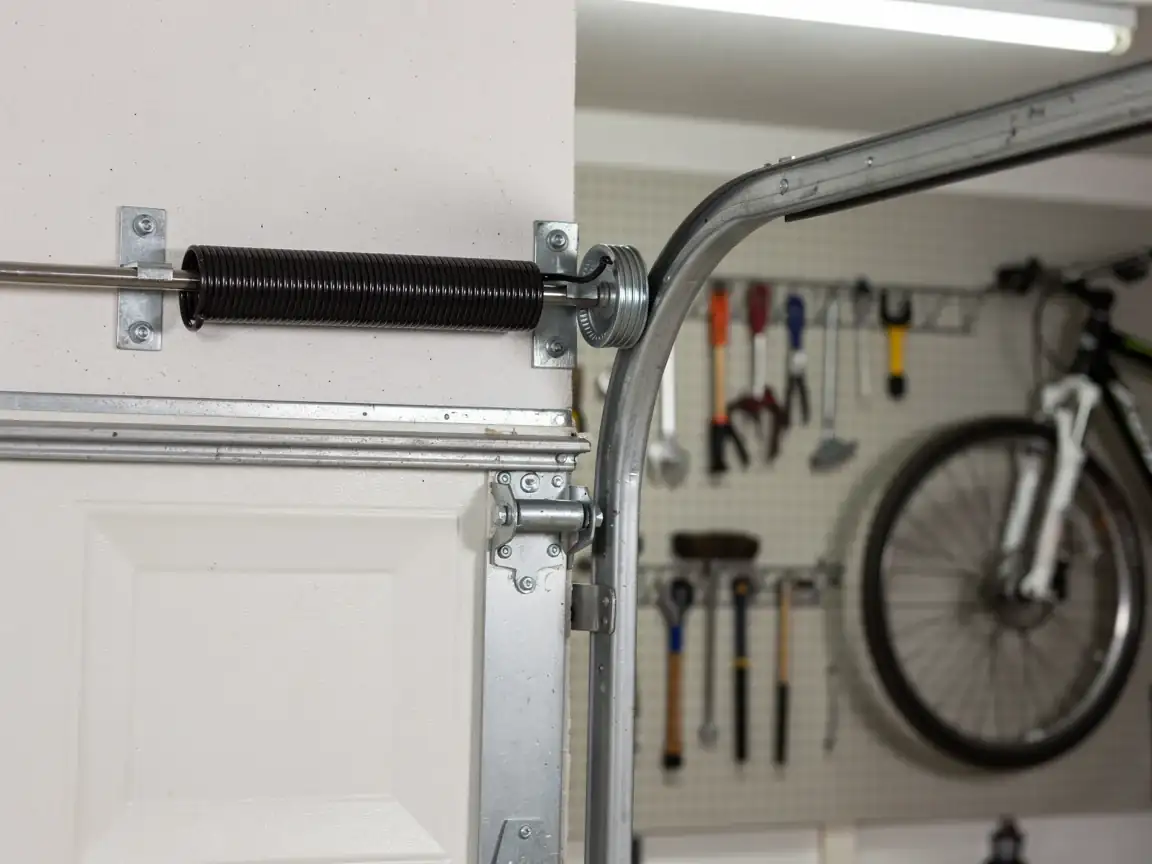
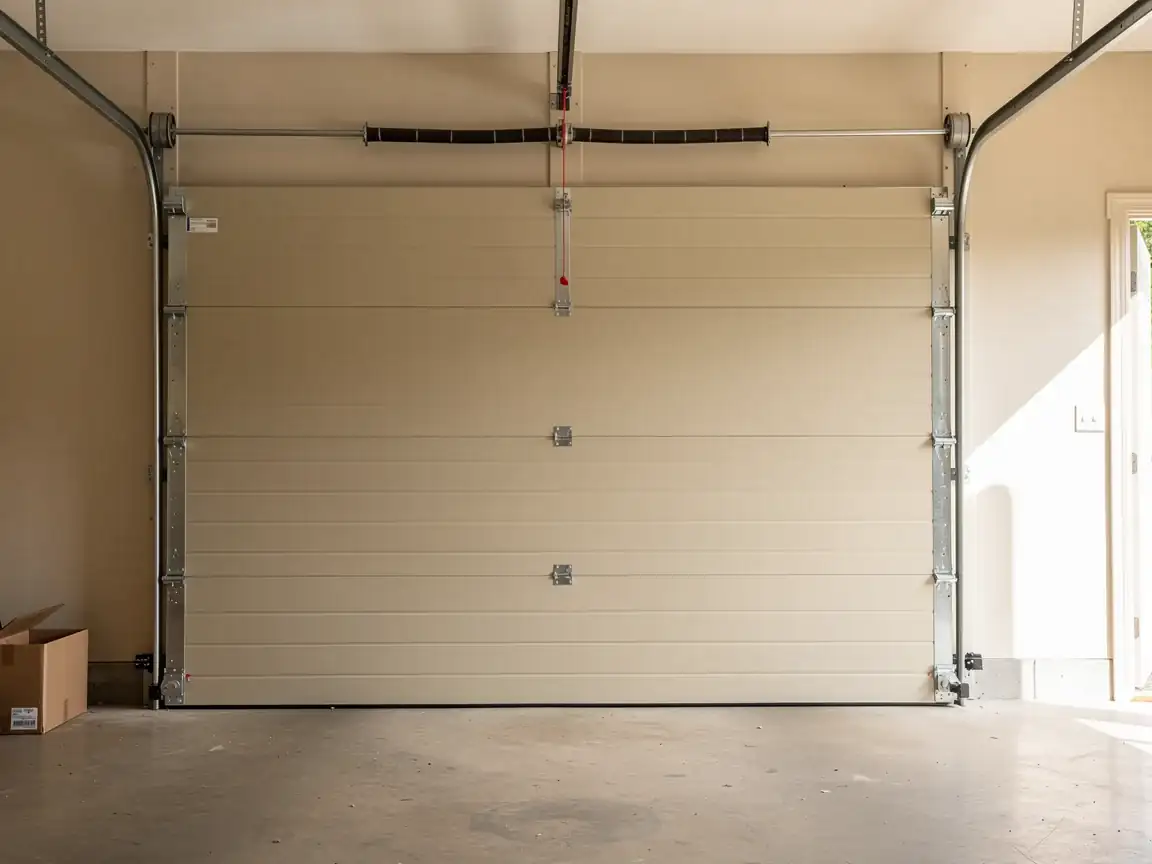
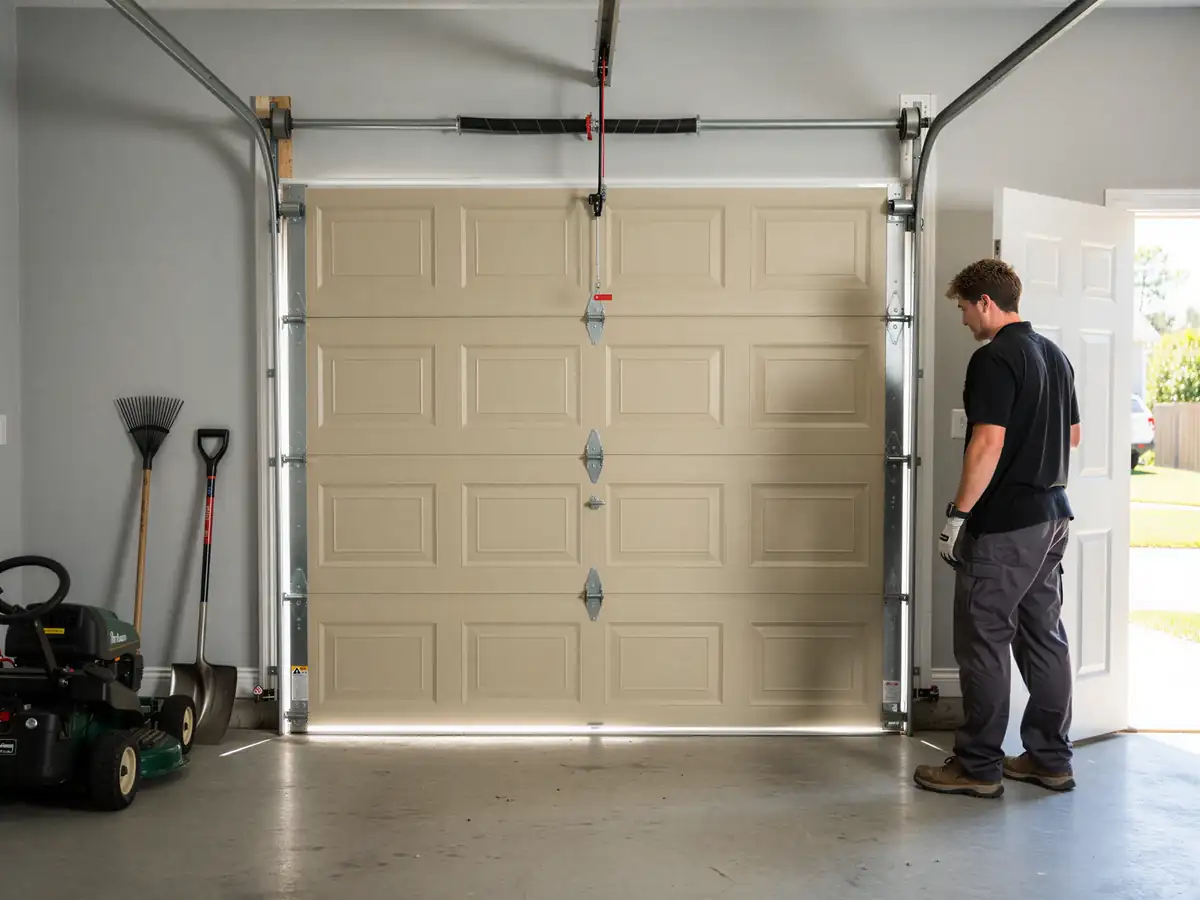
A cable that's frayed, jumped its drum, or snapped outright shows up a few ways: the door hangs crooked, one side drops faster than the other when you open it, or you hear a snap and the door won't budge at all. Sometimes it's a slow give - the door starts sagging on one corner over a few weeks before the cable finally lets go. On a double door with a broken torsion spring and a worn cable both failing around the same time, the door can come down unevenly and bind in the track, which is the point where people call us instead of trying to force it open themselves.
Cables rarely fail out of nowhere. They fray against the drum, rust where they loop through the bottom bracket, or stretch past spec after years of the door cycling twice a day. By the time you see visible fraying, the strands left holding the load are a fraction of what the door was built to carry, and the cable can go at any pull.
Why This Fails Locally
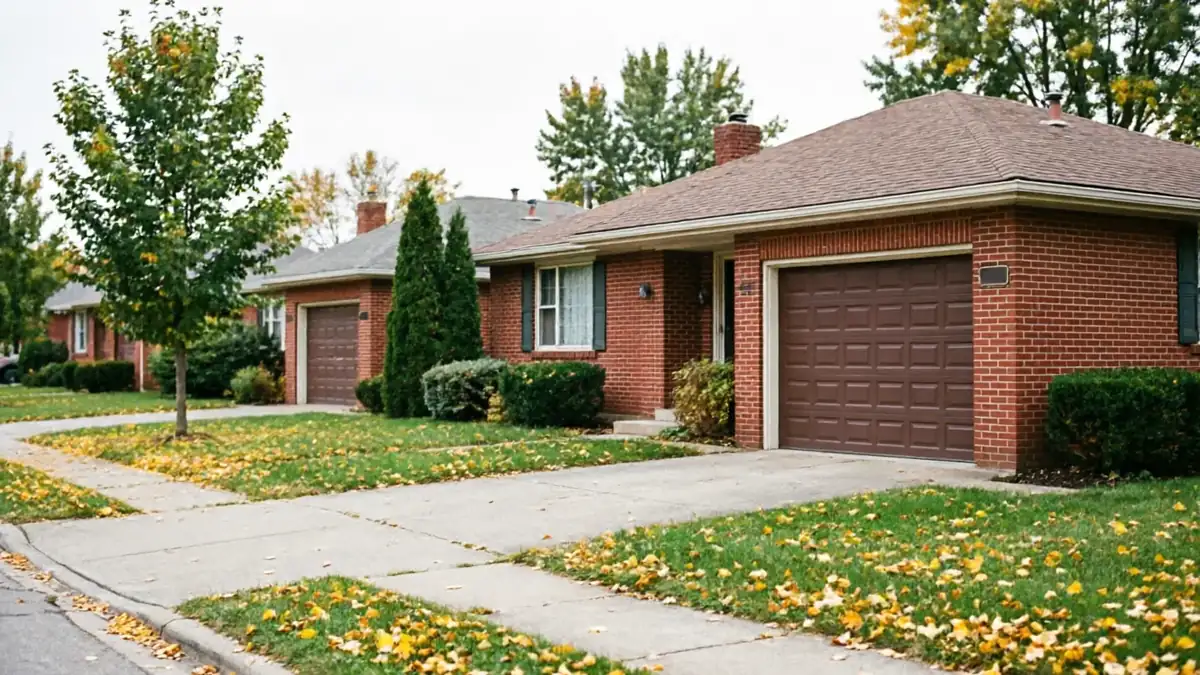
Most of the housing stock across the Akron service area went up between 1952 and 2004
With a median build year around 1972, and a lot of it - across the 42 named areas we work in - is original 1960s and '70s construction. That generation of garage doors came with cable and drum hardware that's now 50 to 70 years old if it was never replaced, and steel cable under constant tension doesn't age gracefully over that span, especially not through Ohio's severe cold winters.
- 70 years
Cold is the other half of it
In a severe cold climate band like this one, steel cable contracts and the galvanized coating gets brittle with repeated freeze-thaw cycling, so a cable that's been slowly fraying for years tends to actually snap on the first hard cold snap of the season, not in July. Combine 1960s-70s hardware with that kind of winter stress and cable failure becomes one of the most predictable calls we get once the weather turns.
Time on the Job
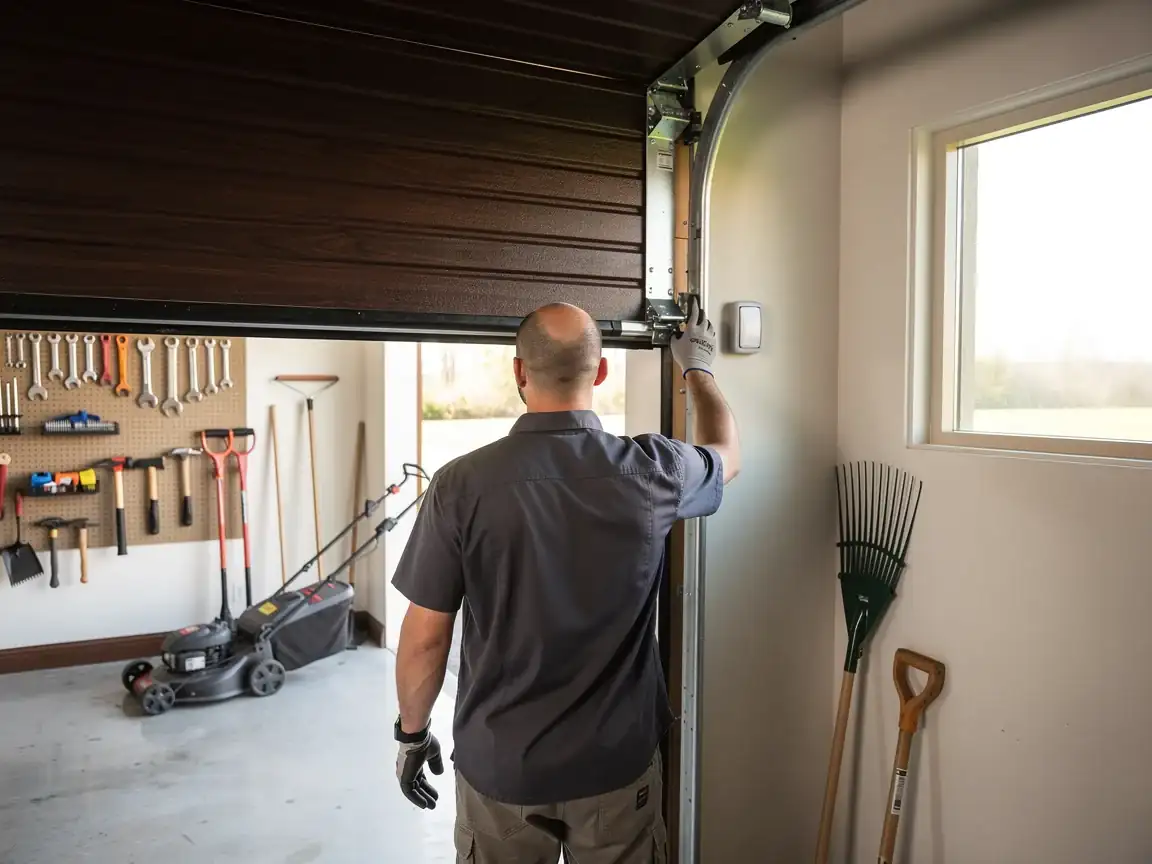
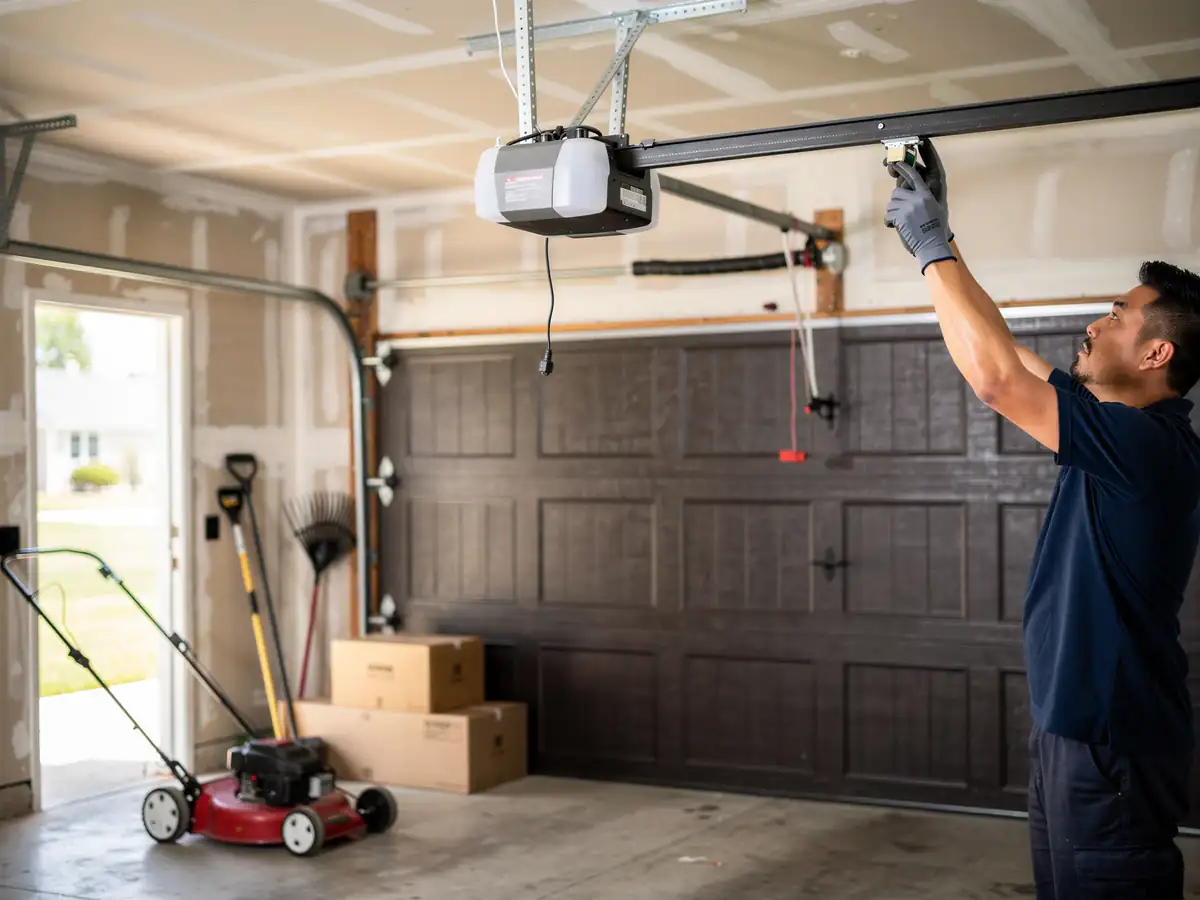
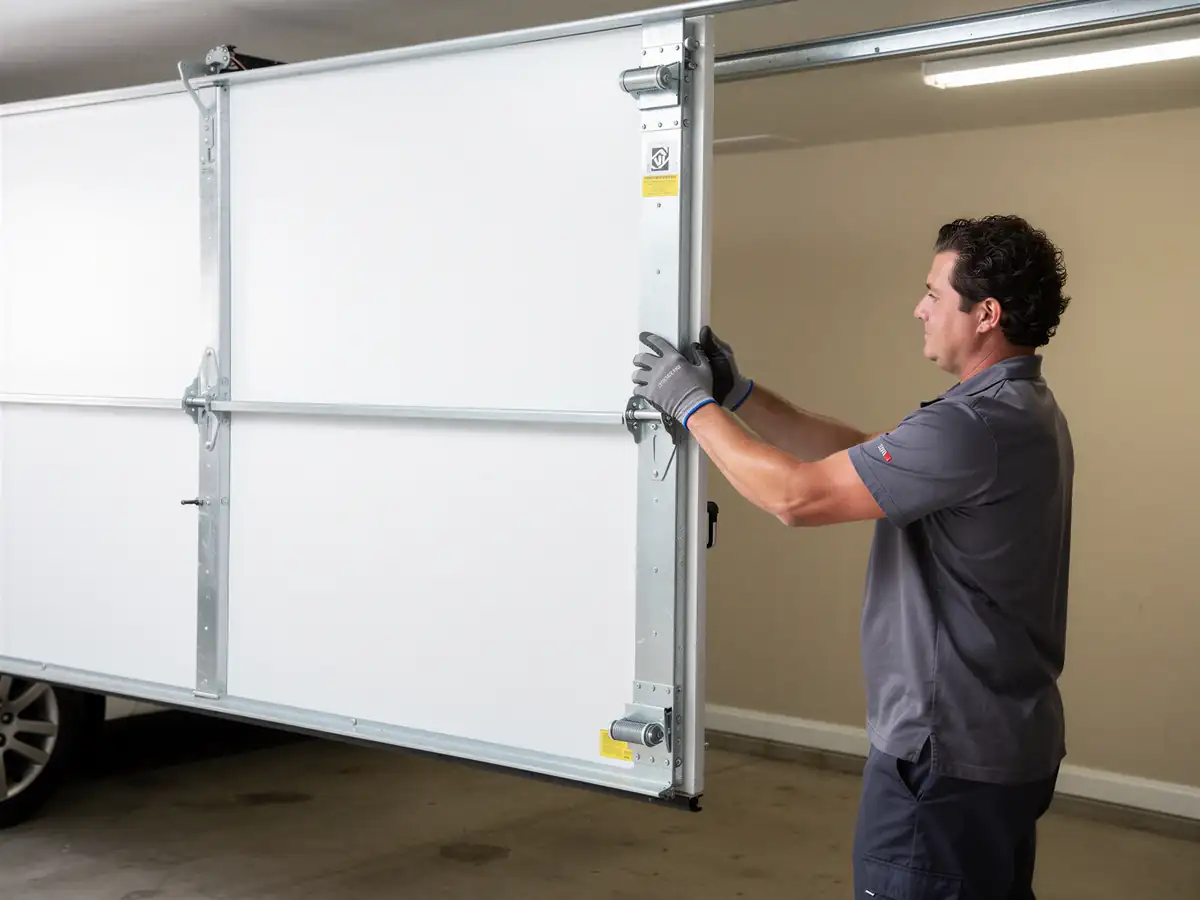
A straight cable replacement on one side, door already down and not under spring tension, is a contained job. Where it takes longer is when the cable snapped unevenly and took the drum or the bottom bracket with it, or when the torsion spring on that side is also shot - which happens often enough on original hardware from the 1960s and '70s that we check both every time, not just the cable that failed.
We also look at the opposite cable even if it hasn't broken yet. If one side frayed from age, the other side is the same age and under the same load, and replacing one without inspecting the other just means a second call later. We're straight with homeowners about that before we start, rather than letting it be a surprise on the invoice.
How We Fix It
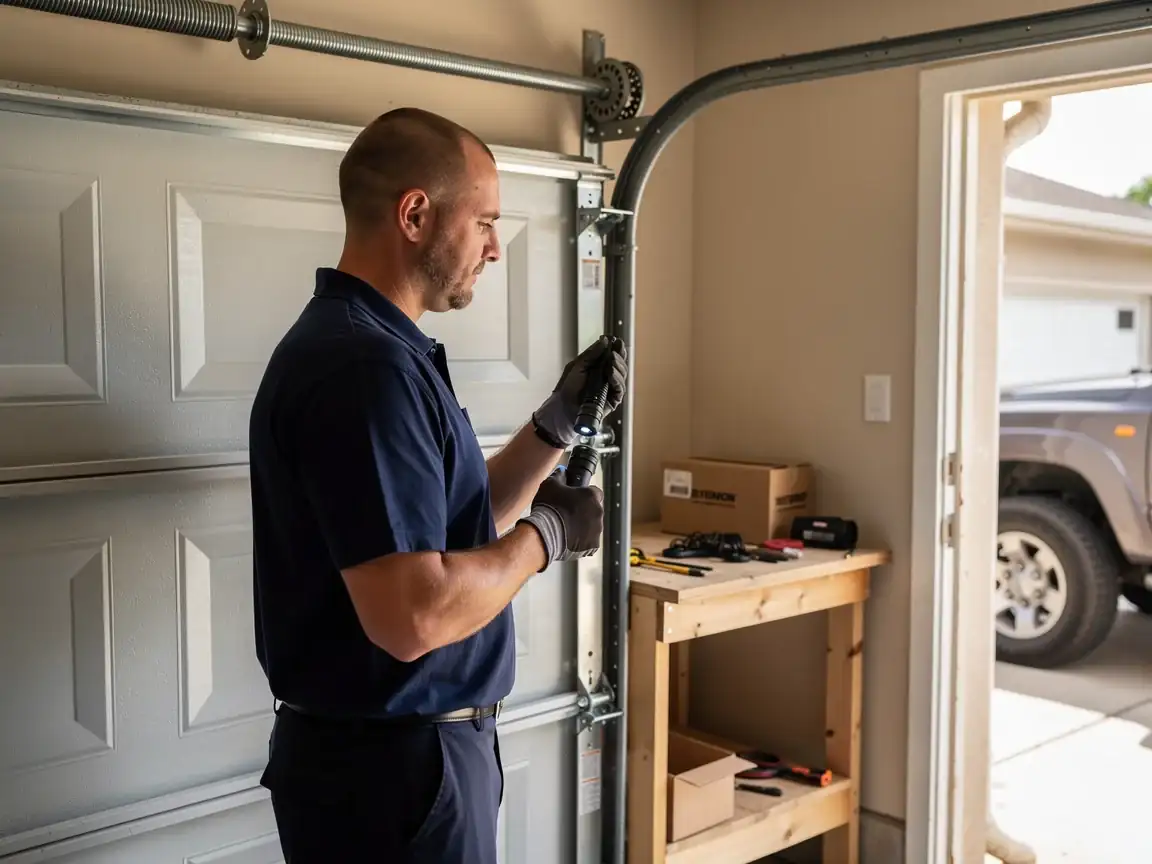
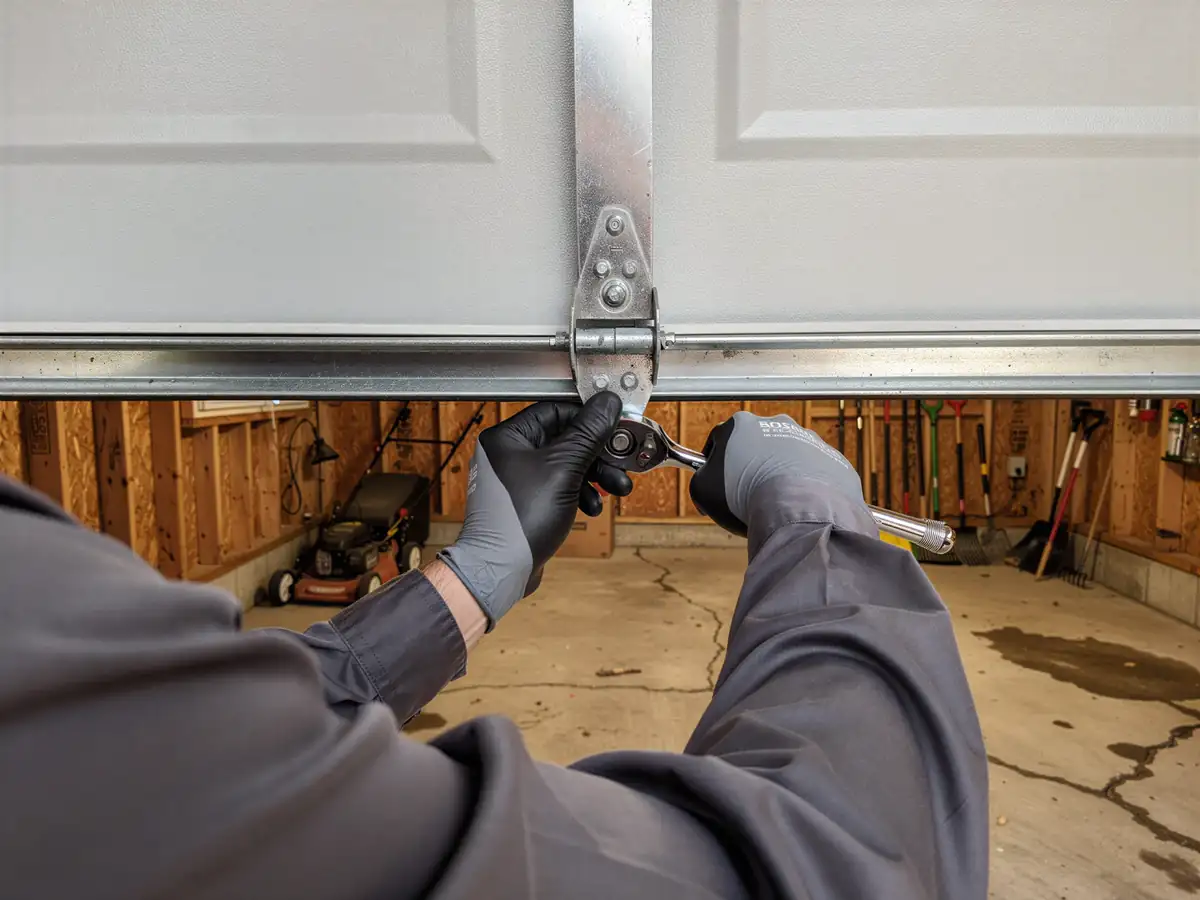
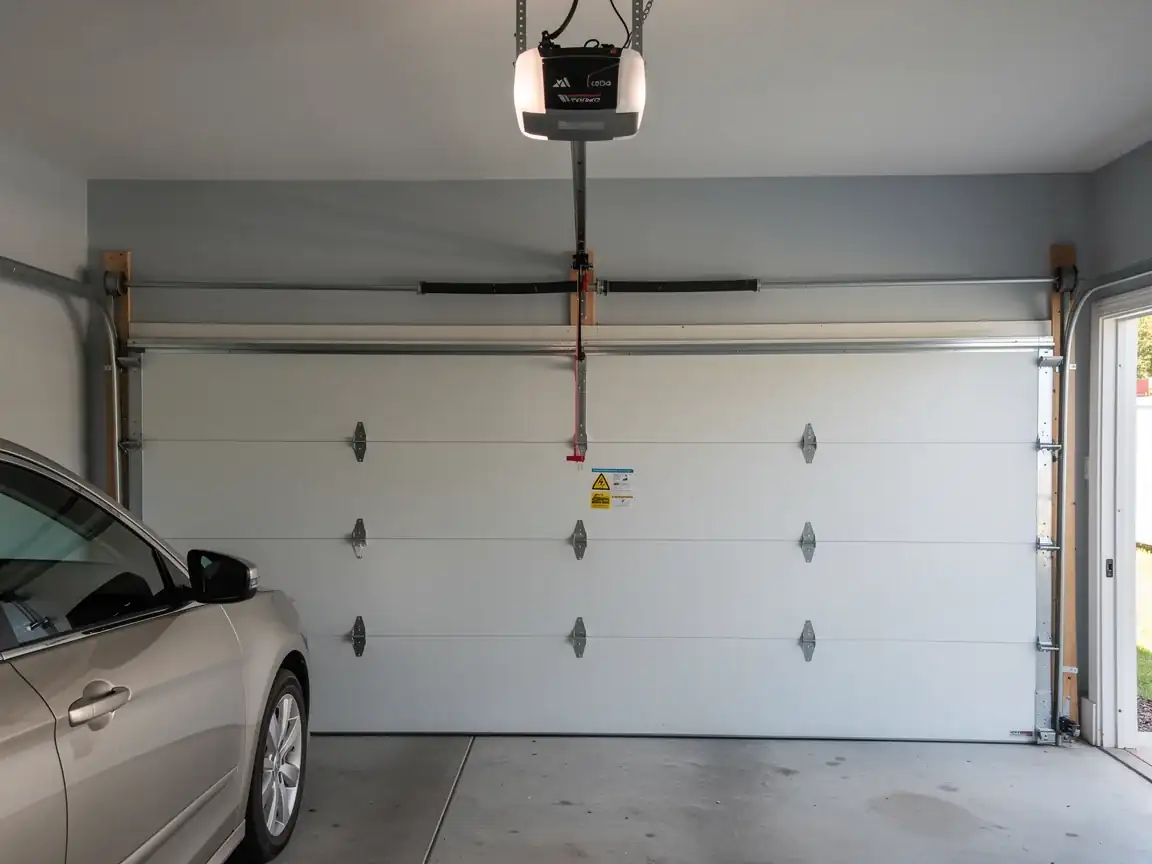
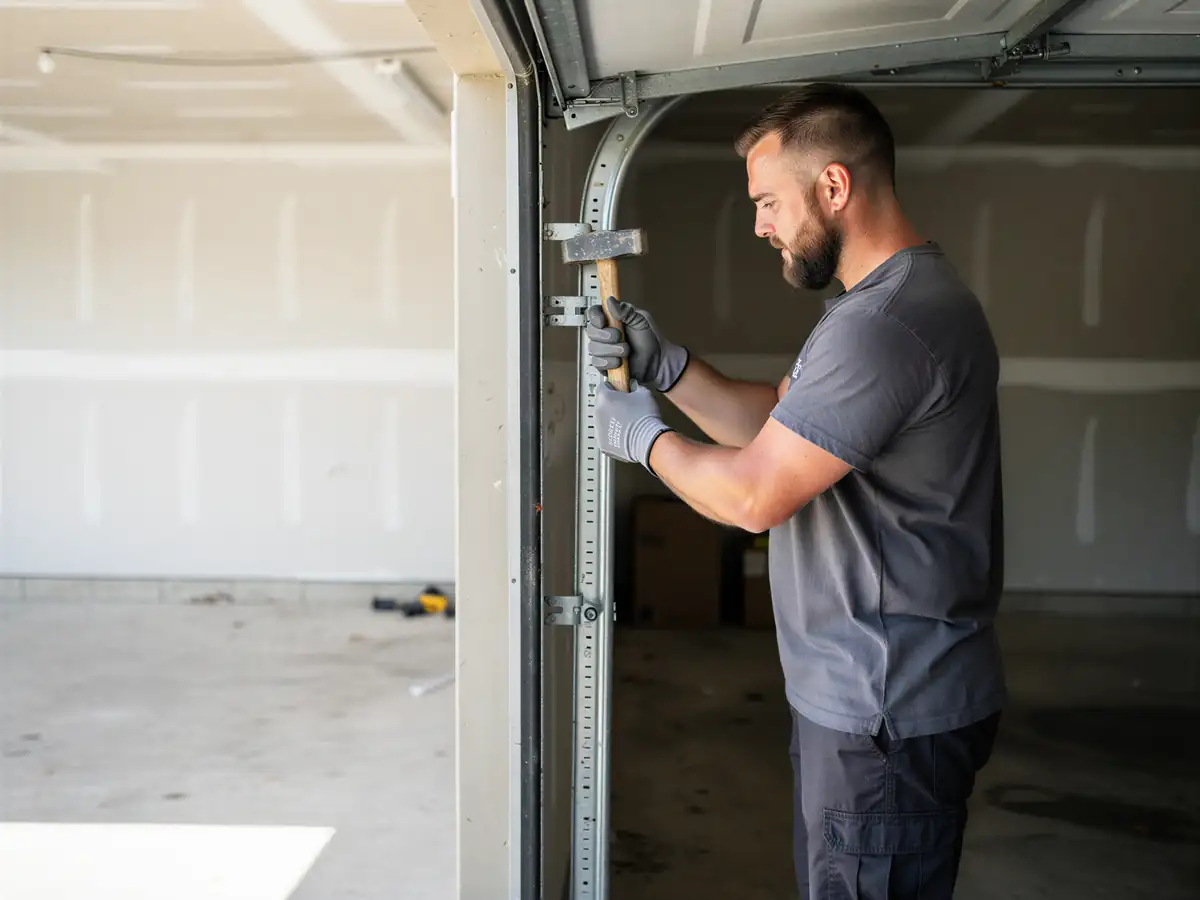
We replace the cable to the correct length and gauge for your door and drum, re-tension the torsion spring system, and run the door through a full cycle to check it tracks straight and seats evenly on both sides. If the drum, bottom bracket, or roller on that side shows wear consistent with age, we flag it rather than bolt a new cable onto hardware that's about to cause the same failure again.
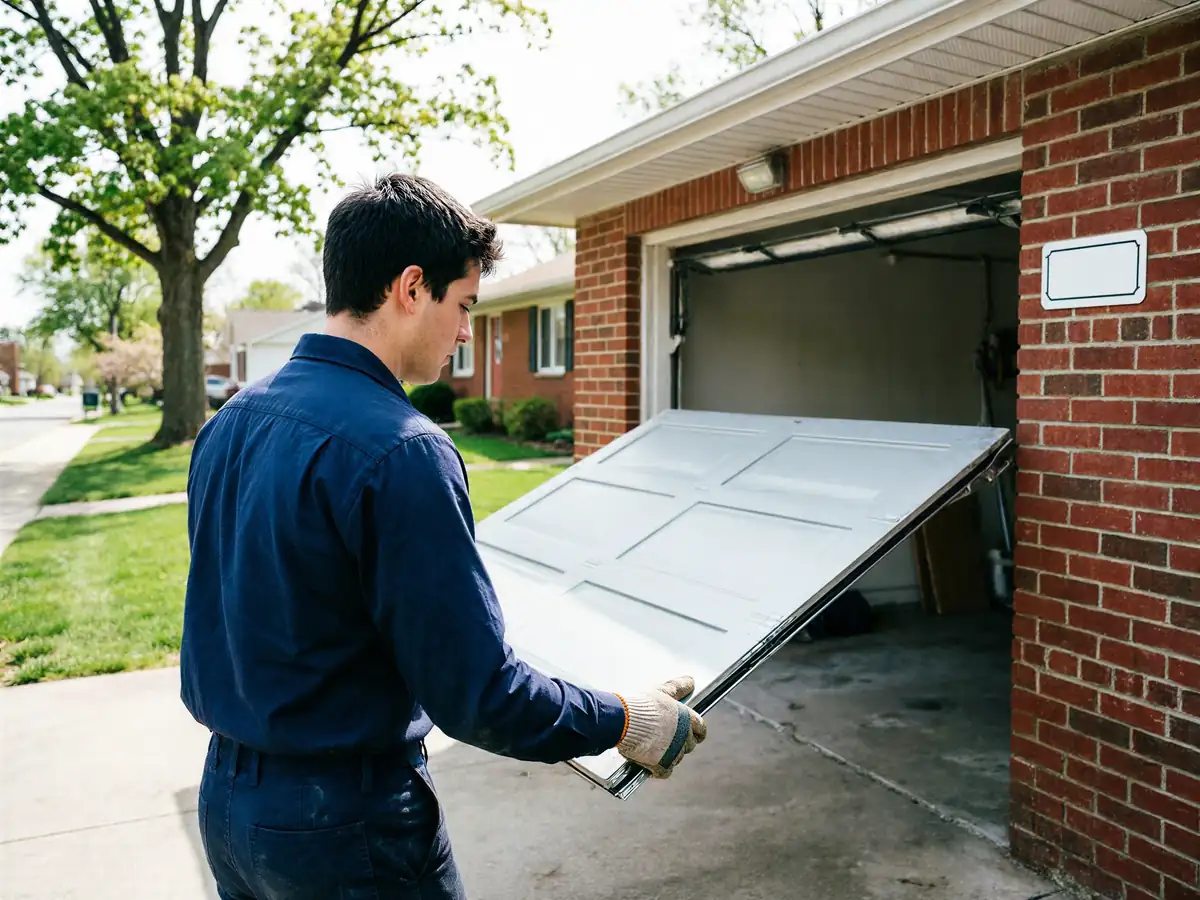
One limitation worth saying plainly: if the door itself is an original one-piece unit from that 1960s-70s era with hardware that's been discontinued, an exact-match replacement part may not exist, and we'll tell you when a full door or opener upgrade makes more sense than patching a cable onto hardware nobody makes parts for anymore. We'd rather tell you that up front than sell a repair that won't hold.