Serving Akron, OH & nearby
(330) 902-8513
Akron, OH

Is Your Old Akron Garage Door Worth Fixing

Akron's housing stock runs 1952-2004, mostly 1960s-70s builds. Here's how to tell if your old door is worth repairing or ready to replace, given our cold winters.

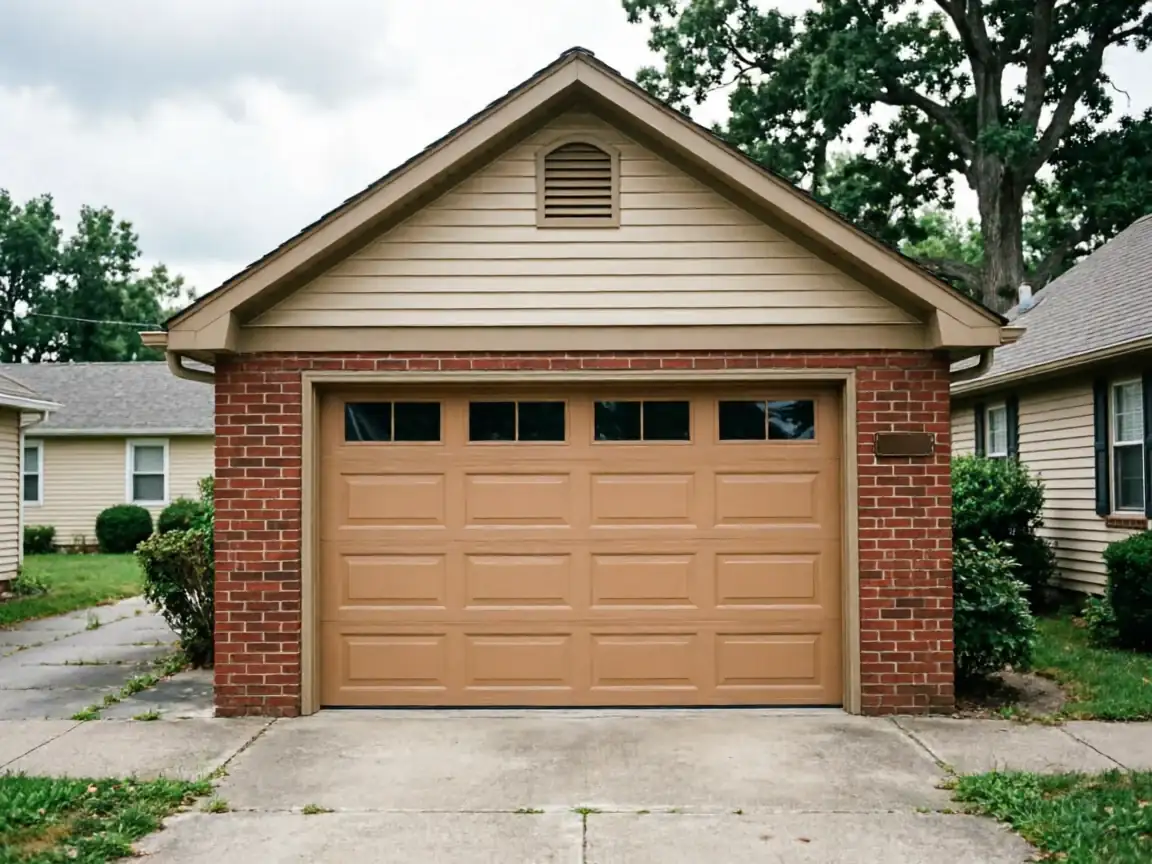
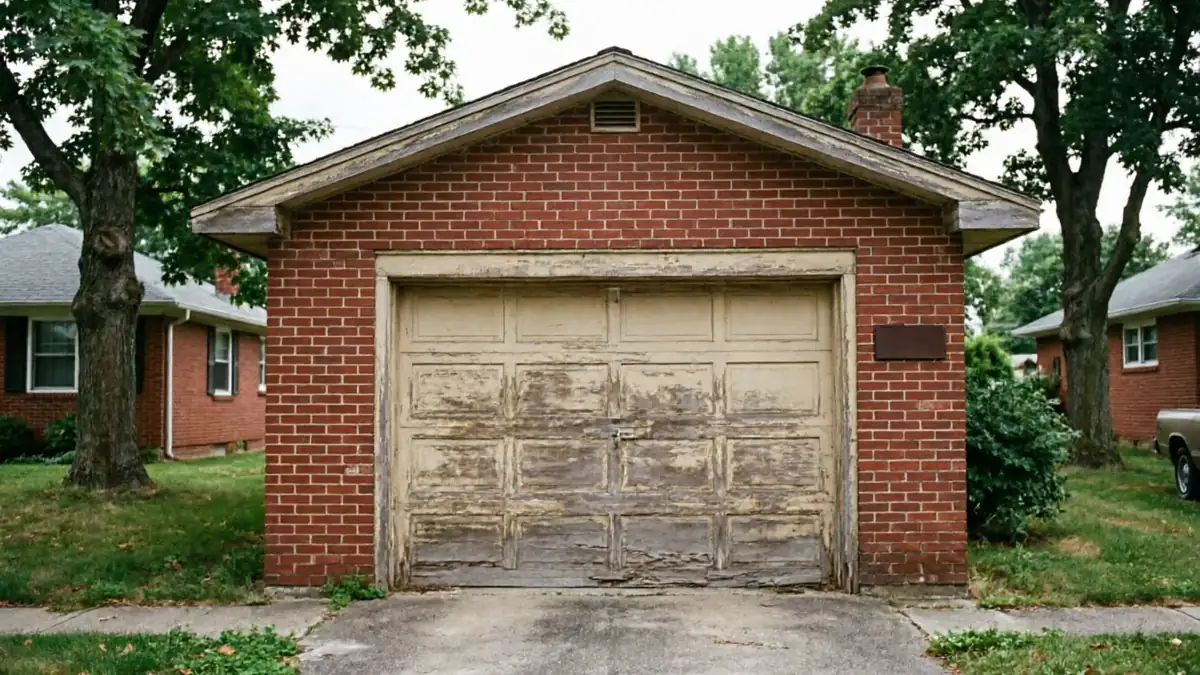
The old garage door on a brick garage has peeling paint and a padlock.

When Waiting Is Fine

If your door is sluggish on cold mornings but still closes flush and the springs aren't screaming, you don't need to call anyone yet. A lot of the housing stock in this area went up between 1952 and 2004, with the median landing around 1972, and most of those original doors were built with steel gauges and hardware that can take decades of use if the opener and springs have been swapped out along the way. A door from that era that still seats evenly in the track, with rollers that aren't chewed up, can run another several winters without trouble. Waiting is also fine if the symptom is cosmetic - a dented bottom panel, faded paint, a section that doesn't match. None of that affects function. What you're listening for is noise that gets worse week over week, or a door that starts needing a shove to close the last six inches. That's a sign the torsion spring is losing tension, and it's worth watching, not panicking over. Slow deterioration on an otherwise sound door built in that mid-century stretch is normal wear, not a reason to replace the whole unit.

Where People Go Wrong

The mistake we see across the 1960s and '70s housing stock common to this area is treating every grinding noise as a death sentence for the door, or the opposite - ignoring a frozen track until the opener motor burns out trying to force it. Houses built in that window often still run original track and drums even where the door panels themselves have been replaced once already, and that mismatched hardware is the actual problem more often than the door. People also replace a whole door when the real failure is a single broken spring or a cable that jumped the drum - a fraction of the cost. On the other end, some owners sink money into repairing a door that's been painted over so many times the steel underneath is thin and starting to bow, and no amount of spring or roller work fixes that. The honest answer: if the panels are sound and square, fix the moving parts. If the panel itself is warped, rusted through at the bottom, or the insulation core has separated, you're throwing good money after bad. We won't talk you into a repair that won't hold through another cold season.

The Situation

Across the service area there are 107,063 owner-occupied houses among 195,121 households, and a large share of them sit in that 1952-2004 build window, concentrated in the 1960s and '70s. That means a lot of garage doors out there are either original to the house or one generation removed - steel sectional doors on torsion springs, often without the foam insulation that became standard later. With median household income at $80,612, most owners here can afford a full replacement if the door calls for it, but plenty choose to keep the original door running because the bones are still good: these were well-built doors for their time, just not insulated for the energy costs we deal with now. The practical question isn't age by itself, it's whether the track, hinges, and springs have already been serviced once. A door that's had one spring replacement and still has its original rollers is a different animal than a door nobody's touched since it was installed.

How Local Conditions Play In

This area sits in a cold, severe climate band, and that changes the math on repair versus replace more than most owners expect. Steel contracts in deep cold, and on an older door without insulation, that contraction stresses weld points and spring coils that have already done forty-plus winters of work. We see more spring failures in January than any other month, and on a door that's original to a house built in the 1960s or '70s, that's often the spring's last job regardless of what else gets fixed. If your uninsulated door is original to the house and you're already looking at a spring replacement, it's worth asking whether an insulated replacement pays you back in the next cold stretch rather than just resetting the same thin steel for another winter. We'll tell you straight when a repair is the better call - plenty of these old doors still are.
How it works

From “it’s stuck” to “it’s fixed”

A quick, honest process - no guesswork and no surprises.

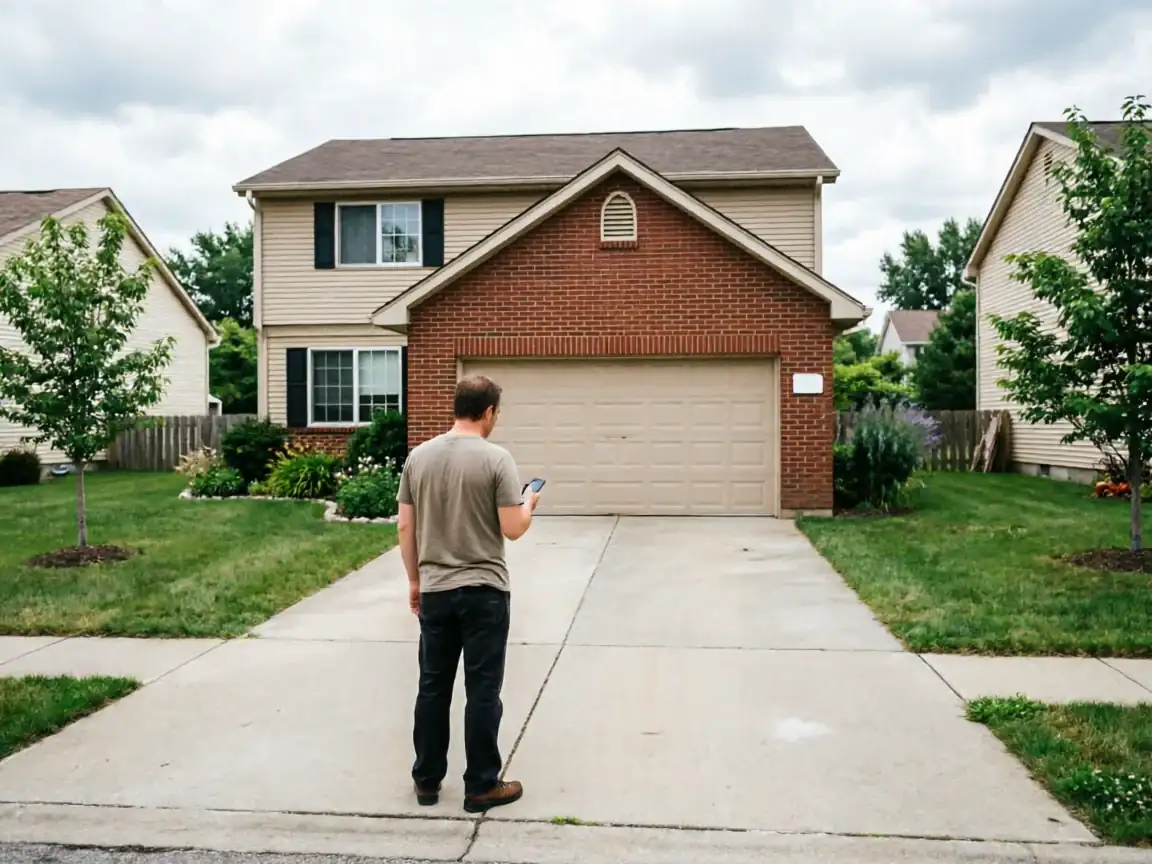
  1. A man stands in a driveway looking at his phone in front of a house.
    1

    Tell us what’s wrong

    Describe the symptom - won’t open, loud bang, opener runs but the door won’t move.

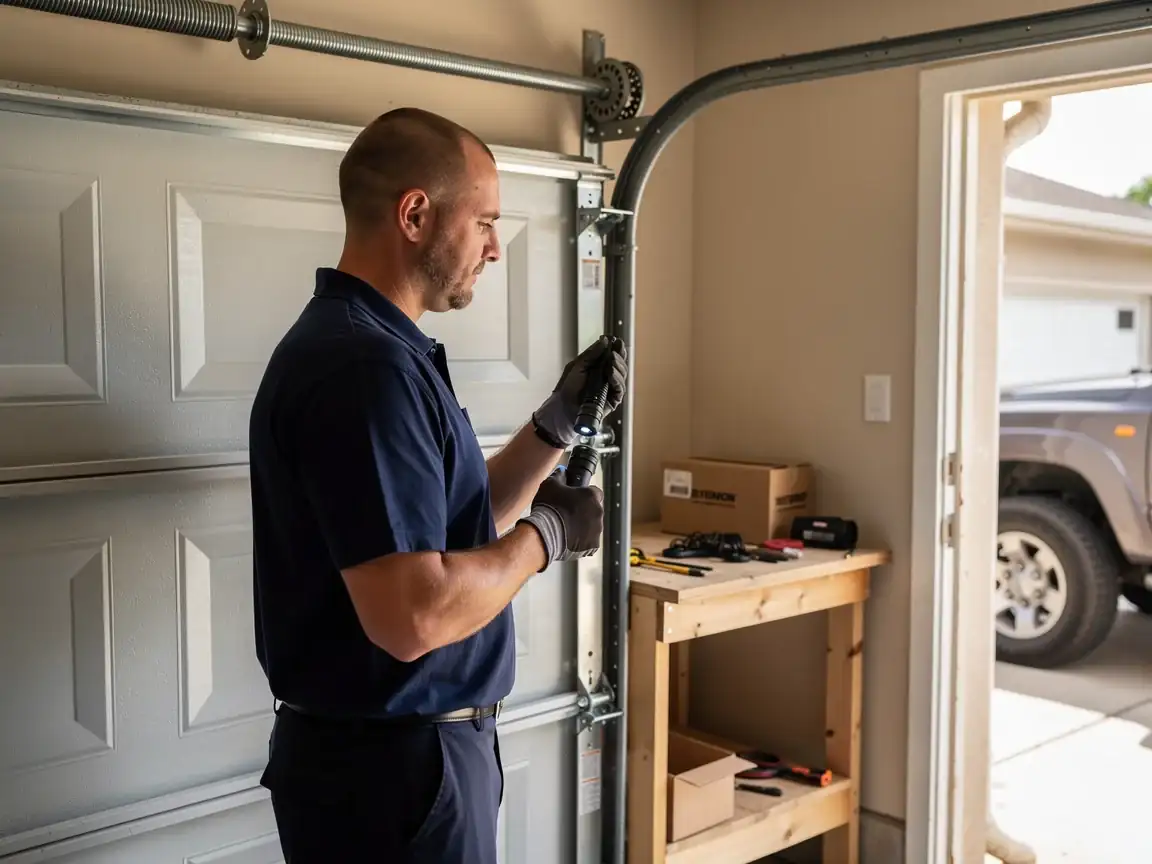
  2. A technician in gloves holds a flashlight next to a white garage door.
    2

    On-site diagnosis

    A technician tests the door under power and by hand and finds what actually failed.

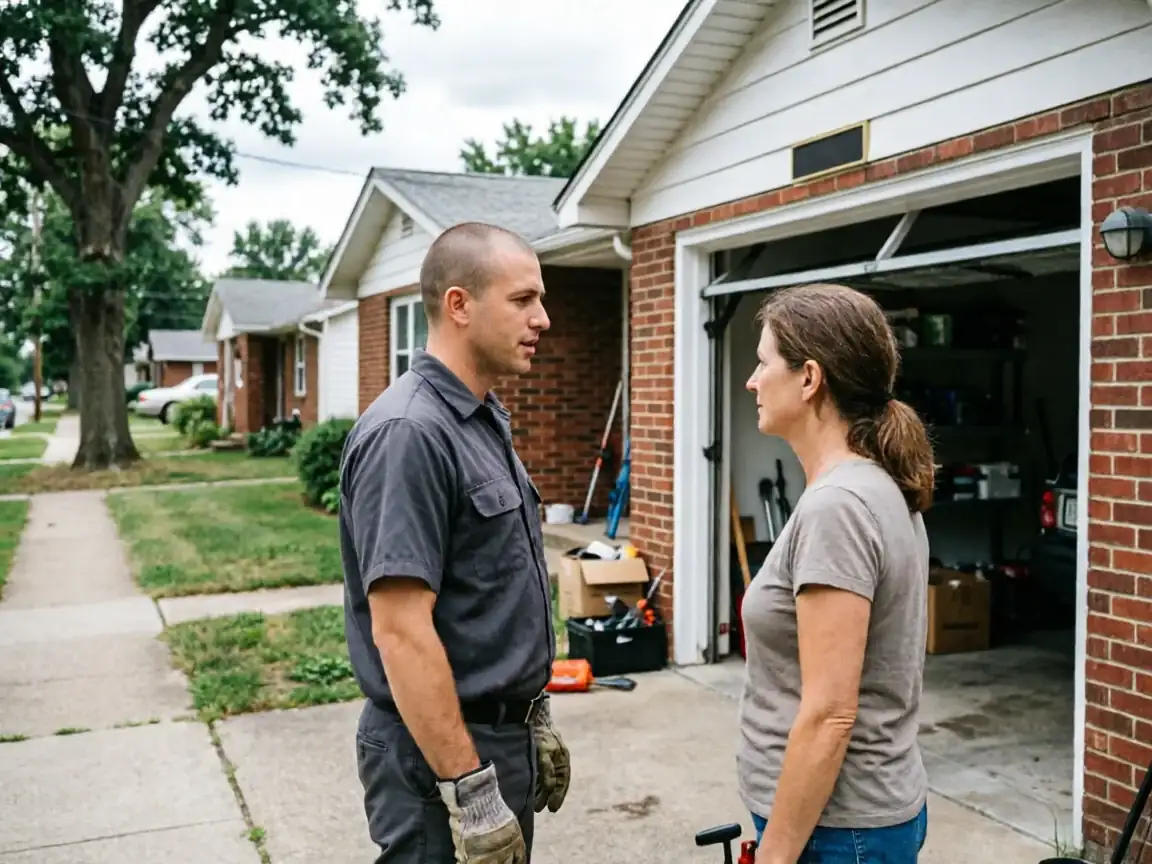
  3. A technician and a woman stand in a driveway in front of an open garage.
    3

    Clear, up-front plan

    You get the fix that’s needed and what drives the cost - before any work starts.

  4. A technician adjusts the brown garage door track inside a garage.
    4

    Repaired & tested

    The repair is done, the door is set true and tested, and the work area left clean.

Not sure which repair your door needs in Akron, OH? Describe what it’s doing - every job starts with a diagnosis.

7areas covered
How we work

What to expect

Diagnosis first

Every visit starts by finding what actually failed - not a pre-written parts list.

The right part for the door

Springs and openers matched to the door’s weight and age, so the fix holds up.

Straight answers

When a repair makes more sense than a replacement - or the reverse - you hear it plainly.

Clean, careful work

Tension released safely, hardware set true, the door tested under power before we leave.

What we do

Garage Door Services

Repair and installation work for Akron homes and businesses.

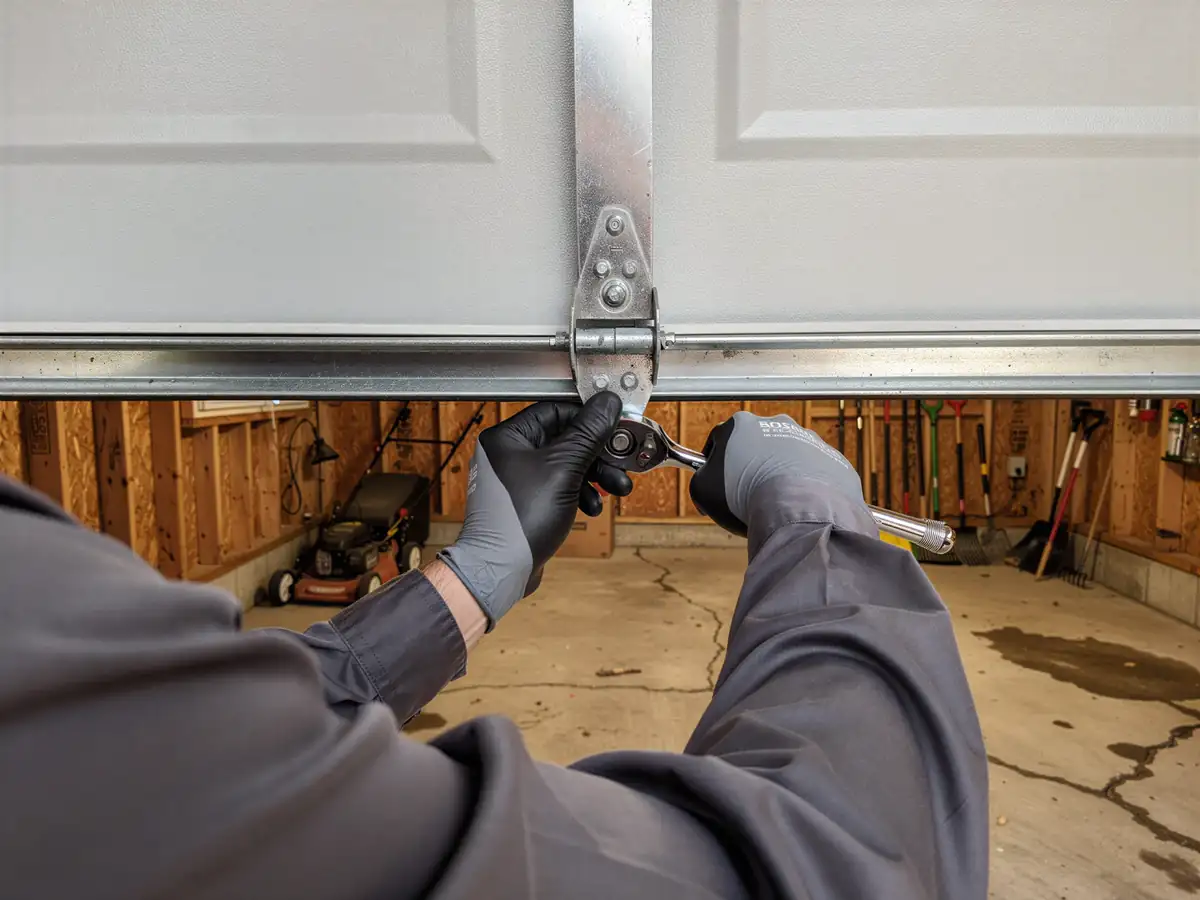
A technician in gloves uses a wrench to adjust a garage door hinge.

Garage Door Repair

Broken spring, stuck opener, or a track that's pulled loose - we fix garage doors in Akron's older housing stock, built mostly 1952-2004, in any weather.

Learn more
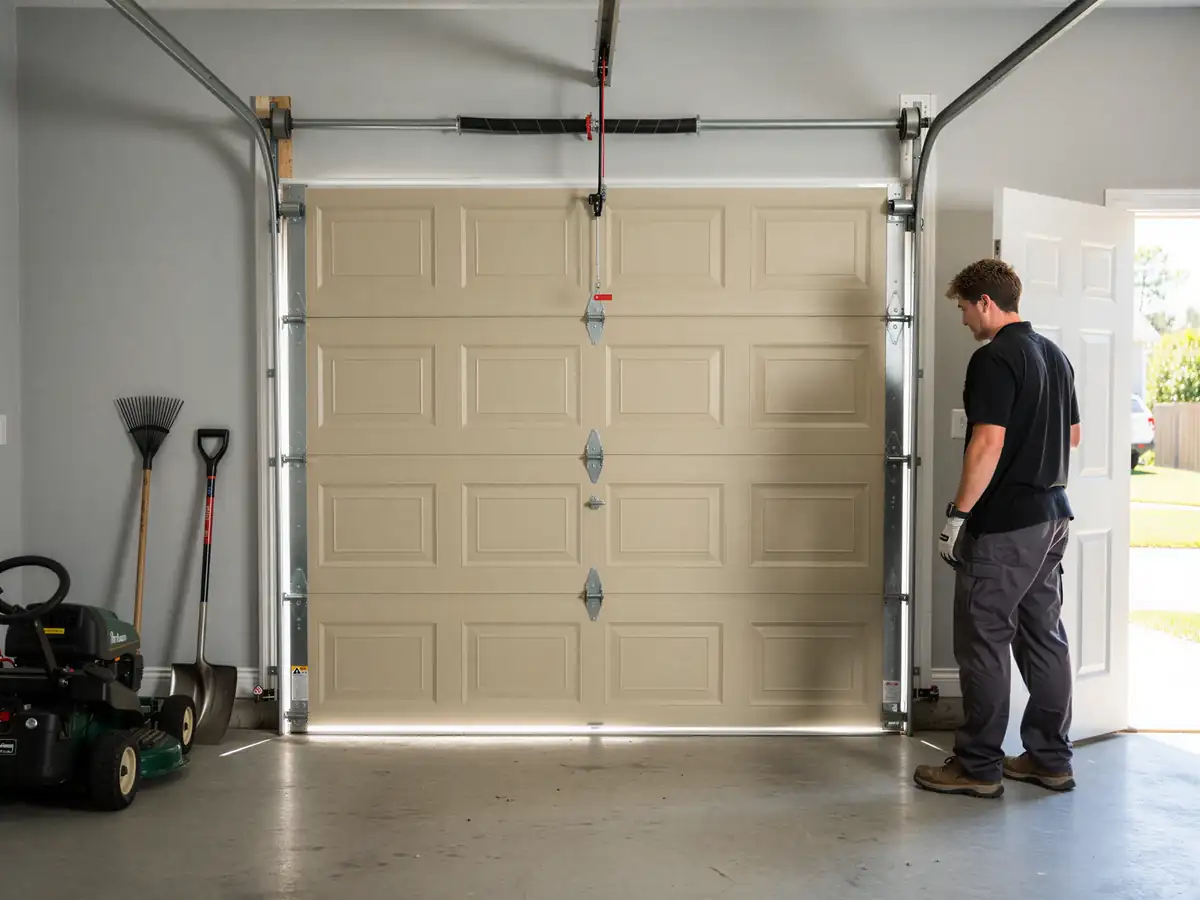
A technician stands next to a closed beige garage door inside a garage.

Garage Door Installation

Akron homes built 1952-2004 often carry doors and openers that don't match today's winters. See why installation jobs here run different, and what we replace them with.

Learn more
The house has a brown garage door with windows, brick, and tan siding.

Garage Door Service

Garage door service for Akron homes built 1952-2004, where cold winters and original hardware wear out springs, cables, and openers faster than newer stock.

Learn more
A technician adjusts a garage door opener rail above a brown garage door.

Opener Installation

Opener failing in cold weather or just worn out? We install garage door openers built for Akron's older housing stock and severe winters. Local, straightforward work.

Learn more
A technician wearing black gloves holds a coiled garage door cable.

Cable Repair

Frayed or snapped cables on Akron's older torsion systems are common on houses built 1952-2004. We diagnose and fix cable failures across the Akron service area.

Learn more
A technician in gloves uses a hammer on a garage door track.

Off-Track Repair

Akron's 1960s and 70s housing stock plus hard winters push garage doors off track more than most places. Here's why it happens and how we fix it for good.

Learn more
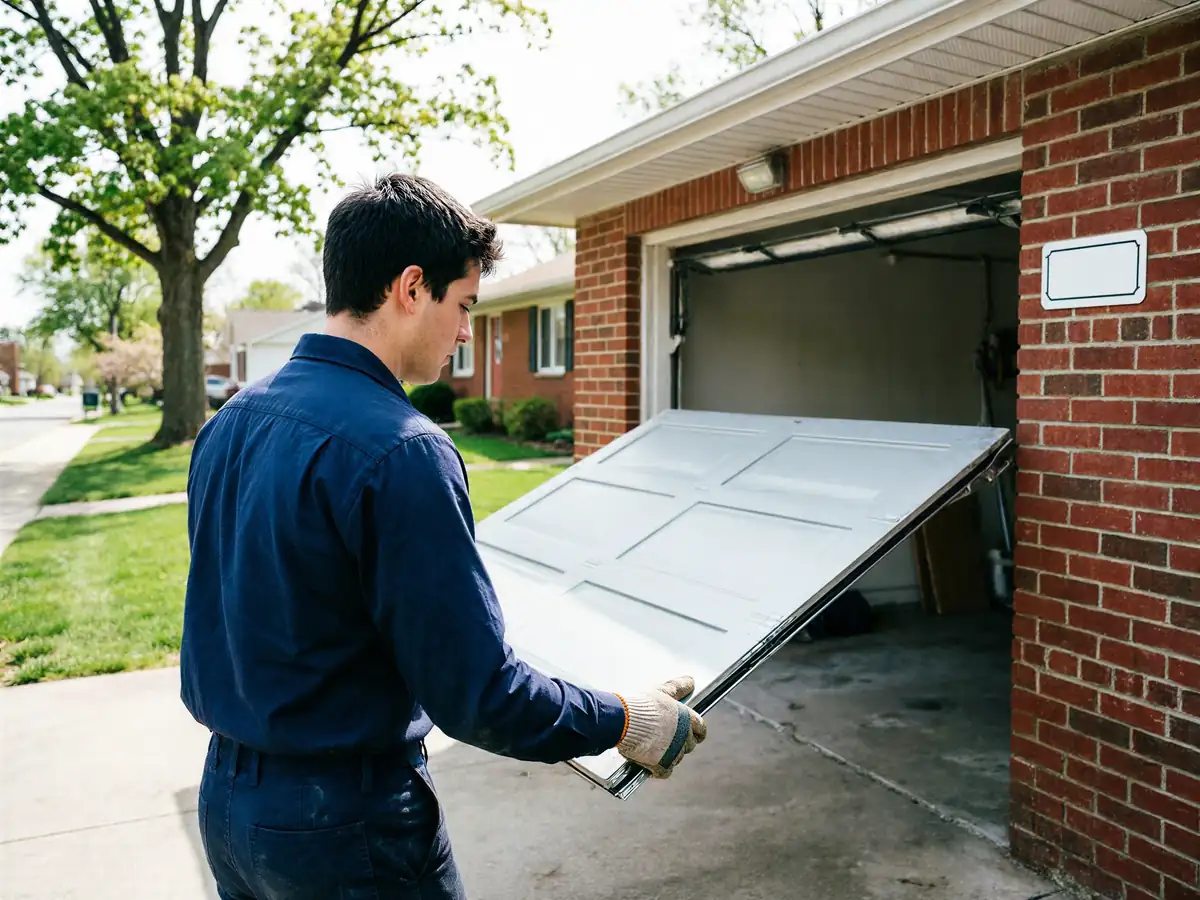
A technician in a blue uniform is carrying a white garage door panel.

Panel Replacement

Dented or cracked garage door panels are common across Akron's 1950s-2000s housing stock. See why panels fail here and how we match and replace them.

Learn more
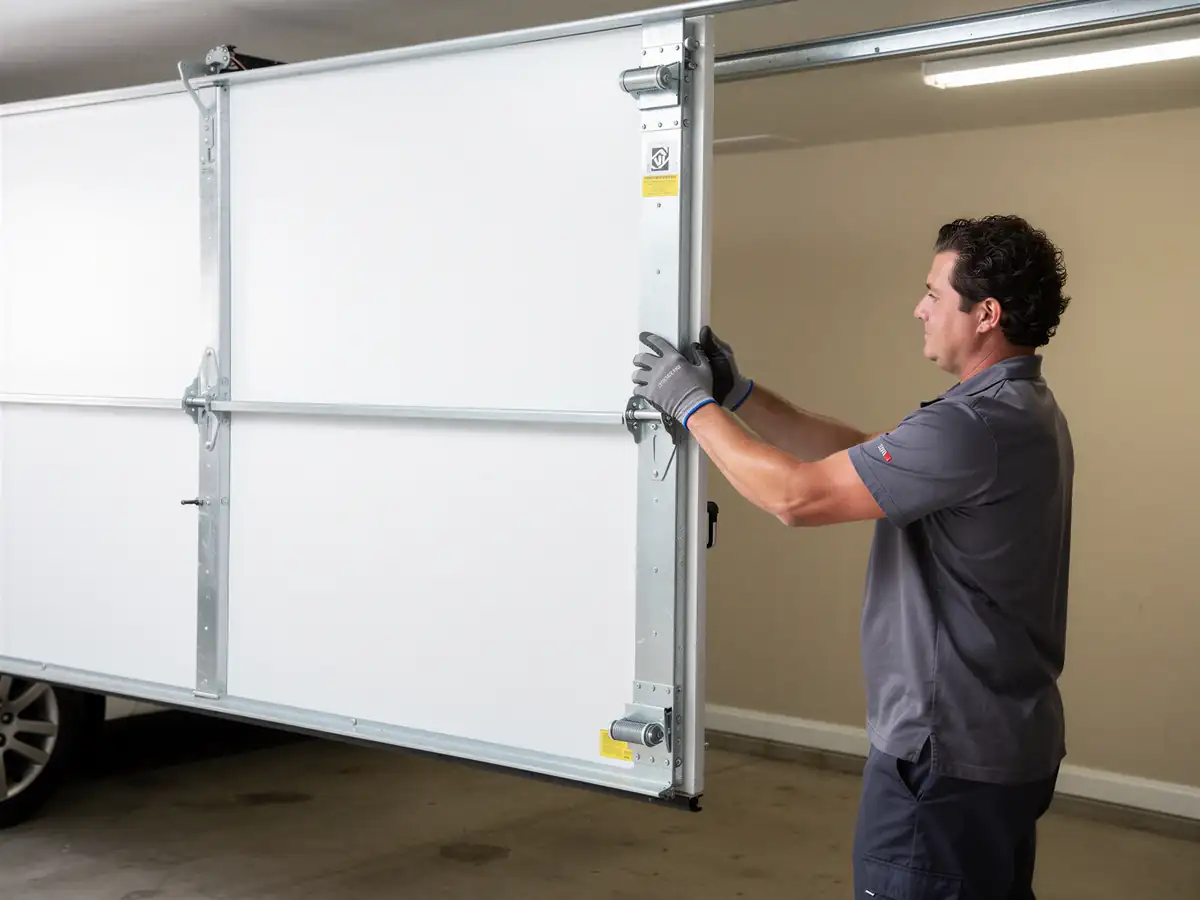
A technician in a gray shirt and gloves adjusts a white garage door.

Maintenance

Akron homes mostly date to the 1960s and 70s, and the region's cold winters age springs and rollers fast. Here's what a maintenance visit actually catches before it fails.

Learn more
Questions

Frequently asked

Straight answers about garage door repair in Akron. Still unsure? Ask us directly.

Is it worth replacing an old garage door just because it's noisy?

Not usually. Noise is often a dry hinge or worn roller, not a sign the door's failing. Given how many houses here were built between 1952 and 2004, a lot of doors that age are still structurally sound - lubricate and check the hardware before assuming you need a new door.

How do I know if my door's steel is too thin to keep repairing?

Check the bottom panel and corners for rust-through or a soft, flexing feel when you press on it. On original doors from the 1960s and '70s common in this area, thinning steel at the bottom section after decades of winter moisture is the usual tell, not the springs or opener.

Does the cold really affect an older door more than a newer one?

Yes. Without foam insulation, steel contracts more in severe cold, putting extra strain on aging spring coils and weld points. An older, uninsulated door working through our cold winters is more likely to need a spring replaced than a newer insulated one.

Ready to get your garage door sorted?

Tell us what it’s doing and where you are in Akron - we’ll take it from there.

Request a QuoteCall