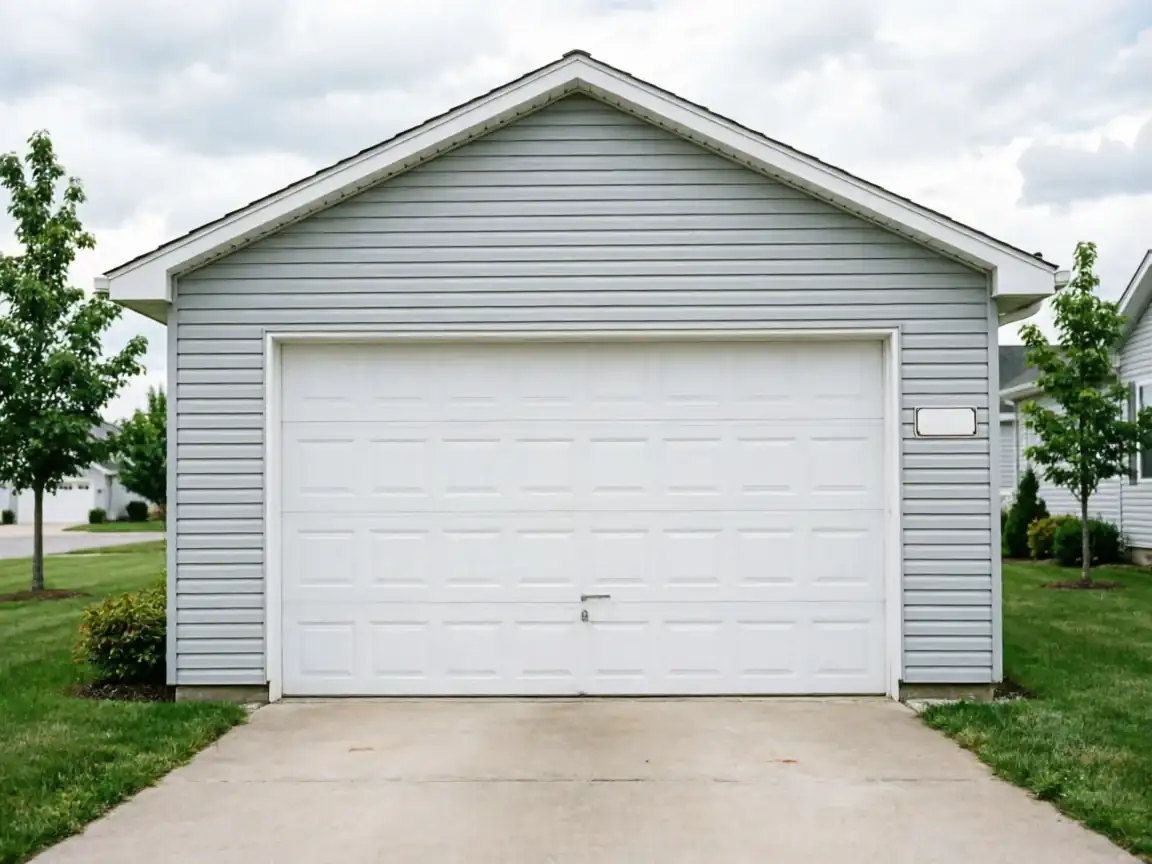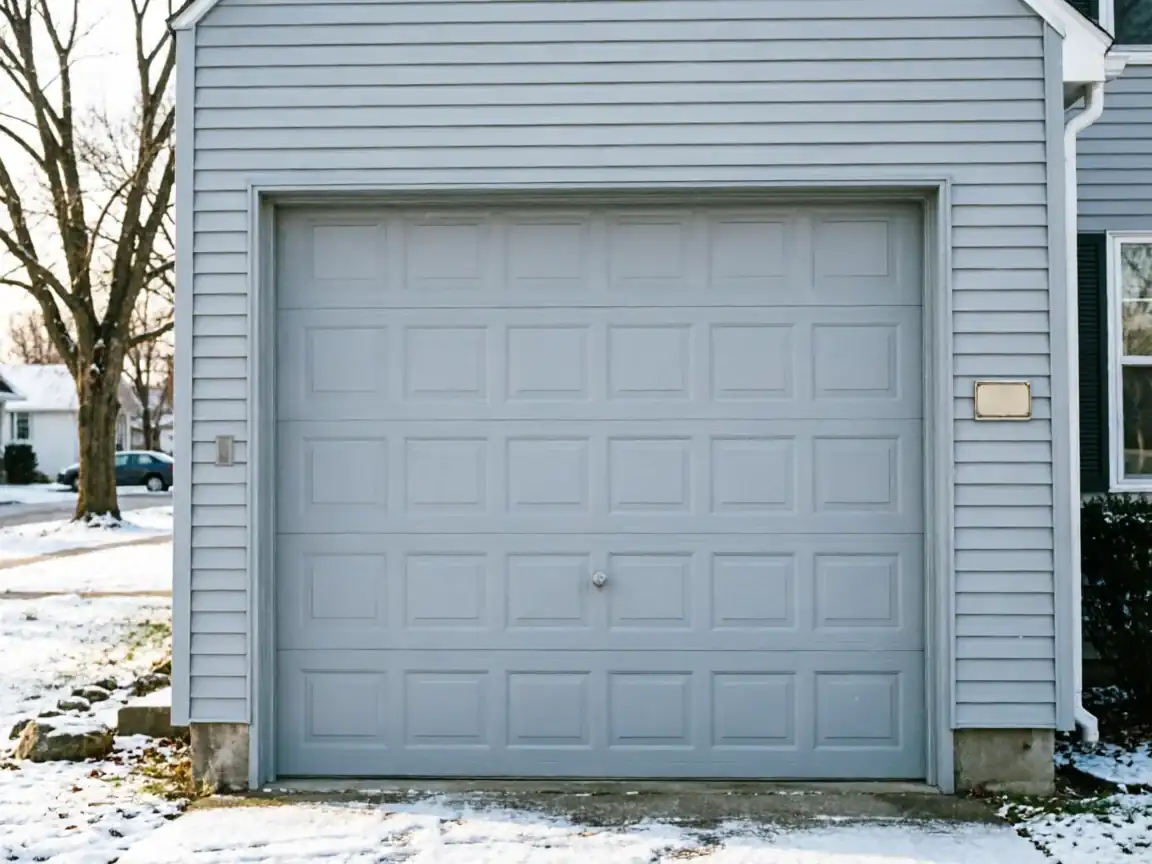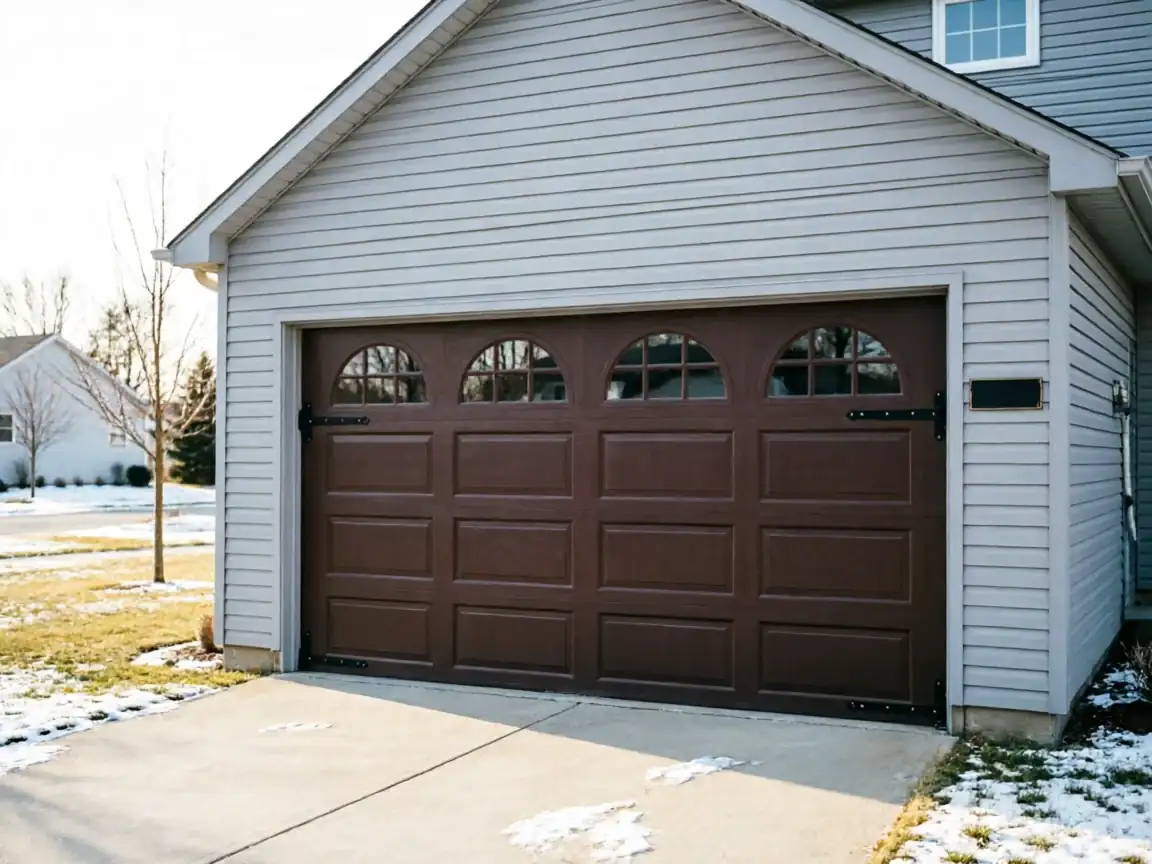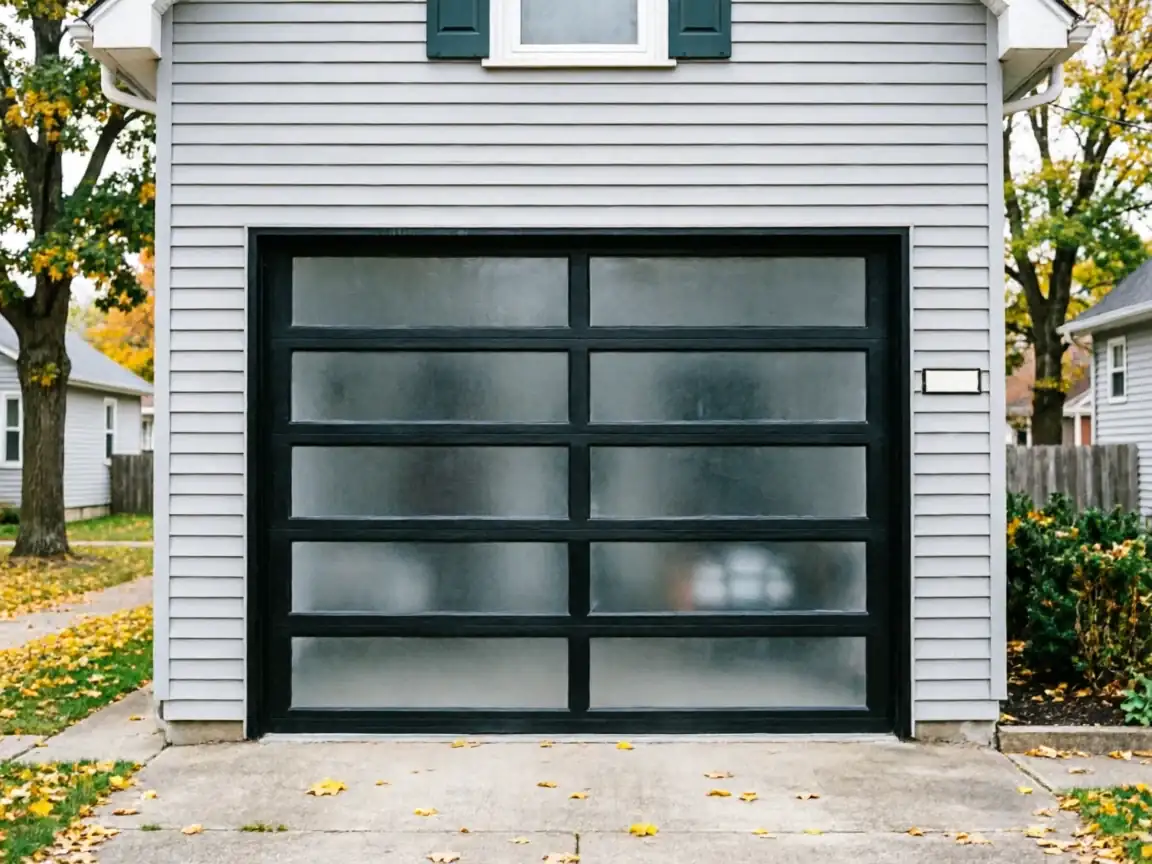
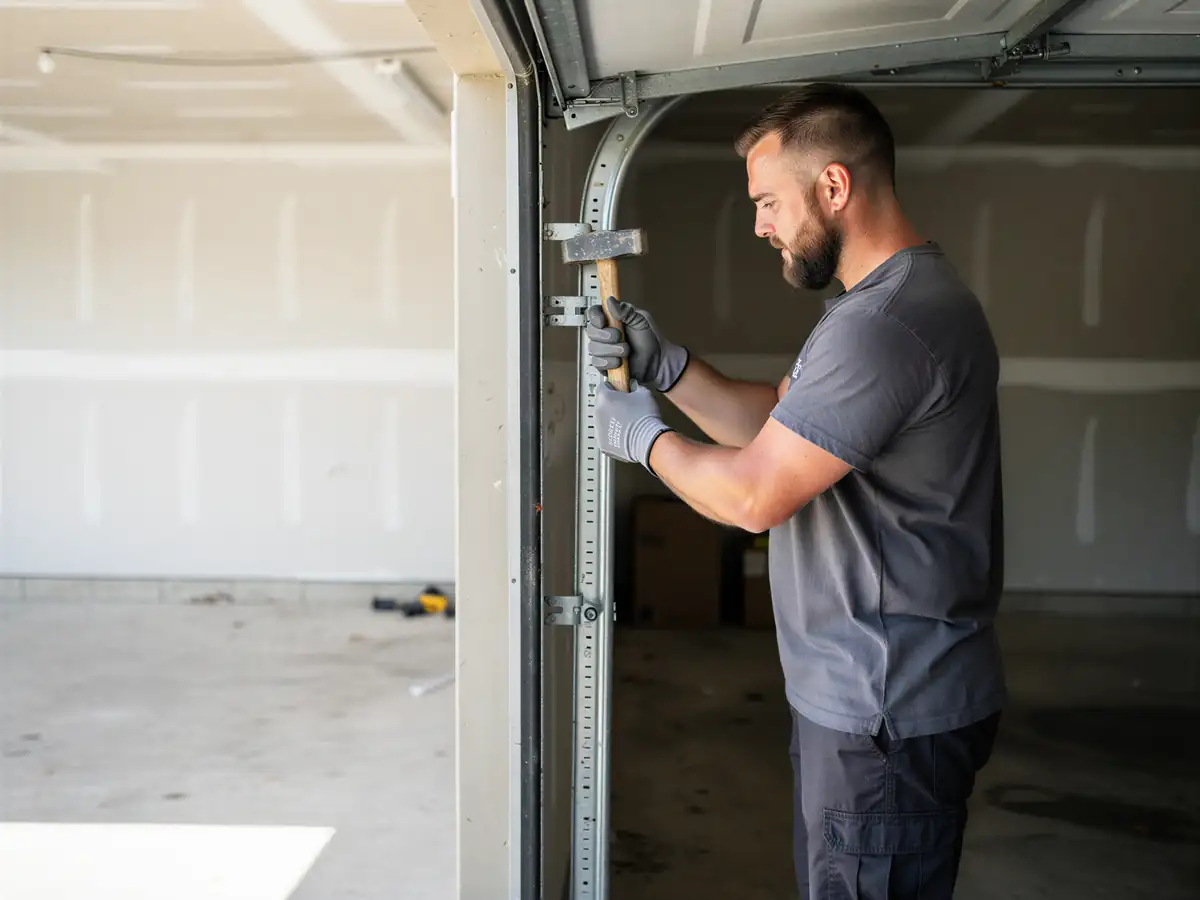
Where This Job Goes Sideways
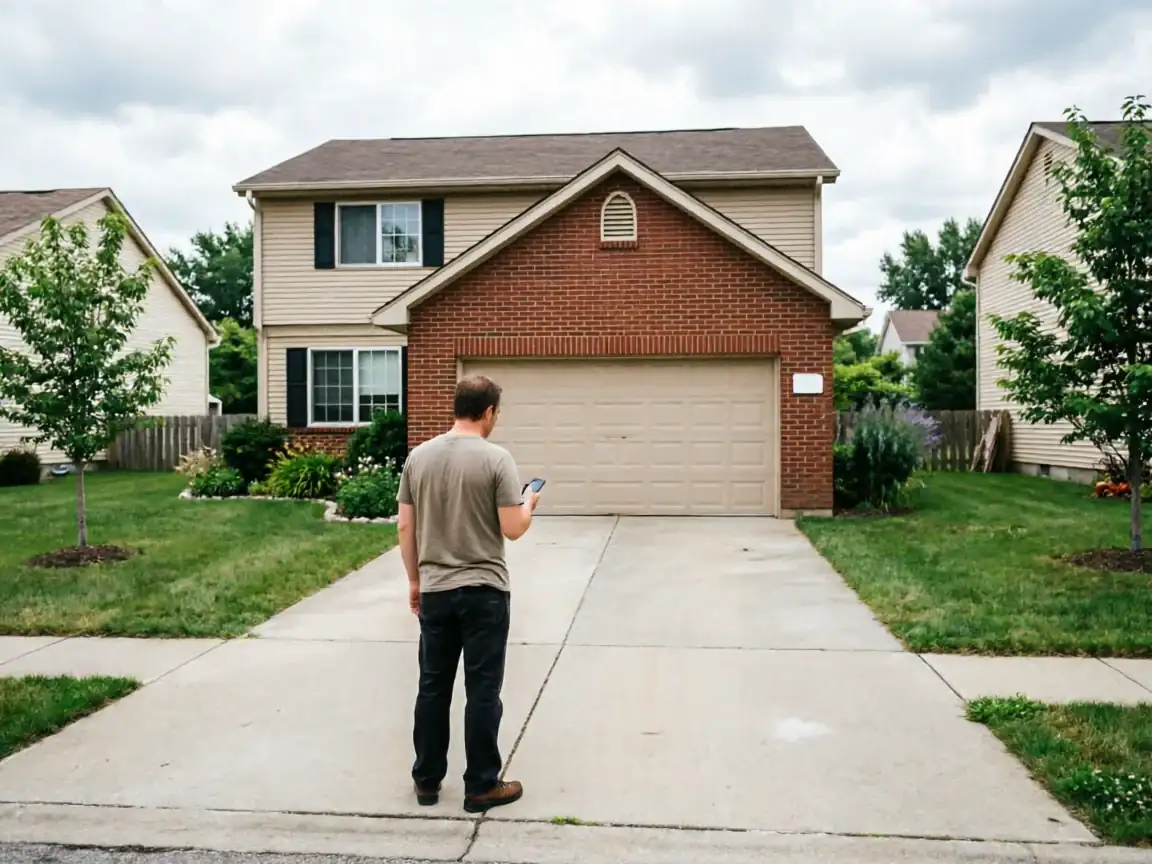
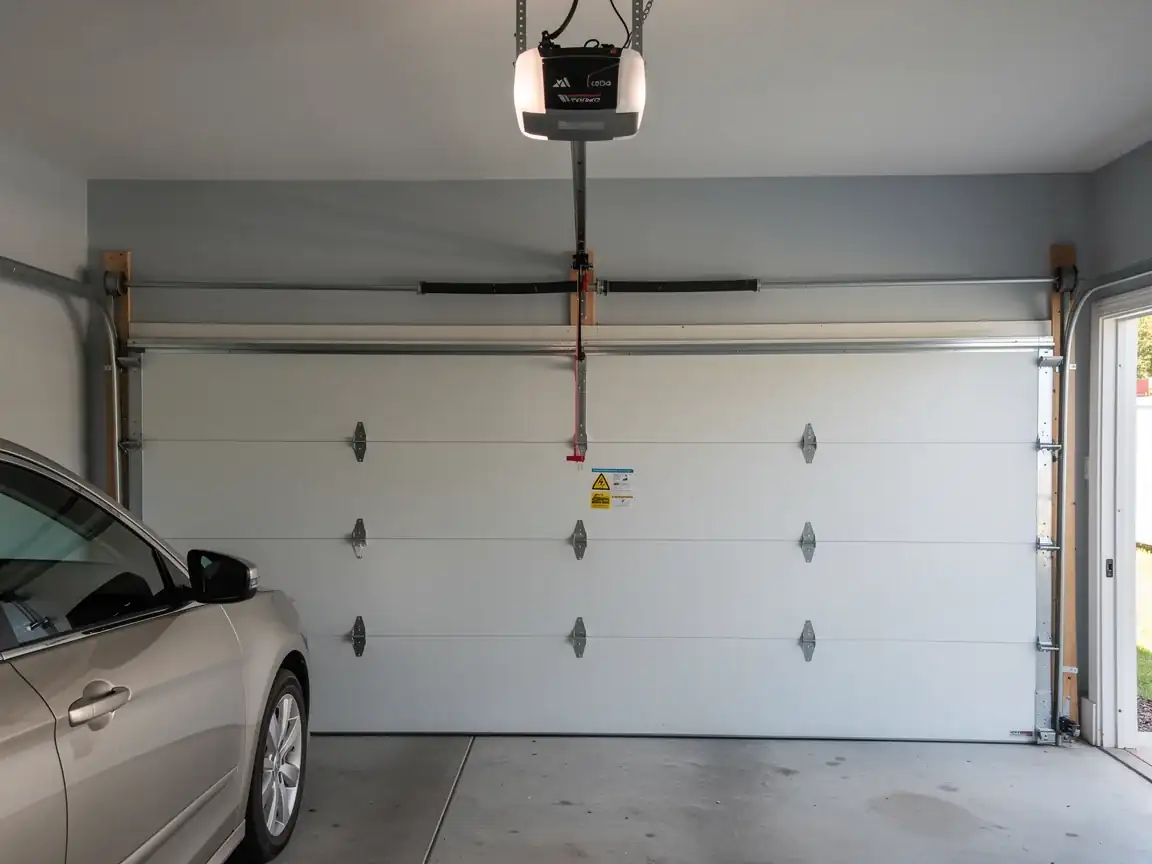
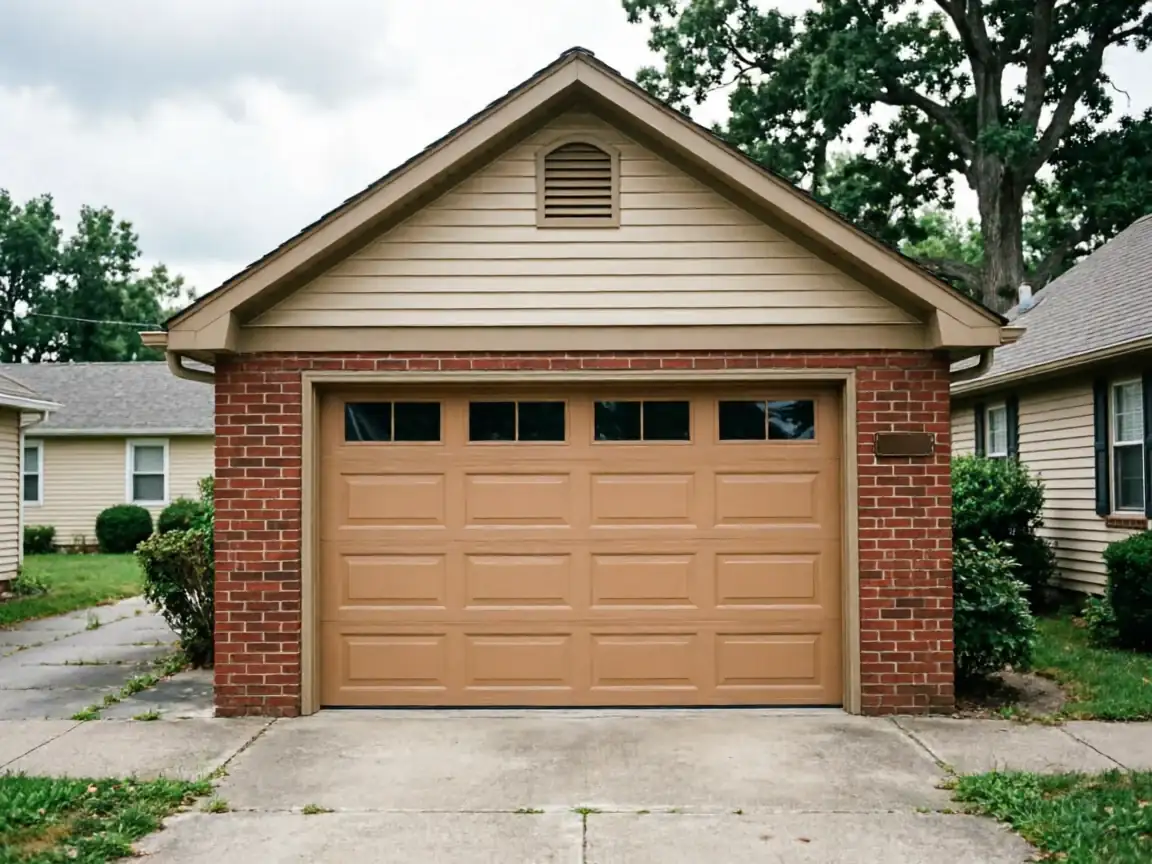
Stow is a town of roughly 14,030 households, small enough that the off-track calls we get tend to cluster around the same housing pattern instead of forty years of mixed-era hardware. The median home here was built around 1979, which puts most garages on galvanized steel track and roller-bracket hardware from the late 70s and 80s - a step up from the older one-piece doors you'll find closer in toward Akron, but old enough now that the brackets have worked loose from thirty-plus winters of expansion and contraction.
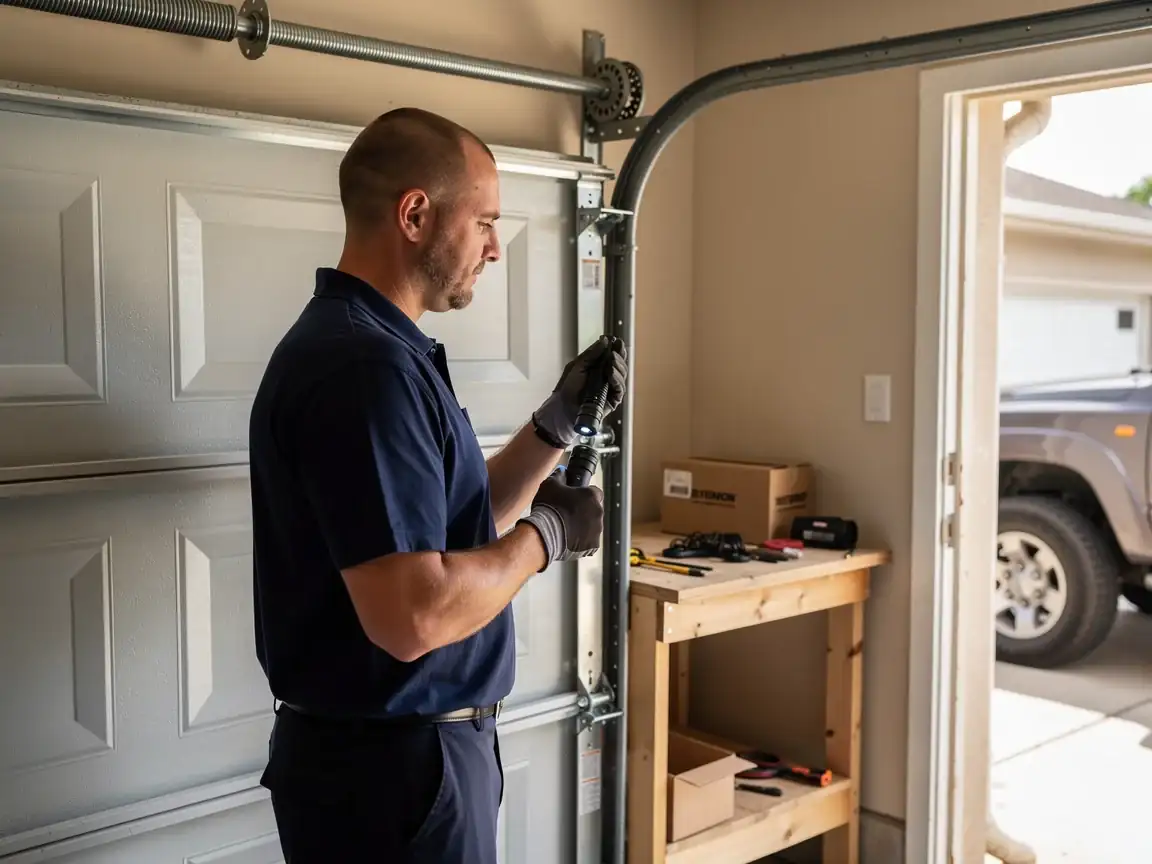
The usual cause isn't a single dramatic event. It's a bottom roller that's worn its track channel wider than spec, or a bracket screw that backed out a sixteenth of an inch at a time until the door walked off the rail on one side. Cold makes it worse - this area sits in a severe cold climate band, and steel track contracts enough in a hard freeze that a door riding the edge of its track in October will jump it in January. A door that's been off track more than once usually has a bent track section, not just a loose roller, and that's a different repair.
We drive out from Akron for these calls, about 8 miles from the shop, so there's no local depot or crew based in Stow itself - just the truck coming over when you call.
The Cost of This Job
We don't post a flat number for this because off-track repairs split into two very different jobs
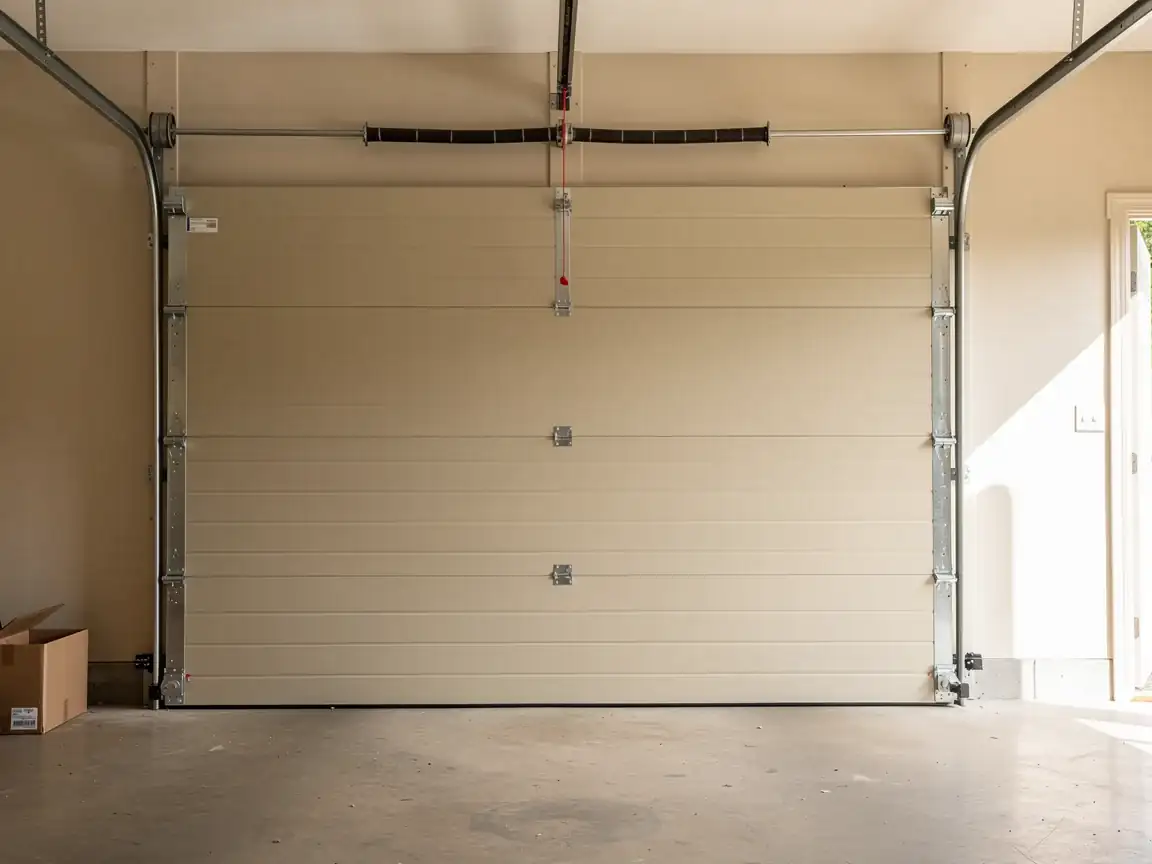
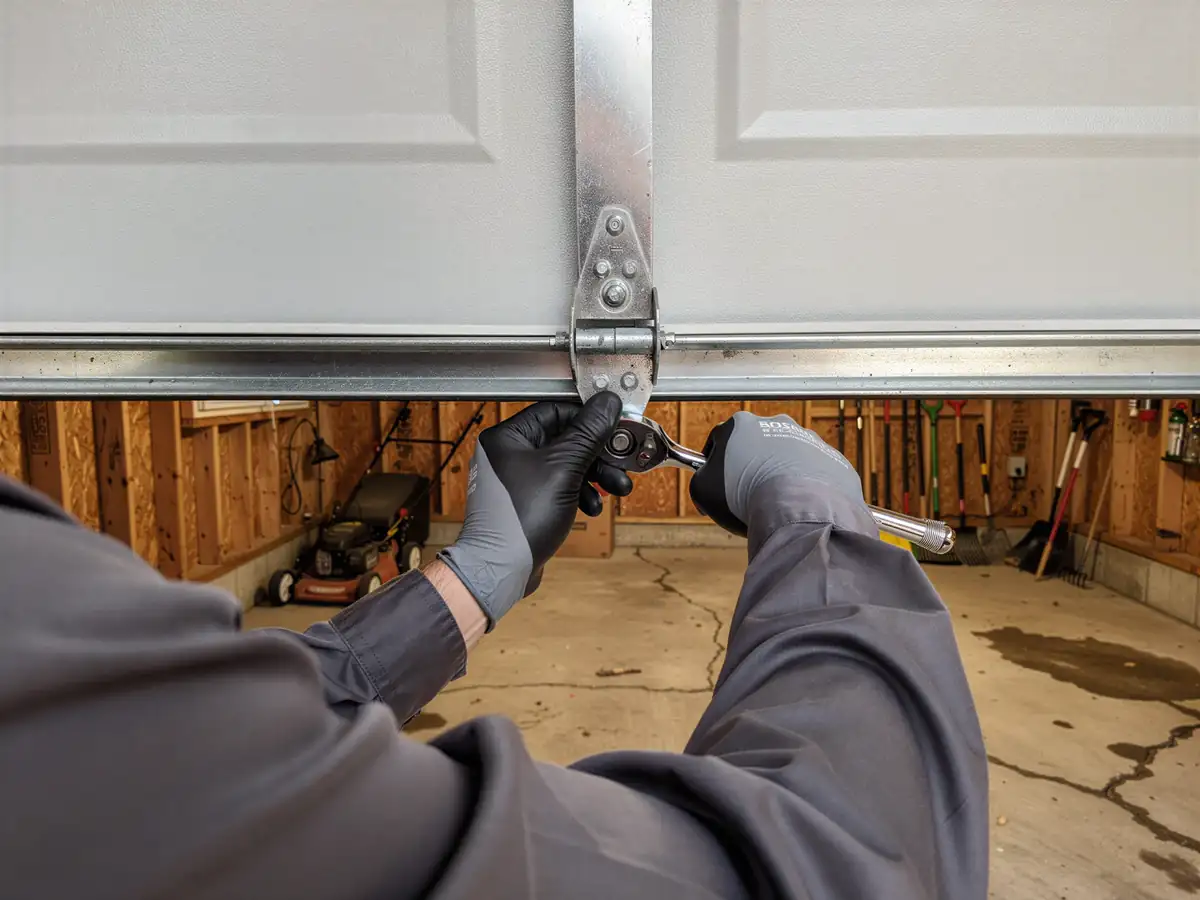
If the track is straight and a roller or bracket has simply slipped, that's a bracket re-set and roller swap - quick work. If the door has come off hard enough to bend the track (which happens more often on the two-car doors common in Stow's later-70s and 80s-built garages, since a bent panel at the track line will torque the rail), you're replacing a track section, and sometimes a panel. We'll tell you which one you're looking at before we quote anything, not after.
Household income in this part of the service area runs higher than the regional average
And we mention that only because it shapes a decision some homeowners face on this job: whether to repair an aging track-and-roller setup or replace it with better hardware while the door's already open. Neither is the wrong call - it depends on how much else on the door is original.
Booking a Visit
Call and tell us what the door's doing - stuck halfway, hanging crooked, come off the rail entirely - and whether it moved under power or by hand before it jumped. That tells us a lot about whether it's a roller, a bracket, or a bent rail before the truck even leaves Akron. We cover Stow along with the rest of this corner of the service area, so a call here gets scheduled the same way a call from any of the other towns we reach does.
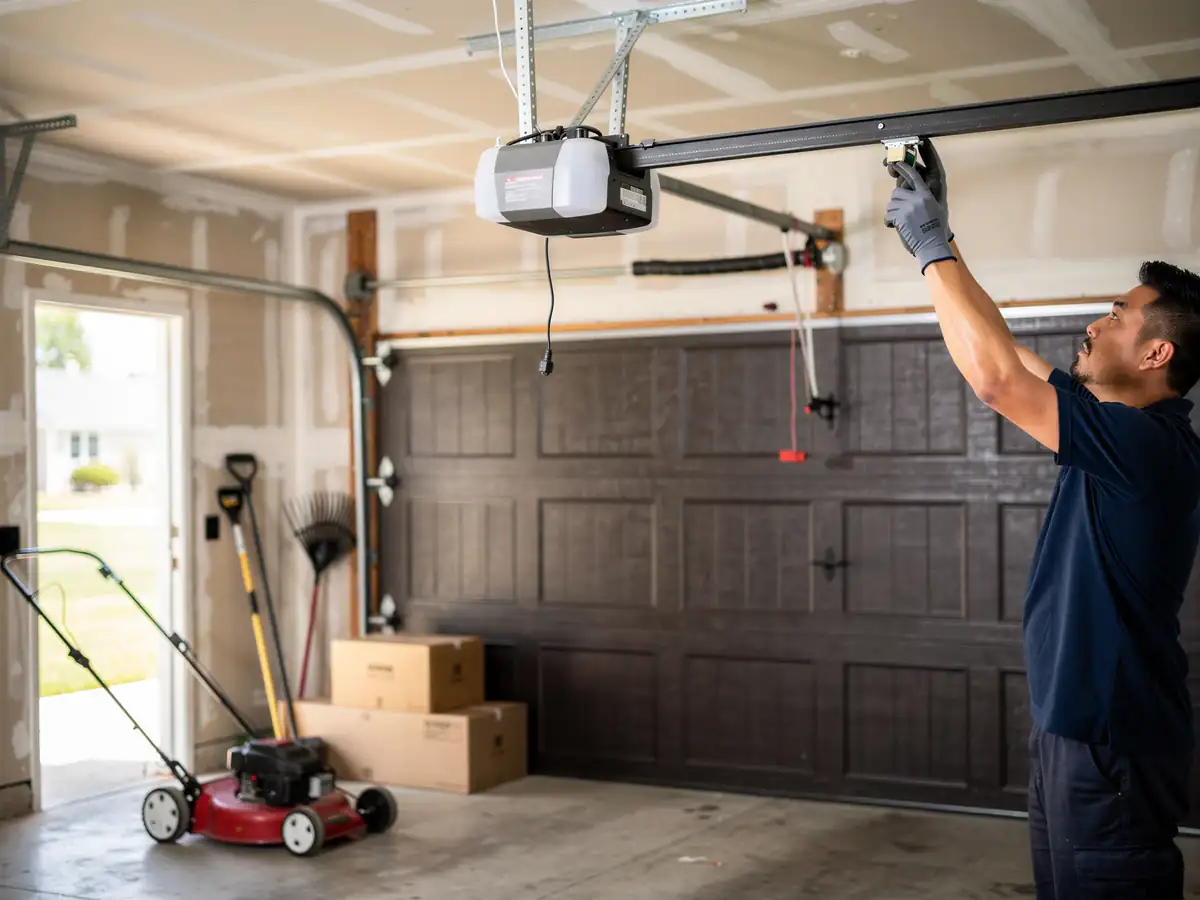
If you can, don't keep running the opener once a panel is visibly off its track. Running it crooked is how a roller problem turns into a bent track or torn panel seam.
Parts We Carry
For this job we carry standard track sections, roller brackets, and both nylon and steel rollers on the truck, since those cover most of what a house built in Stow's main construction window - late 1970s through the 80s and 90s - actually needs. What we don't carry as stock is track hardware sized for older one-piece doors; those are less common out this way than they are in the older in-town neighborhoods closer to Akron, and if we run into one we may need to order the part rather than finish same-visit.
We won't swap in a part that doesn't match the existing track gauge just to finish faster - mismatched track and rollers is how a door ends up back off its rail in a month.
The DIY Question
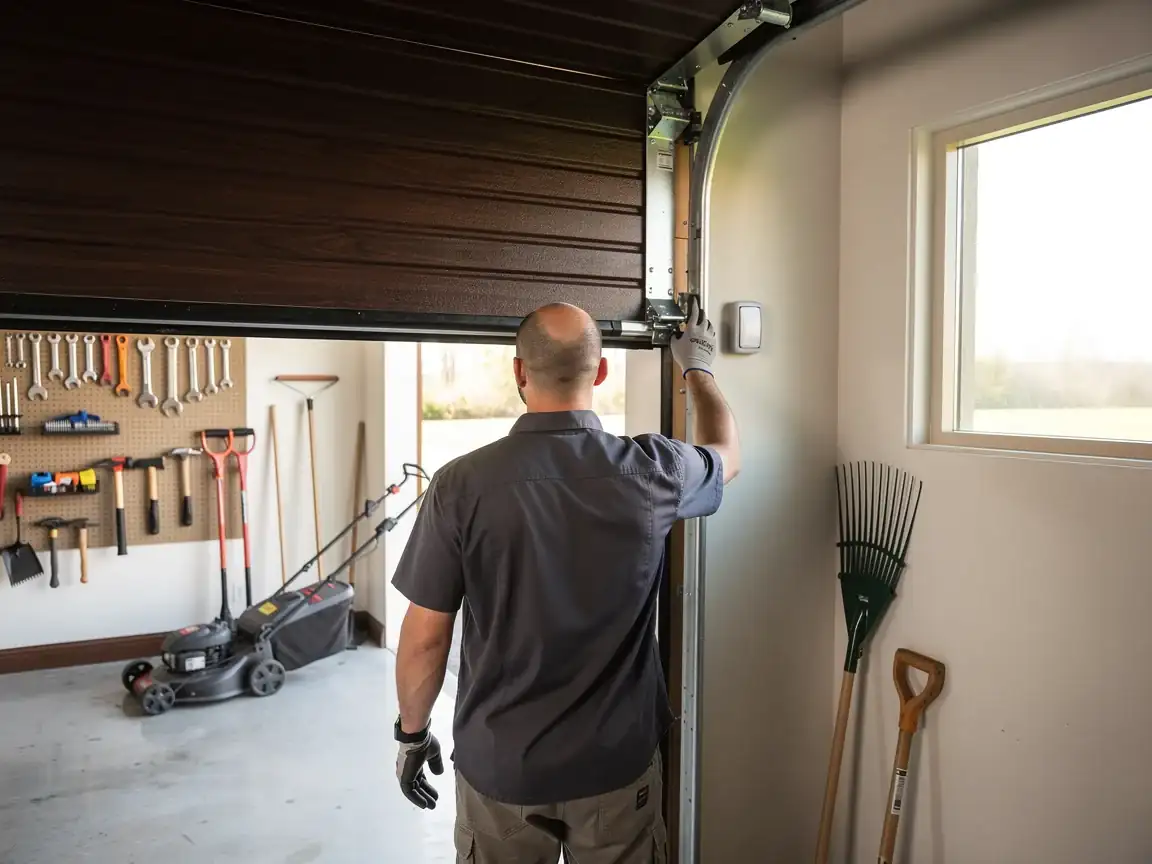
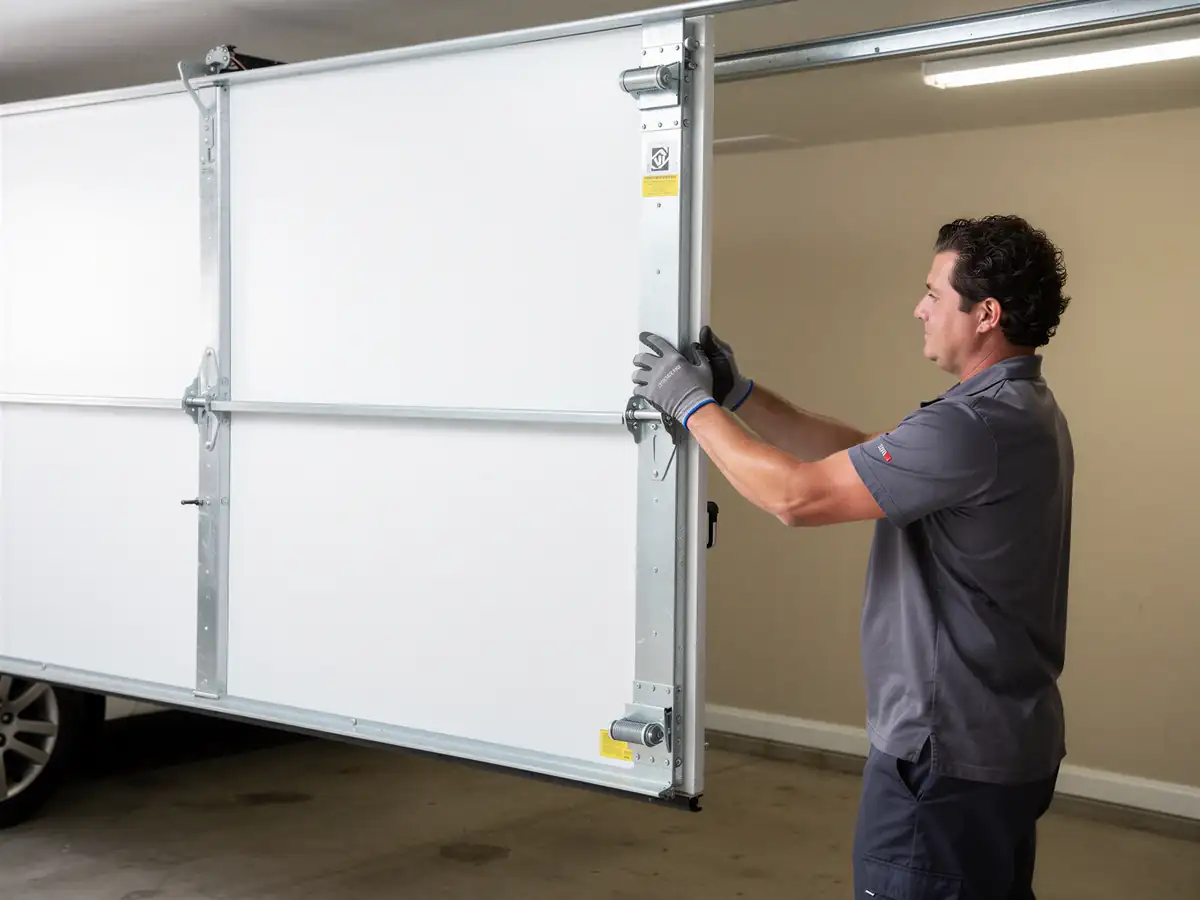
Getting a door back on its track by hand is possible if the track isn't bent and the door is light enough to control
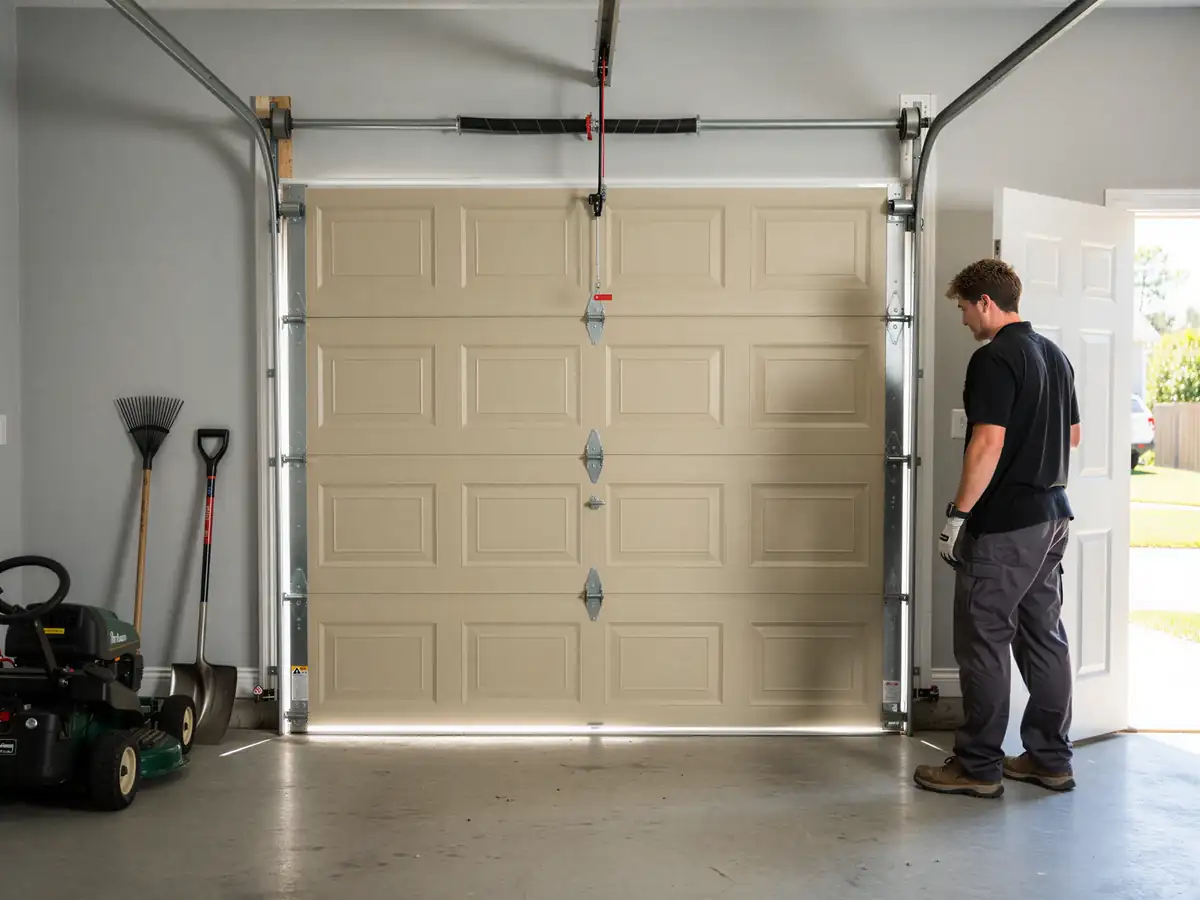
But we'd rather you didn't try it with the springs still under tension. A door that's off track with the cables slack can drop without warning, and on a two-car door that's enough weight to do real damage to a hand or a foot.
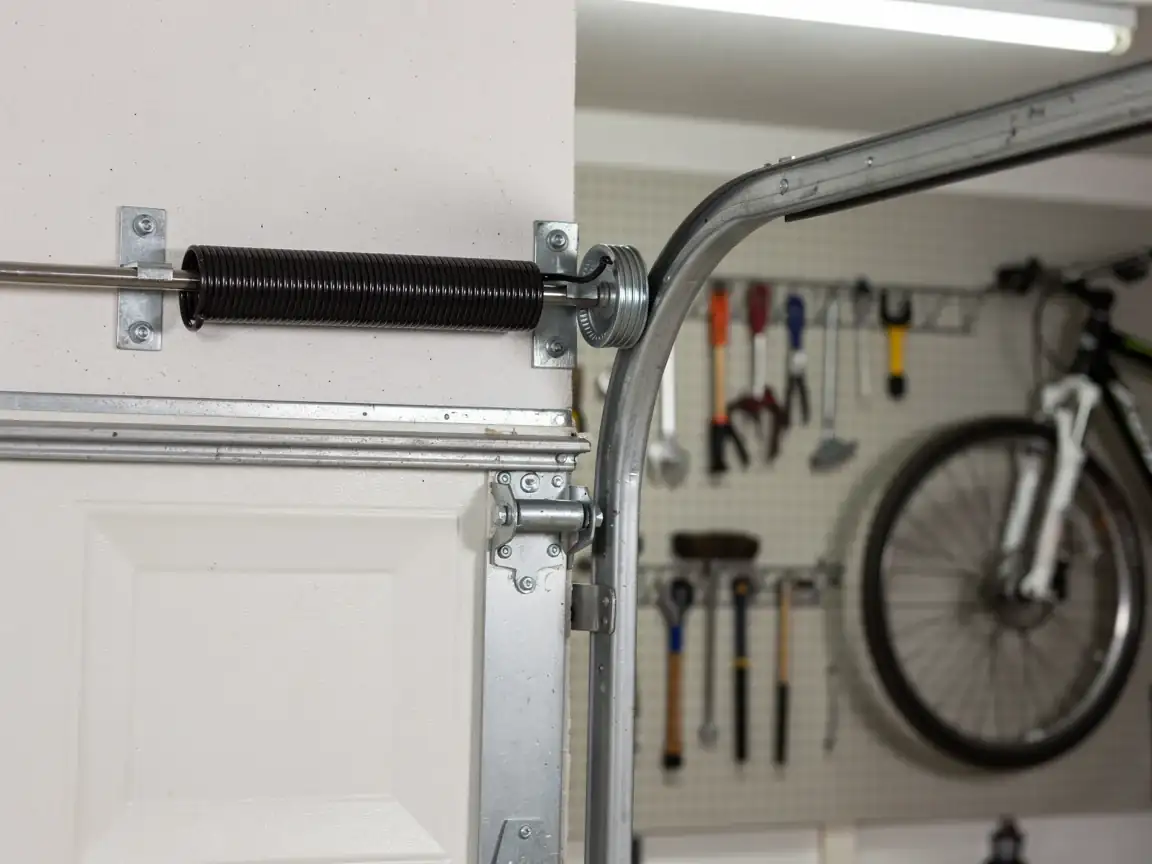
What you can safely check yourself: look at the track where the roller sits
If you can see daylight between the roller and the rail, or the rail itself is visibly bowed out, that's a bent-track job, not a bracket tightening. Knowing which one you've got before you call saves time on the visit, even though we'll still check it ourselves before touching anything.